Tamil Nadu Unveils Global Tender for Vellimalai Pumped Storage Project

Synopsis
The Tamil Nadu government takes a monumental step in renewable energy with the launch of the 1,000 MW Vellimalai Pumped Storage Hydro-Electric Project. This initiative promises to boost power management and support the state's green energy goals.
Key Takeaways
1,000 MW capacity to boost renewable energy storage.
First pumped storage project in Tamil Nadu under PPP model .
Estimated cost of Rs 5,624 crore .
Closed-loop design minimizes environmental impact.
Expected annual generation of 2,080.55 million units of electricity.
Chennai, March 5 (NationPress) In a significant advancement towards enhancing renewable energy incorporation and managing peak electricity demand, the government of Tamil Nadu has commenced the development of the 1,000 MW Vellimalai Pumped Storage Hydro-Electric Project located in the Kanniyakumari district.
The Tamil Nadu Green Energy Corporation Limited (TNGECL), a state-owned entity, has issued a Request for Proposal (RFP) to choose a developer for this project, adhering to the Union Ministry of Power’s guidelines on tariff-based competitive bidding. This initiative will mark the first pumped storage project in Tamil Nadu to be executed under a public-private partnership (PPP) model, utilizing a build-own-operate-transfer (BOOT) framework in line with Section 63 of the Electricity Act.
This model permits private developers to build and manage the facility for a specified duration before handing it back to the government.
According to officials, the Vellimalai project is integral to the state's approach to augment the share of renewable energy sources like solar and wind. Pumped storage facilities serve as extensive energy storage systems, allowing for the retention of surplus electricity generated during off-peak hours to be utilized during high demand periods.
The anticipated cost of the project is Rs 5,624 crore, excluding transmission infrastructure expenses. It will feature four fixed-speed turbine units, each rated at 250 MW, culminating in a total capacity of 1,000 MW and a storage capability of 6,000 MWh.
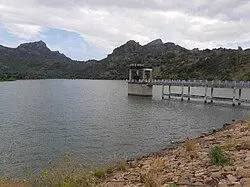
Planned as a closed-loop off-river pumped storage system, this project will establish two artificial reservoirs rather than depending on existing rivers or dams. The upper reservoir, envisioned near Maruvattar Kannu village, will possess a gross storage capacity of 4.39 million cubic meters, while the lower reservoir, proposed near Madatattuvilai village upstream of the Mambazhathuraiyar dam, will accommodate 4.91 million cubic meters of water.
During off-peak hours, around 3.94 million cubic meters of water will be pumped to the upper reservoir over 6.94 hours utilizing surplus electricity. This stored water will then be released to generate power for approximately six hours daily, with projections indicating the project will produce around 2,080.55 million units of electricity annually during peak demand.
In contrast to open-loop pumped storage initiatives that rely on natural rivers and reservoirs, the closed-loop design minimizes hydrological effects by circulating water between the two reservoirs in a controlled manner with minimal natural inflow.
About 159 hectares of land will be required for the project, which includes approximately 62 hectares of forest area. It does not entail the relocation or rehabilitation of local communities, but will necessitate forest clearance and environmental approvals.
TNGECL has already submitted an application to the Union Ministry of Environment, Forest and Climate Change for Terms of Reference (ToR) to initiate the environmental impact assessment process. Given that the proposed upper reservoir is situated within the eco-sensitive zone of the Kanniyakumari Wildlife Sanctuary, clearance from the National Board for Wildlife will also be essential before construction commencement.
Upon its completion, the Vellimalai project is expected to be pivotal in stabilizing the electrical grid and facilitating a continuous supply of renewable energy in Tamil Nadu.
Point of View
The initiation of the Vellimalai Pumped Storage Hydro-Electric Project represents a strategic move towards sustainable energy management in India. It underscores Tamil Nadu's commitment to renewable energy, potentially setting a precedent for future projects across the country.
NationPress
23 Sept 2026
Frequently Asked Questions
What is the capacity of the Vellimalai project?
The Vellimalai Pumped Storage Hydro-Electric Project has an installed capacity of 1,000 MW.
How will the project impact renewable energy in Tamil Nadu?
The project will enhance the state's ability to store and manage renewable energy, particularly from solar and wind sources.
What is the estimated cost of the Vellimalai project?
The project is estimated to cost Rs 5,624 crore, excluding transmission infrastructure.
Will the project require land clearance?
Yes, the project will require approximately 159 hectares of land, including forest clearance.
What environmental approvals are needed?
Clearance from the National Board for Wildlife is required due to the project's location within an eco-sensitive zone.