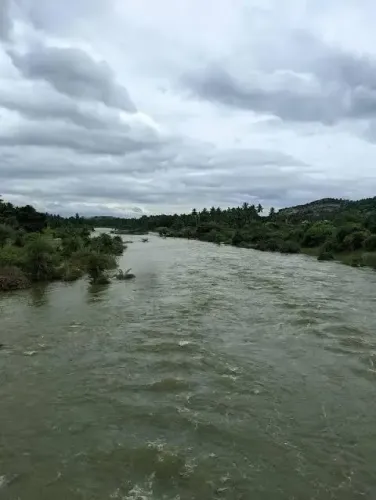
Toxic foam chokes South Pennai River near Kelavarapalli dam, farmers demand action
Synopsis
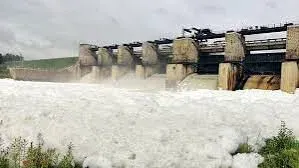
The South Pennai River near Kelavarapalli dam in Hosur has been choked with toxic foam for nearly a month, with dissolved oxygen crashing below 1 mg/litre — a level incompatible with aquatic life. Farmers in Krishnagiri are demanding a rare joint investigation by Tamil Nadu and Karnataka, as preliminary tests flag sewage-linked sulphates and phosphates rather than industrial effluents.
Key Takeaways
Toxic foam has persisted in the South Pennai River near Kelavarapalli dam , Hosur , for nearly a month.
Dissolved oxygen in the affected stretch has fallen below 1 mg/litre , making it incapable of supporting aquatic life.
Preliminary WRD tests show elevated sulphates and phosphates , pointing to sewage contamination rather than industrial discharge.
Farmer groups in Krishnagiri district are demanding a joint investigation by Tamil Nadu and Karnataka .
The Tamil Nadu Pollution Control Board is conducting independent sampling; water samples are being tested in Chennai and Pollachi .
Farmer representatives are set to meet Water Resources Department officials to seek a coordinated inter-state action plan.
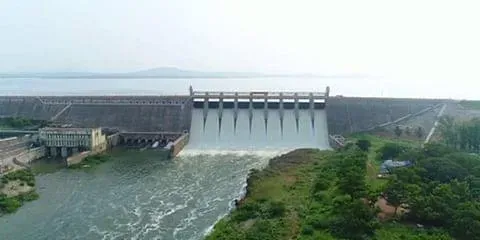
Toxic foam has been accumulating in the South Pennai River near the Kelavarapalli dam in Hosur for nearly a month, alarming farmers across Krishnagiri district in Tamil Nadu. Farmer groups are pressing both the Tamil Nadu and Karnataka governments to jointly investigate the source of the contamination and implement immediate remedial measures.
How Bad Is the Foam Problem
The foam has grown more pronounced following recent rainfall in Karnataka, which raised inflows into the Kelavarapalli dam — a critical irrigation source for thousands of acres of farmland in the region. Farmers dependent on the reservoir warn that deteriorating water quality could devastate crop cultivation and undermine the long-term sustainability of agriculture across the command area.
Local farmer organisations believe the primary cause is untreated sewage entering the South Pennai River upstream, particularly from urban areas in Karnataka. They have also called for a thorough inspection of mills and industrial units along the river in both states to determine whether industrial discharge is contributing to the contamination.
What Water Tests Have Found
Officials of the Water Resources Department (WRD) confirmed that routine monthly monitoring of the river is ongoing. Preliminary findings point to elevated levels of sulphates and phosphates — markers more commonly associated with sewage contamination than with chemical industrial effluents.
More critically, dissolved oxygen levels in the affected stretch have dropped below one milligram per litre, a threshold at which aquatic life, including fish, cannot survive. Water samples are being sent to laboratories in Chennai and Pollachi for detailed analysis. The Tamil Nadu Pollution Control Board (TNPCB) is also conducting independent sampling to assess the full extent of the contamination.
Farmer Demands and Next Steps
Representatives of farmer associations are expected to meet WRD officials to press for urgent intervention and a coordinated action plan spanning both states. They have specifically demanded scientific studies to identify the exact pollution sources and legally enforceable measures to prevent untreated waste from entering the river.
Notably, this is not the first time cross-border river pollution has strained Tamil Nadu-Karnataka relations over shared water bodies. The South Pennai River flows through both states before serving as a lifeline for agriculture in the Krishnagiri belt, making unilateral action insufficient.
Ecological and Agricultural Stakes
Farmers have warned that continued river degradation poses serious risks not just to agriculture but also to biodiversity and public health in the region. With dissolved oxygen levels already below survivable thresholds for aquatic life, ecologists note that recovery could take months even after pollution sources are controlled.
The TNPCB and WRD investigations are expected to yield more definitive findings in the coming weeks, with pressure mounting on both state governments to act before the next major agricultural season.
Point of View
Not enforce, across state lines. Monthly sampling cycles are too slow for a river already below survivable oxygen thresholds. Without a binding inter-state protocol, the investigation risks becoming a jurisdictional blame game while farmers in Krishnagiri bear the agricultural cost.
NationPress
29 Sept 2026
Frequently Asked Questions
What is causing the toxic foam in the South Pennai River near Kelavarapalli dam?
Preliminary tests by the Water Resources Department indicate elevated sulphates and phosphates, which are typically associated with untreated sewage rather than industrial chemical discharge. Farmer organisations also suspect urban sewage inflows from Karnataka upstream, though a full scientific assessment is still under way.
How serious is the water quality deterioration?
Dissolved oxygen levels in the affected stretch have dropped below 1 milligram per litre — a critically low threshold at which fish and most aquatic life cannot survive. This indicates severely degraded water quality that poses risks to the river's ecological health.
Why are both Tamil Nadu and Karnataka being asked to act?
The South Pennai River flows through both states, and the suspected pollution sources — including urban sewage and industrial units — are located upstream in Karnataka. Since neither state can enforce remediation on the other's territory, farmers are demanding a coordinated inter-state investigation and action plan.
Who is investigating the pollution?
The Water Resources Department is conducting routine monthly monitoring and has sent water samples to laboratories in Chennai and Pollachi. The Tamil Nadu Pollution Control Board is also independently collecting samples to assess the contamination's extent.
What are farmers demanding?
Farmer associations in Krishnagiri district are demanding scientific studies to identify exact pollution sources, inspection of mills and industrial units along the river in both states, and legally enforceable measures to stop untreated waste from entering the South Pennai River. Representatives are expected to meet WRD officials to press for urgent intervention.