How Can the Third Eye Improve Public Perception of Police?
Synopsis
Prime Minister Modi emphasizes the need for enhanced police professionalism and citizen-centric services at the DGPs Conference, aiming to reshape public perception, especially among the youth. This pivotal dialogue on police reform is vital for national security and citizen trust.
Key Takeaways
Prime Minister Modi called for improved police professionalism.
Transformation of public perception is essential, especially among youth.
Emphasis on using technology for enhanced policing.
Accountability and merit-based appointments are crucial for police reforms.
Urban Policing Awards promote innovation in law enforcement.
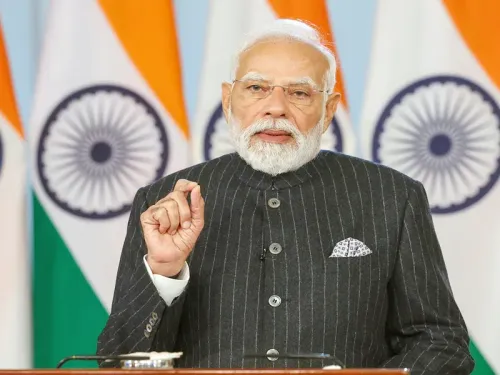
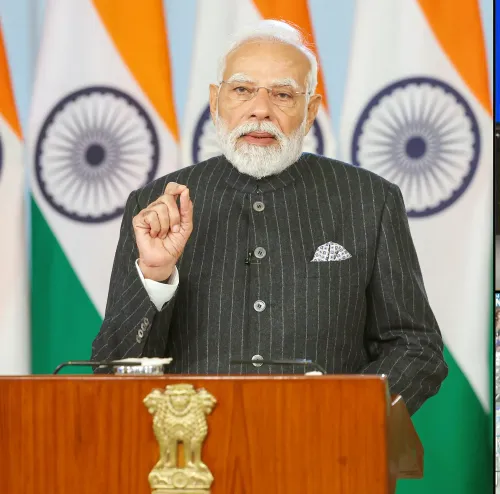
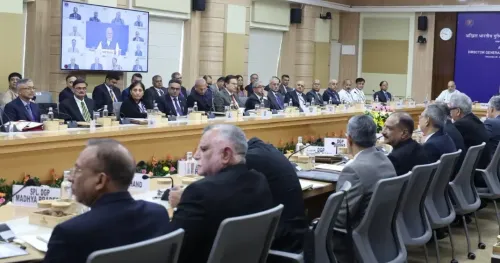
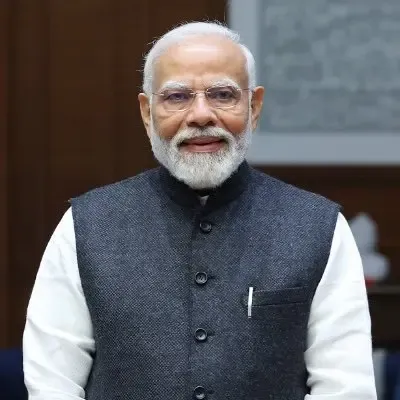
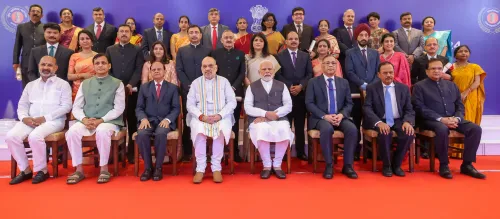
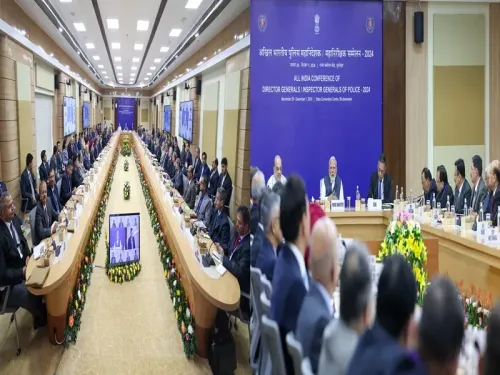
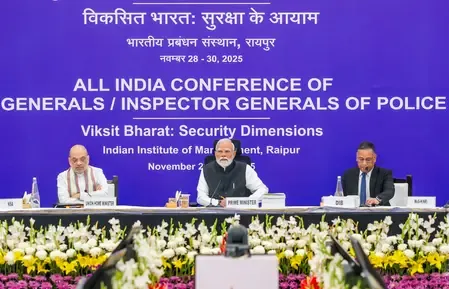
New Delhi, Dec 7 (NationPress) During the closing session of the 60th Annual Conference of DGPs held in Raipur on November 30, Prime Minister Modi urged police leaders nationwide to bolster the professionalism, sensitivity, and responsiveness of their forces and highlighted the critical need to reshape public perception of the police, especially among the youth.
This three-day conference, traditionally led by the Director Intelligence Bureau (DIB), who is recognized as the highest-ranking police officer in the country, offers a unique chance for states to receive a thorough update on the nation’s internal security landscape.
Previously conducted at Vigyan Bhawan in New Delhi, under the Modi administration, the initiative to host it in various state capitals was introduced. This strategic move acknowledges that policing is a state subject and aims to promote uniformity in law and order management throughout the nation. The DGPs Conference garners enthusiastic engagement from state police chiefs, transcending the varying political climates of state governments, reinforcing the notion that while law and order is a state matter, national security rests as a shared responsibility between the Centre and the states.
With the theme of the conference being ‘Viksit Bharat: Security Dimensions’, the Prime Minister discussed several critical issues including urban policing, tourist protection, awareness of new laws replacing archaic colonial Penal Codes, coastal policing, and the monitoring of banned outfits. He stressed the necessity for modernizing public safety systems and law enforcement management practices. Advocating for an increased reliance on technology, he encouraged state police to connect their databases under NATGRID with Artificial Intelligence to generate actionable intelligence concerning crime and criminals.
He pointed out that an enhanced application of forensics would fortify the criminal justice system and suggested that universities incorporate case studies on successful forensic methods into relevant courses. The Prime Minister called for state police to play a more pivotal role in counter-terrorism and counter-radicalization efforts. He also recognized the top three cities in the newly launched Urban Policing Awards, designed to inspire innovation and enhancement in urban policing.
In his advice to police chiefs regarding the transformation of public perception, Prime Minister Modi identified a challenge that police leadership has yet to address effectively. He succinctly stated that police must be sensitive and responsive to deliver citizen-centric services.
The police, as an enforcement arm of the democratic state, hold significant influence over governance; their effectiveness can either uplift or undermine public trust. Unfortunately, the reality often is that law-abiding citizens hesitate to report crimes at police stations due to a lack of trust.
Reflecting on my initial posting as ASP decades ago, I recall the District SP, a commendable officer, who coined the phrase ‘Friendly but not familiar’ during the annual Police Week observance. This sentiment remains relevant today—unfortunately, lawbreakers often develop a sense of ‘familiarity’ with police, while officers tend to be unapproachable to everyday law-abiding individuals. Rectifying this situation is the responsibility of senior police officials. Notably, India stands out as a nation where a police career is part of the All India Civil Services dedicated to police leadership roles.
The Indian Police Service faces a challenging question regarding its efforts to enhance the accountability and public service standards expected of police stations. Given that senior police officers overseeing stations wield the authority of Station House Officers in their jurisdictions, police stations emerge as the fundamental units of policing and the primary point of interaction between police and the public. The public's perception of the police is closely tied to how they view their local police station.
The Prime Minister’s vision for a citizen-centric police force will be evaluated at this level, underscoring the necessity for police leadership to recognize the importance of upgrading police station operations. Simply asserting their own integrity is inadequate; they will be evaluated based on their success in optimizing police station functionality under their command. The tradition of senior officers, even those at the rank of Range Dy IG, conducting formal inspections of police stations seems to have waned. Unexpected visits from senior officers to ensure proper record-keeping and the presence of authorized personnel are essential for maintaining police station efficiency.
Additional steps are necessary for substantial police reform. First, the ratio of police personnel per lakh of population must be improved, and vacancies—reportedly as high as 22% of sanctioned strength—should be filled without delay. In our federal structure, law and order management is primarily a state responsibility, while the Centre's role largely involves providing paramilitary forces upon request.
To mitigate the susceptibility of senior officers to political pressures from ruling parties, it is crucial for the Centre to play a role in appointing the DGP (and the Chief Secretary) based on seniority and merit. These are IPS and IAS officers whose performance is already monitored by the Centre through the Department of Personnel & Training. Following the Supreme Court's 2018 ruling that discouraged the appointment of ‘Officiating DGPs’ and outlined the selection process for DGPs from a UPSC-drawn panel of three, the Centre can fulfill its natural role.
The apex court had already established a fixed tenure for DGPs in its 2006 ruling concerning Prakash Singh’s case. Furthermore, all Station House Officers should be appointed with the DGP's recommendation or consent, empowering them to exercise this authority confidently. Lastly, any misconduct by police officers should be investigated while considering whether supervisory officers, such as Circle Officers or SPs, effectively fulfilled their responsibilities. Holding supervisory officers accountable for individual failures is a practice diligently followed by the Army and is worth emulating in civil administration.
(The writer is a former Director of the Intelligence Bureau)
Point of View
I believe that the ongoing dialogue surrounding police reform is essential for fostering trust between law enforcement and the public. By emphasizing citizen-centric services and enhancing professionalism, we can pave the way for a more secure and harmonious society. The focus on youth engagement is particularly vital, as it lays the foundation for a more informed and supportive relationship between the community and law enforcement.
NationPress
19 Sept 2026
Frequently Asked Questions
What was the main focus of Prime Minister Modi's address to the DGPs?
The main focus was on enhancing the professionalism, sensitivity, and responsiveness of police forces, along with transforming public perception, especially among the youth.
Why is public perception of the police important?
Public perception is crucial as it influences trust, cooperation with law enforcement, and overall community safety.
What role does technology play in modern policing?
Technology can enhance data management and intelligence gathering, leading to more effective crime prevention and public safety measures.
How can police reforms be implemented effectively?
Reforms can be implemented through improved accountability, filling personnel vacancies, and ensuring senior officers are appointed based on merit.
What is the significance of the Urban Policing Awards?
The Urban Policing Awards recognize innovative practices in urban policing, encouraging improvements and enhancing public trust.