Karnataka minister Nagendra resigns over Valmiki scam, alleges BJP targeting Dalits
Synopsis
Karnataka minister B. Nagendra resigned from the Cabinet not because he conceded guilt — but to protect the Congress from political embarrassment. His parting shot was pointed: he framed the entire episode as a BJP-orchestrated assault on Dalit and Adivasi political representation, invoking Ambedkar and the Constitution in a resignation address that was as much a political manifesto as a farewell.
Key Takeaways
Nagendra resigned as Karnataka Planning and Statistics Minister on 28 August , citing the need to protect the Congress from embarrassment over the Valmiki Corporation scam .
Shivakumar had told Nagendra he was innocent and did not need to resign, but Nagendra proceeded on his own initiative.
Nagendra was arrested by the Enforcement Directorate (ED) and spent three months in jail before being released on bail; his name appears in the second chargesheet but not the first.
He alleged the BJP was deliberately targeting Dalits , Adivasis, and minorities to prevent them from holding positions of power.
Nagendra questioned why the Governor sanctioned prosecution against him while a similar request against Union Minister H.D.
Kumaraswamy allegedly remained pending.
He said he would continue fighting the allegations and appeal to the Congress high command, focusing outreach on 15 Assembly constituencies with significant Scheduled Tribe populations.
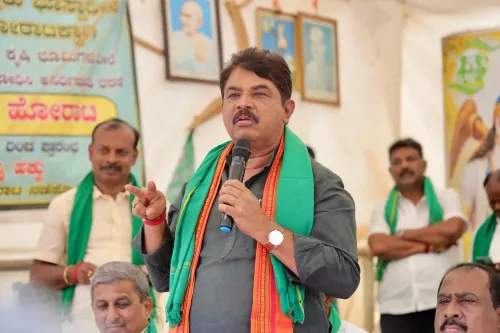
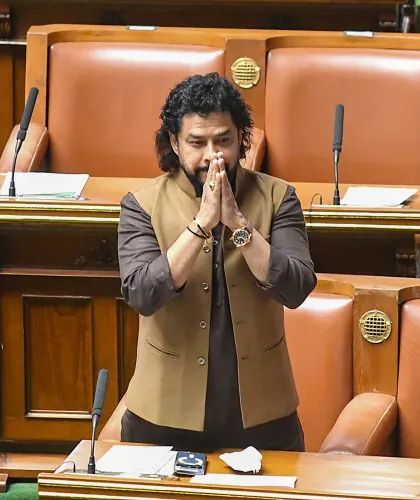
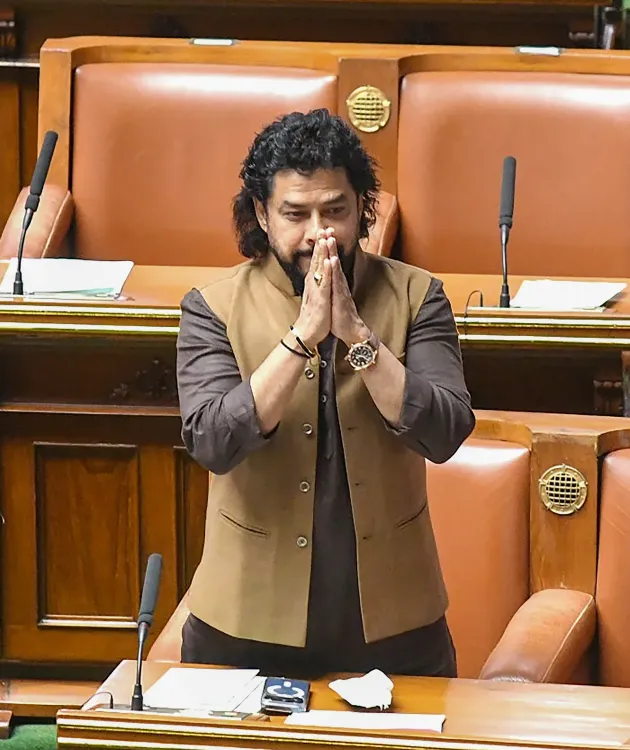
Karnataka Planning and Statistics Minister B. Nagendra on Friday, 28 August resigned from the state Cabinet, citing a desire to shield the Indian National Congress and its leadership from political fallout over the alleged Karnataka Maharshi Valmiki Scheduled Tribes Development Corporation scam. The announcement was made at a joint press conference at Vidhana Soudha in Bengaluru.
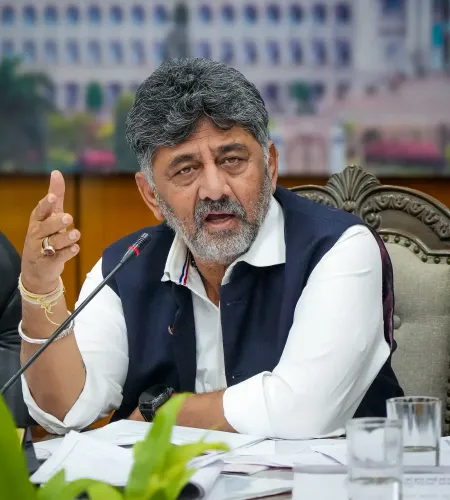
Nagendra, who became visibly emotional during the address, maintained his innocence and said the resignation was a personal decision, not an admission of guilt. He stated that Chief Minister D.K. Shivakumar had told him he was innocent and did not need to step down, but that he was proceeding regardless to protect the party.
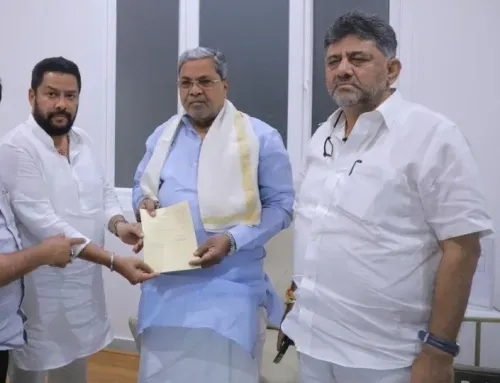
'Chief Minister D.K. Shivakumar has told me that I am innocent at all levels. But, on my own, and to ensure that the party is not embarrassed because of me, I am submitting my resignation letter to the Chief Minister,' Nagendra said.
Nagendra's Defence Against the Allegations
The outgoing minister strongly contested the charges, pointing out that multiple investigations — including by the CID and a Special Investigation Team (SIT) — had already been conducted. He noted that he had been arrested by the Enforcement Directorate (ED) and spent three months in jail before being released on bail. He also disclosed that his name appeared in the second chargesheet in the case but not the first.
'Have I signed anywhere? Have I issued any order? Have you recovered even one rupee from me?' he asked, directly challenging the allegations.
Nagendra further questioned the Governor's decision to grant sanction for prosecution against him while, he alleged, a similar request concerning Union Minister H.D. Kumaraswamy had been pending for years without action. 'Is this justice? Is there one rule for me and another for others?' he said.
Caste and Constitutional Arguments
Nagendra framed the controversy in sharp caste-political terms, alleging that the Bharatiya Janata Party (BJP) was deliberately targeting Dalits, Adivasis, women, Shudras, and minorities to prevent them from holding positions of power. He invoked the legacy of B.R. Ambedkar and the Constitution, arguing that discriminatory practices of the past could not be revived.
'This is not the age of the Shastras. This is the age of the Constitution and Babasaheb Ambedkar,' he said. He also cited the Ramayana episode of Shambuka to argue that caste-based discrimination had no place in constitutional India.
Nagendra also questioned why Union Finance Minister Nirmala Sitharaman should not resign, noting that Union Bank of India falls under the Union Finance Ministry — a reference that appeared aimed at drawing a parallel with his own situation.
Attack on BJP and Assembly Disruptions
Nagendra alleged that the BJP and other Opposition parties had deliberately disrupted the state Assembly session to prevent substantive debate on critical issues including drought, the Cauvery water dispute, the KPSC recruitment controversy, and the Kasturirangan report. He criticised the BJP's proposed padayatra over the Valmiki Corporation issue, calling it politically motivated.
He also referenced AICC president Mallikarjun Kharge — a senior Congress leader from Karnataka — saying the controversy should not put him in an embarrassing position.
What Comes Next
Nagendra said he would continue to present his case to the people, particularly in the 15 Assembly constituencies where the Scheduled Tribe community has a significant presence. He reiterated that he would appeal to the Congress high command and fight the allegations. The BJP has been intensifying pressure over the alleged irregularities in the Valmiki Corporation and is unlikely to ease its campaign following the resignation. How the Congress leadership responds — and whether further political or legal developments follow — will determine the trajectory of this controversy in the weeks ahead.
Point of View
He insulates the Congress from further Assembly disruptions while keeping himself in the public eye as a wronged Dalit leader. The caste framing is deliberate: it shifts the narrative from alleged financial irregularities to BJP culpability in suppressing marginalised communities, a potent argument in constituencies where ST voters are decisive. What mainstream coverage underplays is the Governor's selective prosecution sanction — if Nagendra's claim about the Kumaraswamy request going unacted is accurate, it raises serious questions about institutional neutrality that go beyond this one case.
NationPress
28 Aug 2026
Frequently Asked Questions
Why did Karnataka minister B. Nagendra resign?
B. Nagendra resigned as Karnataka Planning and Statistics Minister on 28 August to prevent the Congress party and its leadership from being embarrassed by the political controversy over the alleged Valmiki tribal welfare corporation scam. He maintained throughout that he was innocent and that the resignation was a personal decision, not an admission of guilt.
What is the Valmiki tribal welfare corporation scam?
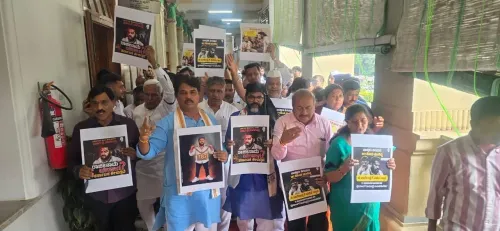
The controversy centres on alleged financial irregularities involving the Karnataka Maharshi Valmiki Scheduled Tribes Development Corporation. The BJP has demanded Nagendra's resignation and intensified protests over the issue. Nagendra has denied any role, noting that his name appeared in the second chargesheet in the case but not the first.
What legal action has been taken against Nagendra?
Nagendra was arrested by the Enforcement Directorate (ED) in connection with the case and spent three months in jail before being released on bail. He has said multiple investigations, including by the CID and a Special Investigation Team, have been conducted, and he disputes that any evidence of his direct involvement has been found.
What allegations did Nagendra make against the BJP?
Nagendra alleged that the BJP was deliberately targeting Dalits, Adivasis, women, Shudras, and minorities to prevent them from holding positions of power. He also alleged that the BJP disrupted the state Assembly session to block debate on issues such as drought, the Cauvery dispute, and the KPSC recruitment controversy.
What happens next after Nagendra's resignation?
Nagendra has said he will continue to fight the allegations, appeal to the Congress high command, and take his case to the people — particularly in 15 Assembly constituencies with significant Scheduled Tribe populations. The BJP is expected to maintain pressure over the Valmiki Corporation issue, and the legal proceedings are ongoing.