Trinamool Congress Challenges Chief Election Commissioner Gyanesh Kumar: Impeachment Motion Ahead?

Synopsis
Trinamool Congress MP Kirti Azad has voiced strong criticism against Chief Election Commissioner Gyanesh Kumar, supporting an impeachment motion due to perceived bias in the Election Commission's operations. This move reflects rising tensions in Indian politics as the opposition seeks to uphold electoral integrity.
Key Takeaways
Kirti Azad criticizes Chief Election Commissioner Gyanesh Kumar .
Trinamool Congress is considering an impeachment motion .
Allegations of bias against the Election Commission are central to the controversy.
Constitutional procedures for removal are stringent.
The situation reflects rising tensions in Indian politics.
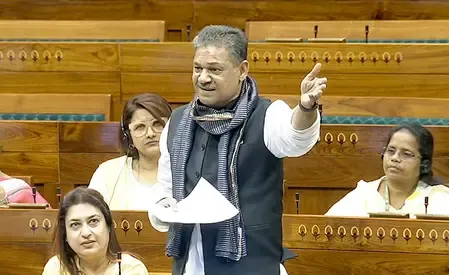
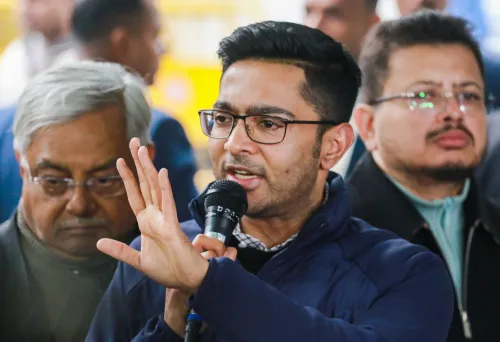
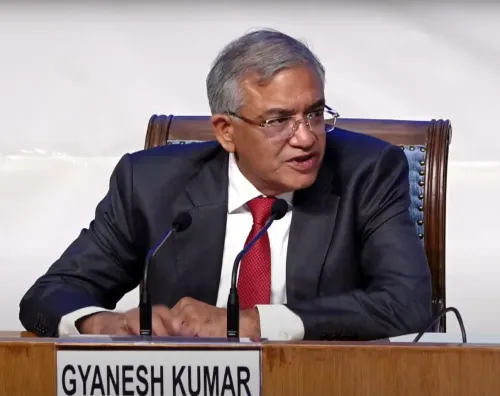
New Delhi, March 12 (NationPress) Trinamool Congress MP Kirti Azad has expressed his disapproval of Chief Election Commissioner Gyanesh Kumar and has backed the party's initiative to initiate an impeachment motion against him, claiming that the Election Commission is failing to operate with impartiality.
Speaking to IANS outside Parliament, Azad voiced concerns regarding the actions of the Chief Election Commissioner, which he believes jeopardize the neutrality of the electoral body.
"This is not merely the CEC; this is the Bharatiya Janata Party’s CEC. The manner in which the Election Commission operates, even after multiple observations from the Supreme Court, raises significant doubts," he stated.
Azad accused the Trinamool Congress delegation of being treated with disrespect during their meeting with officials.
"Our delegation that approached the Election Commission faced disrespectful treatment. They were spoken to inappropriately, and with women members present as well. The mentality behind their treatment is evident," he commented.
He further asserted that the Chief Election Commissioner's actions do not align with constitutional standards.
"The operational methods of the CEC appear unconstitutional. This is why we, alongside other opposition parties, are voicing our dissent," he added.
The Trinamool Congress is reportedly considering the option of bringing an impeachment motion against the Chief Election Commissioner in Parliament. For such a motion to proceed, it requires the signatures of at least 100 Lok Sabha Members of Parliament and a minimum of 50 MPs in the Rajya Sabha.
As per the 2023 legislation governing the appointment and duties of the Chief Election Commissioner and Election Commissioners, the CEC cannot be removed from office except through a procedure akin to that for removing a Supreme Court judge.
This stipulates that the removal of a Chief Election Commissioner necessitates an impeachment motion that must be approved by both Houses of Parliament. The motion requires a special majority—meaning a majority of the total House membership and a two-thirds majority of the members present and voting.
The debate surrounding the Election Commission has escalated in recent months, especially regarding the Special Intensive Revision (SIR) of electoral rolls. This process began in Bihar last year and has been implemented in several states, resulting in ongoing disputes between the opposition and the Election Commission.
In September 2025, Rahul Gandhi, the Leader of the Opposition in the Lok Sabha, accused the Chief Election Commissioner of "shielding vote thieves and undermining democracy." Gandhi conducted two press conferences where he alleged that the Election Commission failed to prevent the inclusion of questionable voters in Karnataka and Maharashtra, provoking strong reactions from the electoral body.
Opposition parties have also sought intervention from the Supreme Court to suspend the SIR process, claiming it favors the Bharatiya Janata Party. However, the Supreme Court did not halt the process, despite conducting thorough hearings on the involved procedures.
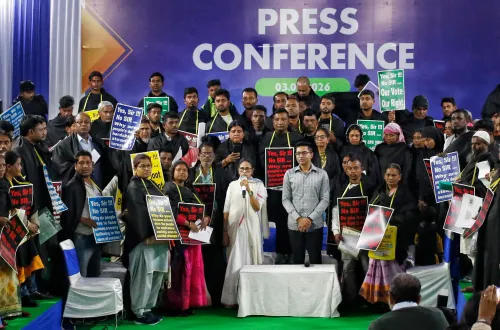
Last month, Mamata Banerjee, the Chief Minister of West Bengal, became the first Chief Minister to confront the SIR exercise in the Supreme Court.
"We have a singular objective—everyone must have the right to vote. We aim to safeguard voting rights for all. If anyone believes they can seize power through intimidation or by removing names from the voters' list, that will not happen," Banerjee asserted.
The Trinamool Congress had previously distanced itself from the Congress-led opposition's attempt to introduce a no-confidence motion against Lok Sabha Speaker Om Birla. However, the party later offered its support, anticipating reciprocal backing from the opposition in its efforts against the Chief Election Commissioner.
In the meantime, after the no-confidence motion against him was dismissed, Om Birla resumed his position as Speaker in the Lok Sabha and addressed the House amidst growing tensions between the ruling party and opposition factions.
Point of View
It highlights the increasing scrutiny of electoral processes in India. The implications of this action could resonate widely, impacting the political landscape significantly.
NationPress
3 Oct 2026
Frequently Asked Questions
What is the basis for the impeachment motion against Gyanesh Kumar?
The impeachment motion is based on allegations of bias and failure to function impartially by the Election Commission, as articulated by Trinamool Congress MP Kirti Azad.
What is required for an impeachment motion to proceed in Parliament?
An impeachment motion requires the signatures of at least 100 Lok Sabha MPs and 50 Rajya Sabha MPs to be considered.
What are the constitutional provisions for removing a Chief Election Commissioner?
The Chief Election Commissioner can only be removed through an impeachment motion that must pass in both Houses of Parliament with a special majority.
What controversies have arisen regarding the Election Commission recently?
Controversies have intensified over the Special Intensive Revision of electoral rolls, with opposition parties alleging bias in favor of the ruling party.
How have prominent political figures responded to the Election Commission's actions?
Leader of the Opposition Rahul Gandhi has accused the Chief Election Commissioner of undermining democracy, reflecting a growing concern among opposition parties.