AGMC to become Northeast's top medical hub: Tripura CM Manik Saha
Synopsis
Tripura CM Manik Saha used AGMC's 22nd Foundation Day to lay out an ambitious healthcare roadmap — 9 kidney transplants already done, liver and heart transplant facilities in the pipeline, a Health University on the way, and 81.7% child immunisation coverage in just two months. For a state that once sent patients outside for routine procedures, the shift is significant.
Key Takeaways
Tripura CM Manik Saha pledged to make AGMC and GBP Hospital the Northeast's leading medical education and research hub, speaking at the college's 22nd Foundation Day on 1 August .
Nine kidney transplant surgeries have been successfully performed in Tripura; liver and heart transplant facilities are in the pipeline.
MBBS seats in government medical colleges have increased manifold, with new specialised courses and expanded postgraduate programmes added.
An independent Health University is being established; the process is described as progressing rapidly.
Child immunisation coverage reached 81.7% during April–May 2026–27 ; patient attendants at GBP Hospital now receive meals at just ₹10 per meal .
Flagship schemes including PM-JAY , Ayushman Bharat , and Mukhyamantri Sarvajan Arogya Abhiyan are cited as key drivers of expanded healthcare access.
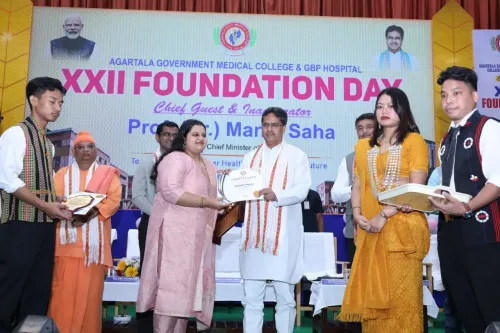
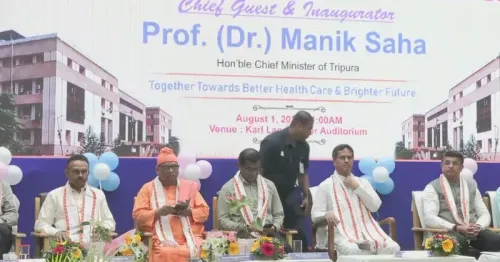
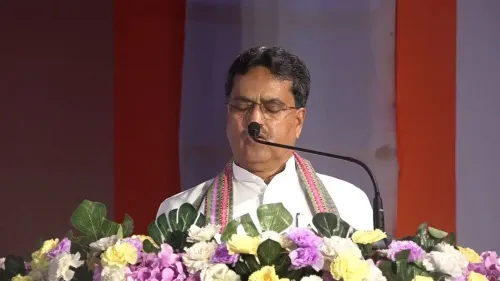
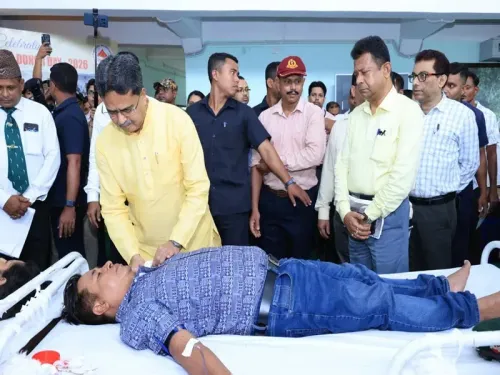
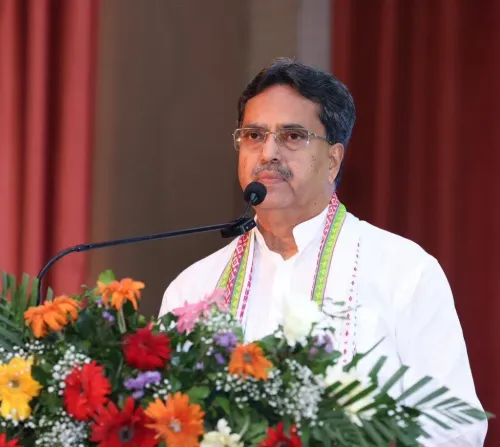
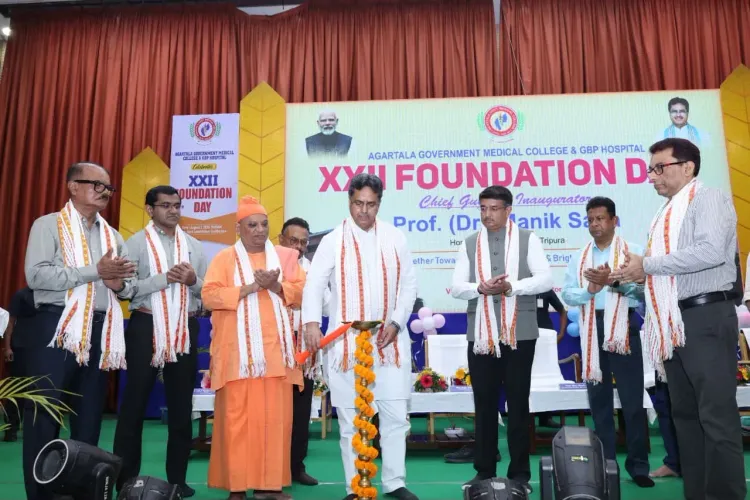
Tripura Chief Minister Manik Saha on Saturday, 1 August declared that the state government is committed to transforming the Agartala Government Medical College (AGMC) and Govind Ballabh Pant (GBP) Hospital into one of the foremost medical education, research, and super-speciality healthcare institutions in Northeast India. Saha made the remarks while addressing the 22nd Foundation Day celebrations of AGMC and GBP Hospital — Tripura's first medical college.
From a Distant Dream to Regional Landmark
Inaugurating the Foundation Day programme, Saha recalled that establishing a government medical college in Tripura was once considered an unattainable goal. AGMC, he said, has since grown into one of the most significant medical institutions in the Northeast, contributing across healthcare delivery, medical education, research, and super-speciality services.
The Chief Minister, who also holds the Health and Family Welfare portfolio and is himself a dental surgeon, emphasised that medical institutions are not merely disease-treatment centres but platforms for humanitarian service, knowledge generation, and the promotion of human values.
Expansion of Medical Education in Tripura
Saha highlighted a marked increase in medical education capacity under the state government's watch. MBBS seats in government medical colleges have increased manifold, he said, while capacity at the Government Dental College has been enhanced and postgraduate medical education has grown alongside new specialised courses.
'Today, the total number of MBBS seats in government medical colleges has increased manifold. Expansion of seats at AGMC, capacity enhancement in the Government Dental College, growth of postgraduate medical education and introduction of new specialised courses have opened up opportunities for aspiring medical students,' Saha said.
He added that the process of establishing an independent Health University is progressing rapidly. 'Once the proposed Health University becomes operational, Tripura will take another significant step forward in medical education, research and the development of skilled healthcare professionals,' he said.
Complex Surgeries Now Performed Locally
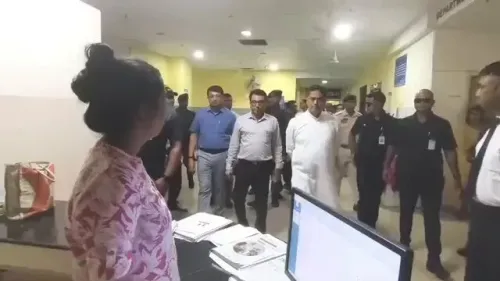
Saha pointed to a tangible shift in the state's clinical capabilities. Patients who were previously referred outside Tripura even for relatively straightforward procedures can now be treated locally. Nine kidney transplant surgeries have already been successfully performed in the state, and the government is working to introduce liver and heart transplant facilities in the coming years.
'Today, because of the expertise, dedication and use of modern medical technology, even highly complex surgeries are being successfully conducted at AGMC and GBP Hospital. As a result, referrals outside the state have come down significantly,' he said.
Flagship Health Schemes and Public Health Metrics
Saha credited coordinated efforts between the Centre and the state government, under Prime Minister Narendra Modi, for strengthening healthcare infrastructure across Tripura. He cited several flagship schemes — Pradhan Mantri Jan Arogya Yojana (PM-JAY), Mukhyamantri Jan Arogya Yojana, Ayushman Bharat, and Mukhyamantri Sarvajan Arogya Abhiyan — as key drivers of improved access.
On public health outcomes, Saha noted that during April–May of the 2026–27 financial year, approximately 81.7 per cent of children were covered under the complete immunisation programme. He also announced a subsidised mid-day meal facility for patient attendants at GBP Hospital at just ₹10 per meal, alongside the ongoing construction of a Bharat Mata Canteen and a modern night shelter at the facility.
With a proposed Health University on the horizon and transplant services in the pipeline, Tripura's medical ambitions appear to be moving well beyond the Northeast's conventional healthcare benchmarks.
Point of View
But no external audit or National Health Mission data was cited. The nine kidney transplants are a genuine milestone for a state that previously referred patients elsewhere for far less complex procedures, yet the timeline for liver and heart transplant facilities remains vague. The proposed Health University could be transformative, but Tripura has announced institutional expansions before that moved slowly once the political moment passed. The real test of AGMC's Northeast ambitions will be whether it can retain specialist talent — the chronic bottleneck for tier-2 state medical colleges across India.
NationPress
16 Sept 2026
Frequently Asked Questions
What is AGMC and why is it significant for Northeast India?
The Agartala Government Medical College (AGMC) is Tripura's first government medical college, now in its 22nd year. Tripura CM Manik Saha describes it as one of the most important medical institutions in the Northeast, offering healthcare delivery, medical education, research, and super-speciality services.
What medical milestones has Tripura achieved at AGMC and GBP Hospital?
Nine kidney transplant surgeries have been successfully performed in Tripura, and the state government is working to introduce liver and heart transplant facilities. Complex surgeries that previously required referrals outside the state are now being conducted locally at AGMC and GBP Hospital.
What is the proposed Health University in Tripura?
The Tripura government is in the process of establishing an independent Health University, which CM Saha says will advance medical education, research, and the training of skilled healthcare professionals. The process is described as progressing rapidly, though no specific launch date has been announced.
How has medical education capacity expanded in Tripura?
MBBS seats in government medical colleges have increased manifold, according to CM Saha. The Government Dental College has also seen capacity enhancement, and new postgraduate and specialised courses have been introduced, opening more opportunities for medical students in the state.
What welfare facilities are available for patients at GBP Hospital?
GBP Hospital has introduced a subsidised mid-day meal facility for patient attendants at just ₹10 per meal. Construction of a Bharat Mata Canteen and a modern night shelter at the hospital is also currently underway.