CM Manik Saha Launches Universal Bicycle Scheme for 41,800 Tripura Girls
Synopsis
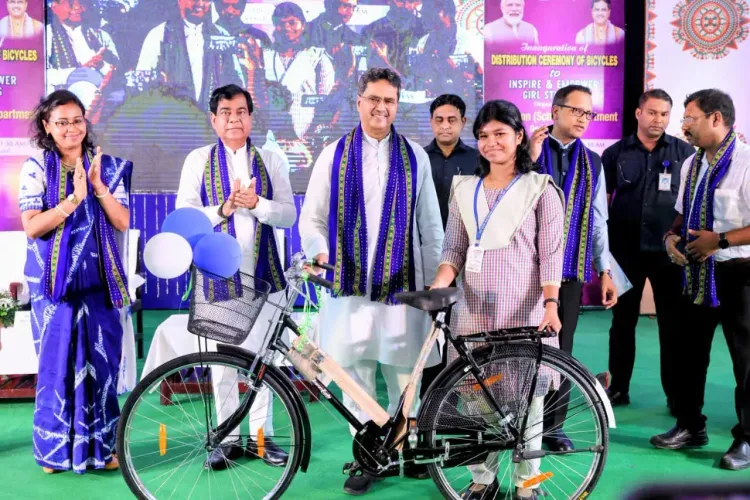
Tripura CM Dr. Manik Saha on June 15 inaugurated a statewide bicycle distribution drive at Agartala's Shishu Bihar School. The Free Bicycle Distribution Scheme for Class IX girls has been made universal by removing the family income ceiling, with 41,800 students set to benefit this year.
Key Takeaways
41,800 Class IX girl students across Tripura will receive free bicycles in 2026 under the expanded scheme.
The family income ceiling has been removed, making the scheme universally accessible to all eligible Class IX girls.
Manik Saha inaugurated the statewide distribution on June 15, 2026 at Shishu Bihar School, Agartala .
The scheme is framed under the Nari Shakti and Beti Bachao Beti Padhao policy framework championed by PM Narendra Modi .
Bicycle schemes have a proven track record of improving girls' secondary-school attendance across Indian states since Bihar's 2007 pilot.
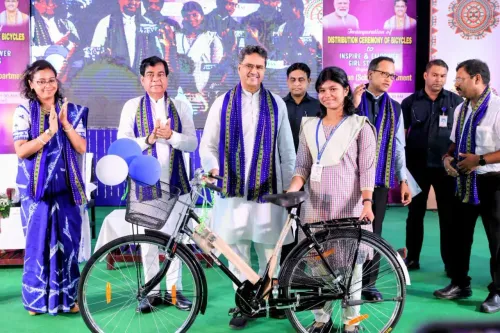
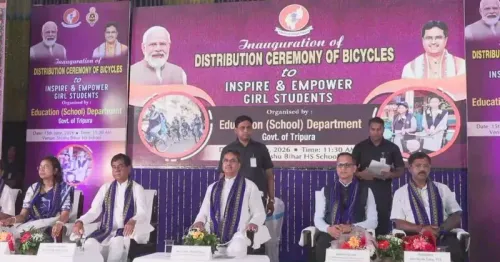
Tripura Chief Minister Dr. Manik Saha on Monday, June 15, 2026, inaugurated a statewide bicycle distribution drive at Shishu Bihar School, Agartala, marking a significant expansion of the state's Free Bicycle Distribution Scheme for Class IX girls. The government has removed the previous family income ceiling from the scheme, making it universally accessible to all eligible students across the state.
Context
Announcing the initiative on social media, Dr. Saha stated that 41,800 girl students across Tripura will receive free bicycles this year under the expanded programme. He described the move as part of the government's commitment to ensuring 'every girl has the opportunity to learn, grow, and succeed,' citing the guiding vision of Prime Minister Narendra Modi and the broader Nari Shakti framework. The inauguration at Shishu Bihar School served as the formal launch point for the statewide rollout.
The most consequential change in this cycle of the scheme is the scrapping of the family income limit that previously restricted eligibility. By removing this barrier, the Tripura government has shifted the programme from a targeted welfare measure to a universal entitlement for all Class IX girls enrolled in eligible schools.
Policy Backdrop
Bicycle distribution schemes for adolescent girls have a well-established lineage in Indian state policy. Bihar pioneered the model with its Mukhyamantri Balika Cycle Yojana in 2007, demonstrating measurable improvements in girls' secondary-school attendance. Multiple states subsequently adopted similar interventions, particularly targeting rural and semi-urban areas where distance to school is a primary driver of dropout rates.
At the national level, the Beti Bachao Beti Padhao scheme, launched in 2015, provided a policy and messaging framework that aligned state-level girl-child education initiatives with central government priorities. Tripura's current expansion — removing the income ceiling — reflects a broader pattern of states deepening existing schemes rather than creating new ones, ensuring wider coverage without administrative exclusions.
Stakeholders and Impact
The direct beneficiaries are 41,800 Class IX girl students enrolled across Tripura, with the scheme administered through the state's school education department. For families in rural and semi-urban pockets of the state, the cost and logistics of daily school commutes represent a real barrier to consistent attendance; a bicycle addresses both distance and time constraints.
By eliminating the income ceiling, the government also removes the documentation burden that often deters eligible families from applying under means-tested schemes. This universalisation is likely to simplify implementation for school administrators and district officials, reducing the scope for exclusion errors at the ground level.
What's Next
The immediate measure of success will be changes in Class IX enrolment, attendance, and retention rates in Tripura in the academic year following the distribution. Education departments typically track these metrics through mid-year and annual school surveys. Any significant improvement could prompt other northeastern states to replicate the universalisation model, particularly the removal of income-based eligibility filters. Dr. Saha expressed confidence that the initiative will 'encourage regular school attendance, strengthen access to education, and inspire our daughters to pursue their dreams with greater confidence and determination.'
Point of View
Reducing exclusion errors and the stigma often associated with means-tested benefits. For the BJP government in Agartala, it also provides a tangible, visible deliverable on the Nari Shakti narrative ahead of any electoral cycle. The alignment with PM Modi's Beti Bachao Beti Padhao framework is deliberate, allowing the state to leverage national messaging while claiming a distinctive policy upgrade. Whether the intervention translates into measurable retention gains will depend on complementary factors — school infrastructure, teacher availability, and safety on rural roads — that a bicycle alone cannot address.
NationPress
27 Sept 2026
Frequently Asked Questions
Who will benefit from Tripura's Free Bicycle Distribution Scheme in 2026?
41,800 Class IX girl students across Tripura will receive free bicycles in 2026 under the scheme inaugurated by Chief Minister Dr. Manik Saha on June 15, 2026 .
What change was made to the Tripura bicycle scheme for girls?
The family income ceiling that previously restricted eligibility has been removed, making the Free Bicycle Distribution Scheme universally accessible to all eligible Class IX girls in Tripura regardless of household income.
Where was the Tripura bicycle distribution scheme inaugurated?
Chief Minister Dr. Manik Saha inaugurated the statewide bicycle distribution programme at Shishu Bihar School in Agartala , the capital of Tripura.
What is the Nari Shakti initiative mentioned by Tripura CM Manik Saha?
Nari Shakti is the overarching policy and messaging framework promoted by Prime Minister Narendra Modi that emphasises women's empowerment, including girls' education, as a national priority. State schemes like Tripura's bicycle distribution are framed under this vision.
Which other Indian states have similar free bicycle schemes for girls?
Bihar pioneered the model with its Mukhyamantri Balika Cycle Yojana in 2007 to improve girls' secondary-school attendance, and multiple Indian states have since adopted comparable bicycle distribution schemes targeting adolescent girls.