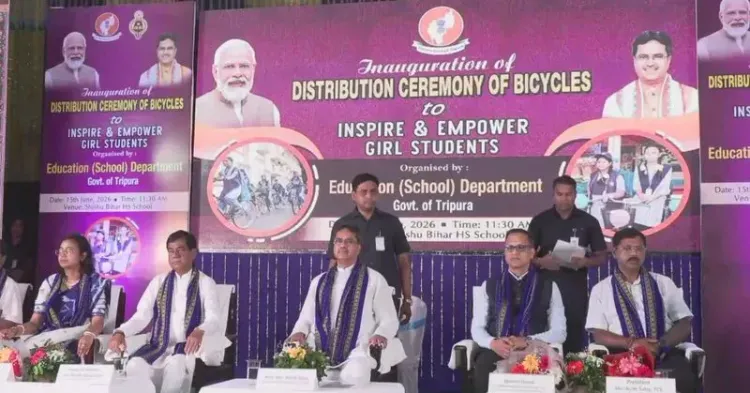
CM Manik Saha addresses bicycle distribution for Class 9 girls in Tripura
Synopsis
Tripura Chief Minister Dr. Manik Saha addressed a bicycle distribution event for ninth-grade girl students on 15 June 2026, continuing a long-standing Indian policy tradition of using cycle schemes to improve girls' access to secondary education and reduce dropout rates.
Key Takeaways
Manik Saha spoke at a bicycle distribution ceremony for Class 9 girl students on 15 June 2026 .
The CM broadcast his address live, underscoring the administration's emphasis on visible welfare delivery.
Bicycle schemes for adolescent girls date to Bihar's Mukhyamantri Balika Cycle Yojana of 2006 , a model widely replicated across Indian states.
The programme targets school access and aims to reduce dropout rates among girls in semi-urban and rural Tripura .
Enrolment and dropout data for 2025-26 will be a key indicator of the scheme's measurable impact.
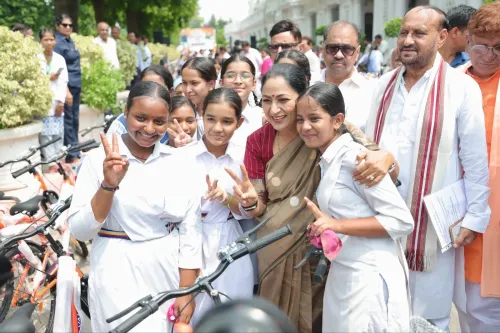
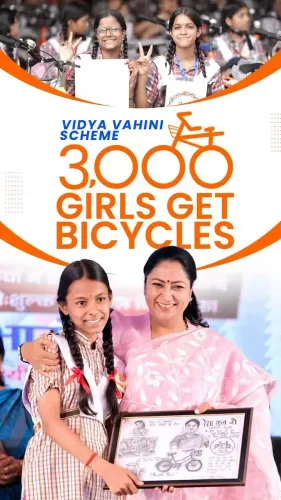
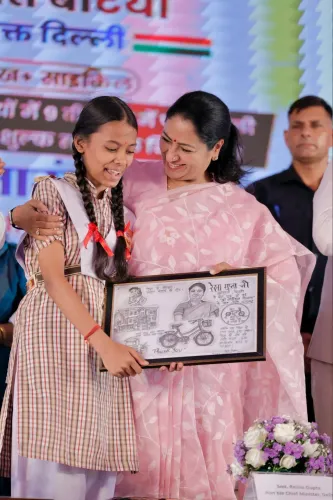
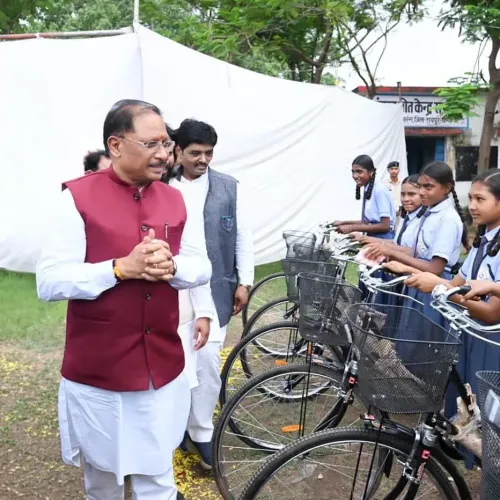
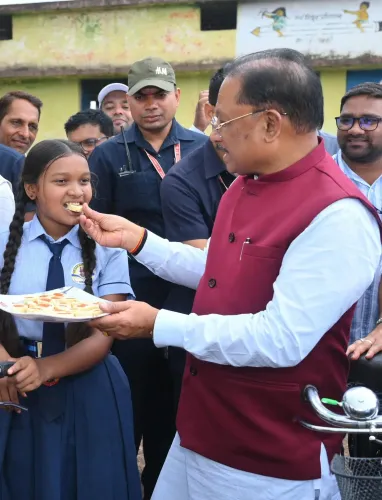
Tripura Chief Minister Dr. Manik Saha on Monday, 15 June 2026, addressed a bicycle distribution ceremony for ninth-grade girl students in Tripura, sharing his participation live on social media.
In his post, Dr. Saha wrote in Bengali: 'নবম শ্রেণির ছাত্রীদের মধ্যে বাইসাইকেল বিতরণ অনুষ্ঠানে বক্তব্য রাখছি' — meaning, 'I am speaking at the bicycle distribution event for ninth-grade girl students.'
Context
The event marks the Tripura government's effort to place bicycles directly in the hands of adolescent girls enrolled in Class 9. Such ceremonies are typically organised by the state's education or social welfare department and are aimed at easing the daily commute for girl students, particularly in semi-urban and rural pockets of the state.
Dr. Saha's presence at the distribution event — and his choice to broadcast his address live — signals the administration's intent to keep welfare delivery visible at the highest level of the government.
Policy Backdrop
Bicycle distribution schemes for adolescent girls have a long lineage in Indian state policy. Bihar pioneered the model with its Mukhyamantri Balika Cycle Yojana in 2006, designed to curb dropout rates among secondary school girls by reducing the distance barrier to school attendance.
Over the following two decades, several states adopted similar programmes, recognising that access to reliable, low-cost personal transport meaningfully raises secondary enrolment rates and narrows gender gaps in education. In Tripura, which has been governed by the BJP since 2018, targeted welfare schemes for girls and women have formed a consistent strand of social policy under Dr. Saha's administration since he assumed office in 2022.
Stakeholders and Impact
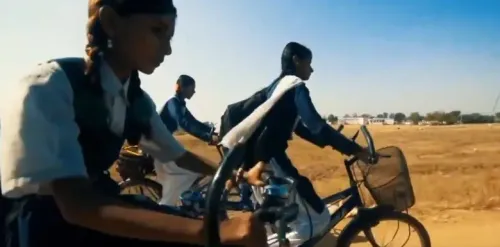
The immediate beneficiaries are ninth-grade girl students across Tripura, many of whom attend schools at distances that are difficult to cover on foot, especially in the state's hilly and forested interior. A bicycle can reduce travel time significantly, lower the risk of dropout, and give adolescent girls a degree of independent mobility.
Parents, school administrations, and local panchayat bodies are secondary stakeholders — for them, the scheme lowers household transport costs and can improve attendance figures that feed into state education metrics. Civil society groups working on gender equity in the Northeast have consistently flagged school access as a priority concern, making programmes of this kind a point of convergence between government and advocacy agendas.
What's Next
Attention will now turn to the Tripura education department's enrolment and dropout data for the 2025-26 academic year, which will offer a measurable baseline against which the scheme's impact can be assessed. Observers will also watch for any government announcement extending the bicycle programme to additional classes or districts beyond the current cohort of Class 9 girls.
With the academic calendar well under way, the timing of the distribution suggests the state is prioritising delivery before mid-year attendance patterns solidify — a window when interventions tend to have the greatest effect on retention.
Point of View
Simultaneously addressing a genuine access gap and generating goodwill among a demographic that has become increasingly decisive in state elections. For a BJP government in Tripura heading deeper into its second term, such targeted, photographable welfare moments serve a dual purpose: signalling administrative performance to the electorate and reinforcing a narrative of inclusive development in a state where gender equity in education still has measurable ground to cover.
NationPress
14 Sept 2026
Frequently Asked Questions
Why is the Tripura government distributing bicycles to Class 9 girl students?
The Tripura government is distributing bicycles to ninth-grade girl students to ease their daily commute to school, reduce dropout rates, and improve secondary enrolment among adolescent girls, particularly in rural and semi-urban areas of the state.
What is the bicycle scheme for girl students in Tripura?
The Tripura government runs a bicycle distribution programme targeting girl students in Class 9. The exact name and scale of the scheme have not been officially confirmed in public records available to date, but it follows a model pioneered by Bihar's Mukhyamantri Balika Cycle Yojana in 2006.
Who attended the bicycle distribution ceremony on 15 June 2026 in Tripura?
Tripura Chief Minister Dr. Manik Saha personally addressed the bicycle distribution ceremony for ninth-grade girl students on 15 June 2026 and shared his participation live on social media.
How do bicycle schemes help reduce school dropout rates among girls in India?
Bicycles reduce the time and physical effort required to travel to school, which is a significant barrier for girls in areas with limited public transport. Research and state-level data from programmes like Bihar's cycle scheme have shown improvements in secondary school attendance and reductions in dropout rates after such interventions.
What is Dr. Manik Saha's role in Tripura?
Dr. Manik Saha has been the Chief Minister of Tripura since 2022. He leads a BJP-led state government that has been in power in Tripura since 2018.