Has Tripura Surpassed 7 MW in Rooftop Solar Generation Under the PM Surya Ghar Scheme?
Click to start listening
Synopsis
Tripura's renewable energy sector celebrates a breakthrough as it exceeds 7 MW of solar generation under the PM Surya Ghar scheme. This achievement not only highlights public engagement in sustainable energy practices but also sets the stage for future advancements in solar power across the state.
Key Takeaways
- Tripura has achieved over 7 MW of solar energy generation.
- Public engagement in renewable energy practices is increasing.
- Subsidies make rooftop solar installations financially viable for many.
- Excess energy can be sold back to the grid, providing additional income.
- The state aims to expand solar power capacity significantly in the coming year.
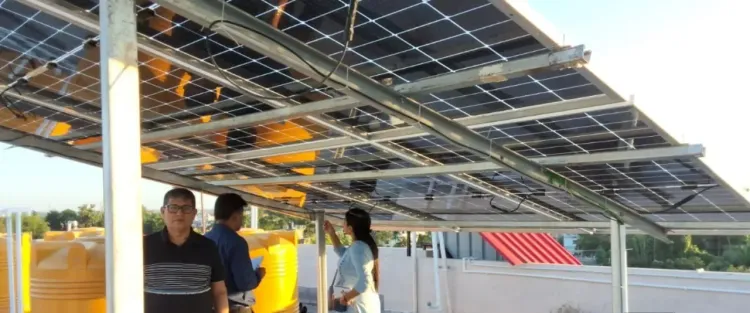
Agartala, Jan 24 (NationPress) Tripura has marked a remarkable achievement in the renewable energy landscape by surpassing 7 megawatts (MW) of solar power generation under the Pradhan Mantri Surya Ghar Muft Bijli Yojana (PMSGMBY), according to officials on Saturday.
The spokesperson for Tripura State Electricity Corporation Limited (TSECL), Bipul Bhowmik, hailed this accomplishment as a historic milestone in the state's progress toward energy independence and sustainable growth.
The official noted that the electricity produced from rooftop solar setups across Tripura has officially exceeded 7 MW, showcasing a rising engagement from the public in renewable energy projects.
Beyond just the figures, this advancement indicates Tripura's gradual shift toward clean energy and a lesser reliance on traditional power sources, as stated by the spokesperson.
Bhowmik emphasized that the PMSGMBY scheme has created unparalleled opportunities for electricity users.
By opting for rooftop solar panels, households can not only eliminate their electricity expenses but also generate extra income by sending surplus energy back to the government grid.
Initiated by Prime Minister Narendra Modi on February 13, 2024, the scheme's objective is to convert homes into mini power generation units.
Its dual goals include alleviating the financial strain of power bills and fostering renewable energy for an environmentally friendly future, according to the spokesperson.
Highlighting the positive public reaction in Tripura, the TSECL Spokesman mentioned that 17,601 electricity users have already enrolled in the PM Surya Ghar scheme.
Among these, rooftop solar installations have been finalized in 2,061 homes, while 1,746 beneficiaries have received government subsidies.
The scheme allows consumers to avail subsidies of up to Rs 85,800, rendering the adoption of rooftop solar economically feasible, especially for middle- and lower-income families.
Energy specialists assert that even a 1-kilowatt solar plant can produce an average of about 100 units of electricity monthly, sufficient to meet the power needs of a typical household.
Any excess electricity can be fed back to the grid, offering consumers additional earnings and long-term savings.
TSECL has been instrumental in facilitating the scheme by providing technical assistance, conducting awareness campaigns, and optimizing installation and grid connectivity procedures.
The official indicated that the corporation aims to boost Tripura's solar power generation capacity to 50 MW within the coming year.
"If realized, this would bring about a transformative shift in the state's energy sector and significantly enhance its renewable energy landscape," the spokesperson added.
As electricity prices continue to climb, officials from the power department suggest that rooftop solar energy is emerging as a viable route to financial autonomy.
TSECL has encouraged consumers to take advantage of the scheme by registering via the official government website or visiting the nearest corporation office.
Additionally, Tripura Power Minister Ratan Lal Nath recently stated that if five lakh households adopt 2 kW rooftop solar panels, the state could produce nearly 1,000 MW of power daily, significantly increasing energy self-sufficiency.
He also noted that solar power systems are being installed in 2,000 government buildings, a project expected to conclude next year and generate around 80 MW of electricity.
Point of View
I believe that Tripura's achievement in solar energy generation under the PM Surya Ghar scheme exemplifies a positive shift towards sustainable energy practices. This initiative not only supports the state's energy independence but also encourages public participation in renewable energy, setting a precedent for other states to follow.
NationPress
25/01/2026
Frequently Asked Questions
What is the PM Surya Ghar scheme?
The PM Surya Ghar scheme aims to encourage households to install rooftop solar panels, promoting renewable energy generation while providing financial support through subsidies.
How much solar energy has Tripura generated?
Tripura has surpassed 7 megawatts (MW) of solar electricity generation under the PM Surya Ghar scheme.
What financial assistance is available for rooftop solar installations?
Consumers can receive subsidies of up to Rs 85,800, making rooftop solar adoption affordable for many households.
What are the benefits of installing rooftop solar panels?
Households can reduce their electricity bills and earn additional income by selling surplus electricity back to the grid.
How many households are participating in the PM Surya Ghar scheme?
As of now, 17,601 electricity consumers have registered under the PM Surya Ghar scheme.