Two cheetahs to enter Veerangana Durgavati Reserve on October 7
Synopsis
India's cheetah rewilding programme just crossed 60 animals — and now it's spreading geographically. With CM Mohan Yadav set to release 'Tholo' and 'CCB-3' into Veerangana Durgavati Tiger Reserve on October 7, Madhya Pradesh will have three distinct cheetah habitats. The move, coming a day after five new cubs were born at Kuno, marks the most ambitious territorial expansion of Project Cheetah since its 2022 launch.
Key Takeaways
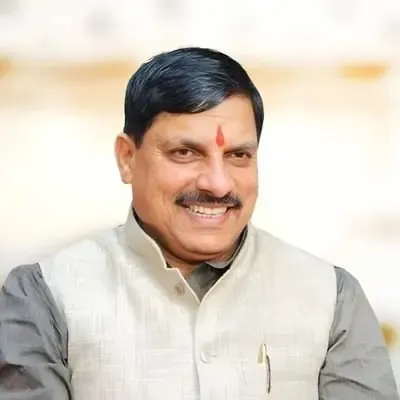
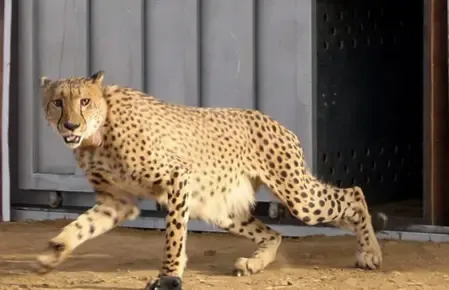
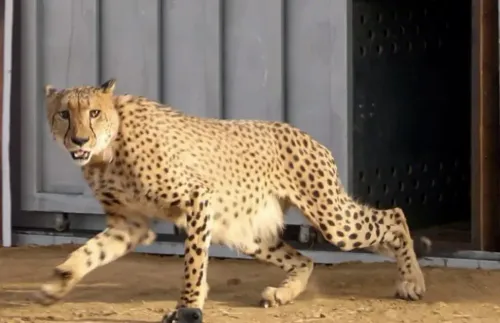
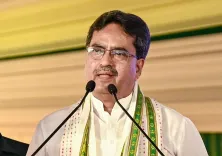
Chief Minister Mohan Yadav will release cheetahs 'Tholo' (male) and 'CCB-3' (female) into Veerangana Durgavati Tiger Reserve on 7 October 2026 .
The reserve becomes Madhya Pradesh's third cheetah habitat , after Kuno National Park and Gandhi Sagar Wildlife Sanctuary.
India's total cheetah population has reached 60 , including 41 born in India ; all are currently in Madhya Pradesh.
Five cubs were born at Kuno National Park on 5 October 2026 to India-born female cheetah KJP21 .
The cheetahs will be housed in a 439-hectare enclosure; the reserve spans 2,339 sq km across Sagar, Damoh, and Narsinghpur districts.
Project Cheetah was launched on 17 September 2022 with eight Namibian cheetahs; the species was declared extinct in India in 1952 .
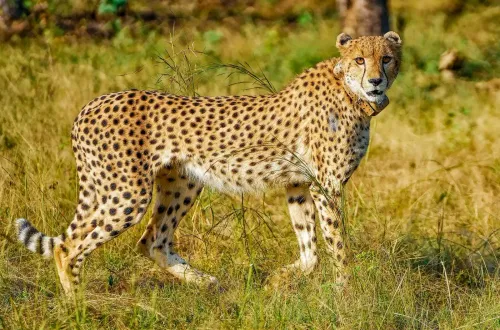
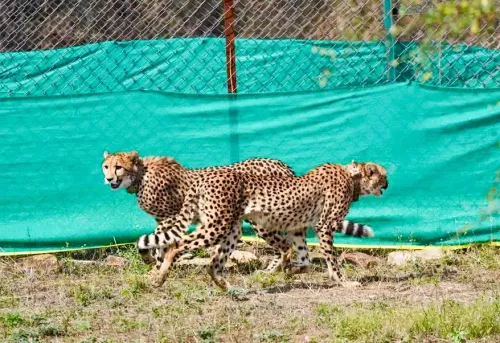
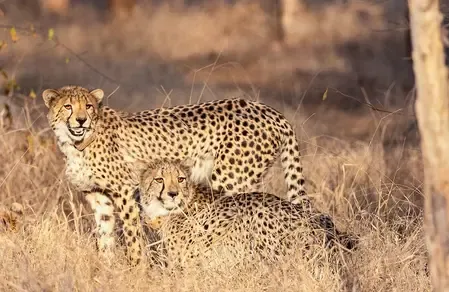
Two cheetahs from Kuno National Park — male cheetah 'Tholo' and female cheetah 'CCB-3' — are set to be relocated to the Veerangana Durgavati Tiger Reserve in Madhya Pradesh on 7 October 2026. Chief Minister Mohan Yadav will formally release the pair into the reserve, making it the third cheetah habitat in the state after Kuno and Gandhi Sagar Wildlife Sanctuary.
The New Habitat
The two cheetahs will initially be housed in a 439-hectare enclosure specially prepared by the state Forest Department, equipped with bomas and supporting infrastructure to ensure safe acclimatisation. Regular monitoring and dedicated healthcare arrangements have also been put in place, according to a state government statement.
Veerangana Durgavati Tiger Reserve spans approximately 2,339 square kilometres across the districts of Sagar, Damoh, and Narsinghpur, making it the largest tiger reserve in Madhya Pradesh. Formerly known as the Nauradehi Tiger Reserve, the reserve received its current status in September 2023 following the integration of the Nauradehi Wildlife Sanctuary. It is named after Rani Durgavati, the 16th-century Gond queen celebrated for her resistance against Mughal forces.
India's Cheetah Count Reaches 60
The relocation comes just a day after a significant milestone at Kuno: on 5 October 2026, India-born female cheetah KJP21 gave birth to five cubs, pushing India's total cheetah population to 60 — of whom 41 were born on Indian soil. All 60 cheetahs currently reside within Madhya Pradesh.
Following the transfer, the distribution across habitats will be: Kuno National Park — 54, Gandhi Sagar Wildlife Sanctuary — 4, and Veerangana Durgavati Tiger Reserve — 2.
Project Cheetah: Background and Progress
Project Cheetah was launched on 17 September 2022 when eight cheetahs from Namibia were released into Kuno National Park — the first intercontinental translocation of a large carnivore in history. An additional 12 cheetahs were brought from South Africa in 2023. The cheetah was declared extinct in India in 1952, and the project aims to re-establish a self-sustaining population in the wild.
Notably, the reserve is also home to tigers, leopards, chital, sambar, nilgai, and bears, as well as being a critical habitat for several endangered vulture species — underscoring the ecological richness of the site chosen for expansion.
Tourism and Regional Impact
The state government has indicated that the cheetah introduction is expected to boost wildlife tourism in the Sagar-Bundelkhand region, an area that has historically lagged behind Madhya Pradesh's more established forest circuits. The move signals a deliberate strategy to spread conservation and tourism dividends beyond the Kuno corridor.
With Veerangana Durgavati now joining the cheetah map, India's rewilding effort is expanding its geographic footprint — and the next phase will likely determine whether distributed habitats can sustain the species long-term.
Point of View
Which is sound conservation logic. Yet the real test is capacity: with 54 cheetahs still at Kuno and only a 439-hectare acclimatisation enclosure at Durgavati, the bottleneck is habitat quality, not political will. India's booming in-country birth rate — 41 of 60 cheetahs now born here — is a genuine conservation win, but it also means the pressure to find suitable land will intensify faster than the programme anticipated. Whether the Sagar-Bundelkhand tourism pitch translates into the sustained funding that serious rewilding demands remains the unanswered question.
NationPress
7 Oct 2026
Frequently Asked Questions
Which cheetahs are being released into Veerangana Durgavati Tiger Reserve?
Male cheetah 'Tholo' and female cheetah 'CCB-3', both from Kuno National Park, will be released into Veerangana Durgavati Tiger Reserve on 7 October 2026 by Chief Minister Mohan Yadav. They will initially be housed in a 439-hectare enclosure prepared by the state Forest Department.
How many cheetahs does India have now?
India's cheetah population stands at 60 as of October 2026, including 41 born on Indian soil. All 60 are currently in Madhya Pradesh, distributed across Kuno National Park (54), Gandhi Sagar Wildlife Sanctuary (4), and soon Veerangana Durgavati Tiger Reserve (2).
What is Project Cheetah and when was it launched?
Project Cheetah is India's programme to re-establish a wild cheetah population after the species was declared extinct in the country in 1952. It was launched on 17 September 2022 with the release of eight Namibian cheetahs into Kuno National Park, followed by 12 more from South Africa in 2023.
What is the Veerangana Durgavati Tiger Reserve?
Veerangana Durgavati Tiger Reserve is the largest tiger reserve in Madhya Pradesh, spanning approximately 2,339 square kilometres across Sagar, Damoh, and Narsinghpur districts. Formerly known as Nauradehi Tiger Reserve, it received its current status in September 2023 and is named after 16th-century Gond queen Rani Durgavati.
Why is the cheetah being moved to a new reserve?
The relocation is part of a strategy to expand cheetah habitats beyond Kuno National Park and reduce the risk of population loss concentrated in a single location. The state government has also cited wildlife tourism development in the Sagar-Bundelkhand region as an additional objective.