Two cheetahs released at Rani Durgavati Tiger Reserve as MP opens third habitat
Synopsis
Madhya Pradesh has taken its cheetah reintroduction programme into uncharted territory — literally. For the first time, two cheetahs have been placed in a tiger-sharing landscape at Rani Durgavati Tiger Reserve, now the programme's third habitat. With the state population growing from 8 to 60, and two more animals due next month, India's boldest wildlife experiment is accelerating.
Key Takeaways
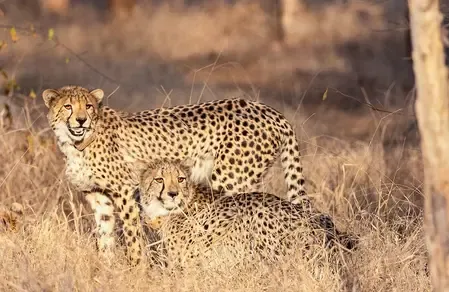
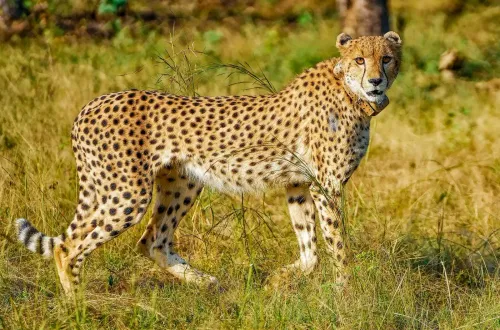
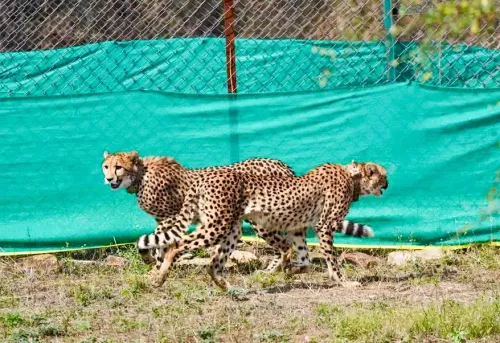
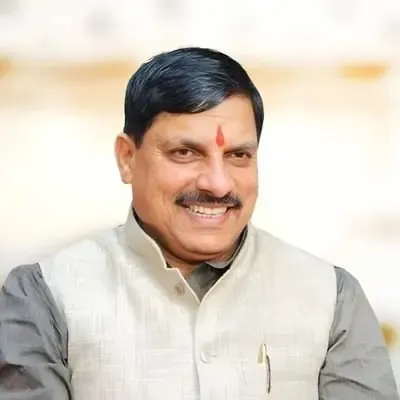
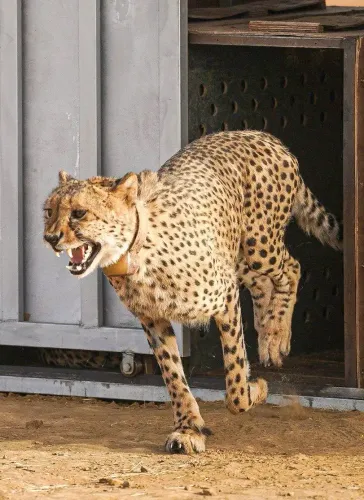
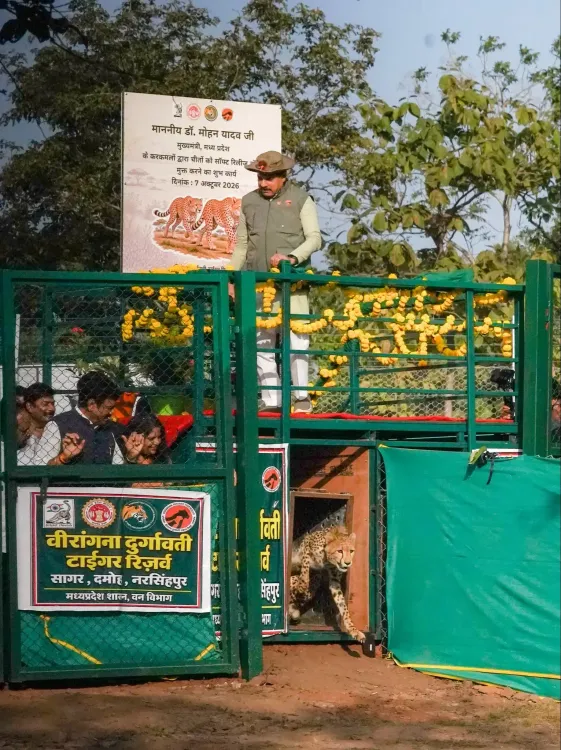
Chief Minister Mohan Yadav released cheetahs Vyom (male) and Neera (female) at Rani Durgavati Tiger Reserve , Sagar , on 7 October 2026 .
This is the third cheetah habitat in Madhya Pradesh, after Kuno National Park and Gandhi Sagar Wildlife Sanctuary .
Notably, tigers are already present at Rani Durgavati — a first for the programme.
Madhya Pradesh's cheetah population has grown from 8 to 60 since the project launched in 2022 .
Two more cheetahs are due at the reserve next month .
State sanctuaries collected ₹80 crore in revenue this year; ₹20 crore was shared with local communities.
Madhya Pradesh expanded its cheetah reintroduction programme to a third habitat on 7 October 2026, as Chief Minister Mohan Yadav released male cheetah Vyom and female cheetah Neera at the Rani Durgavati Tiger Reserve in Sagar. The milestone marks a significant step in India's cheetah conservation effort — the animals have been introduced into a reserve where tigers are already present, a first for the programme.
Why This Release Is Different
The Rani Durgavati Tiger Reserve, formerly known as Nauradehi Wildlife Sanctuary, becomes the third location in Madhya Pradesh to host cheetahs, after Kuno National Park and Gandhi Sagar Wildlife Sanctuary. What sets this site apart is the coexistence challenge: tigers already inhabit the same landscape. Officials noted that cheetahs were last sighted in the region approximately 170 years ago, making this a genuine ecological restoration.
Population Growth and the Road Ahead
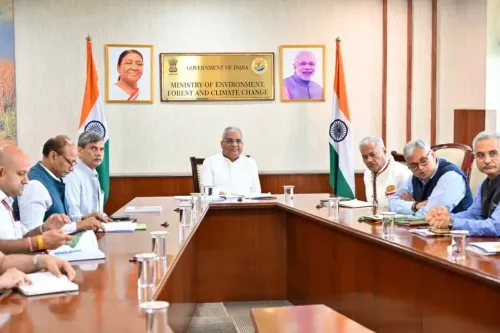
Chief Minister Yadav said the cheetah population in Madhya Pradesh has grown to 60 from the initial eight animals brought to India when the project was launched in 2022. 'From the initial eight cheetahs, their number has now increased to 60. This is a testament to our strong wildlife management and the developing ecosystem,' he said. Two more cheetahs are reportedly scheduled to arrive at Rani Durgavati reserve next month, further consolidating the site's population.
Tourism, Employment and Community Benefit
Yadav said the Cheetah Project would not only strengthen wildlife conservation but also generate tourism and employment opportunities. He noted that sanctuaries across Madhya Pradesh collected around ₹80 crore in revenue this year, of which ₹20 crore was distributed among villagers living near protected areas. The state government is also promoting homestays in tiger reserve buffer zones, providing residents with grants of ₹2–3 lakh per facility. Yadav emphasised that local communities had a right to share in these economic gains given their long presence around the sanctuaries.
Ceremony and Other Highlights
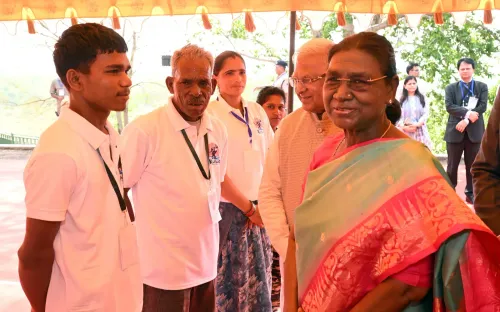
The release took place at the concluding ceremony of Wildlife Conservation Week at the reserve. Yadav also released the Vulture Population Assessment-2026 report and unveiled a book on the Rani Durgavati Tiger Reserve in the Bundeli language. He congratulated Prime Minister Narendra Modi on completing 25 years as an elected public representative, recalling that the cheetah project was launched in Madhya Pradesh in 2022 in Modi's presence. The Chief Minister described Madhya Pradesh as having emerged as a globally significant landscape for the reintroduction of a species that had become extinct in Asia.
Point of View
Not a controlled pilot. The jump from 8 to 60 cheetahs is impressive on paper, but population density, prey availability, and interspecies conflict data will determine whether that number holds. The ₹20 crore community dividend is politically smart and ecologically necessary, since local buy-in is historically the make-or-break variable in large-carnivore coexistence programmes. The real accountability question is whether the programme will publish verifiable mortality, territory, and prey-base data as transparency catches up with the ambition.
NationPress
7 Oct 2026
Frequently Asked Questions
Where were the two cheetahs released in Madhya Pradesh on 7 October 2026?
Male cheetah Vyom and female cheetah Neera were released at the Rani Durgavati Tiger Reserve in Sagar, Madhya Pradesh, on 7 October 2026. The reserve, formerly known as Nauradehi Wildlife Sanctuary, is the third site in the state to host cheetahs.
How many cheetahs are now in Madhya Pradesh?
The cheetah population in Madhya Pradesh has grown to 60, up from the initial eight animals brought to India when the project was launched in 2022. Two more animals are expected to arrive at Rani Durgavati Tiger Reserve next month.
Why is the Rani Durgavati Tiger Reserve significant for the cheetah programme?
It is the first cheetah habitat in India where tigers are already present in the same landscape, making it a uniquely complex ecological experiment. Cheetahs were also last recorded in the region about 170 years ago, adding historical significance to the reintroduction.
Which are the three cheetah habitats in Madhya Pradesh?
The three cheetah habitats in Madhya Pradesh are Kuno National Park, Gandhi Sagar Wildlife Sanctuary, and the newly added Rani Durgavati Tiger Reserve in Sagar. Rani Durgavati was formerly known as Nauradehi Wildlife Sanctuary.
How are local communities benefiting from Madhya Pradesh's wildlife programme?
State sanctuaries collected approximately ₹80 crore in revenue this year, of which ₹20 crore was distributed among villagers living near protected areas. The government is also offering grants of ₹2–3 lakh to residents in tiger reserve buffer zones who set up homestay facilities.