Green sea turtles rescued from nets on Narcondam Island
Synopsis
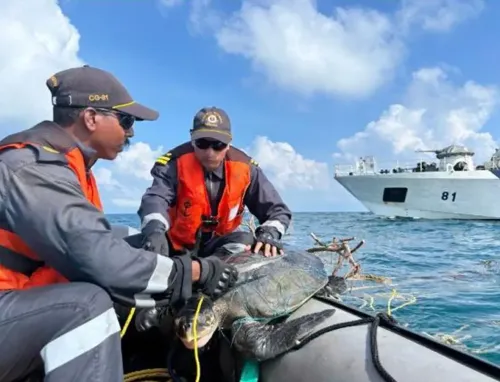
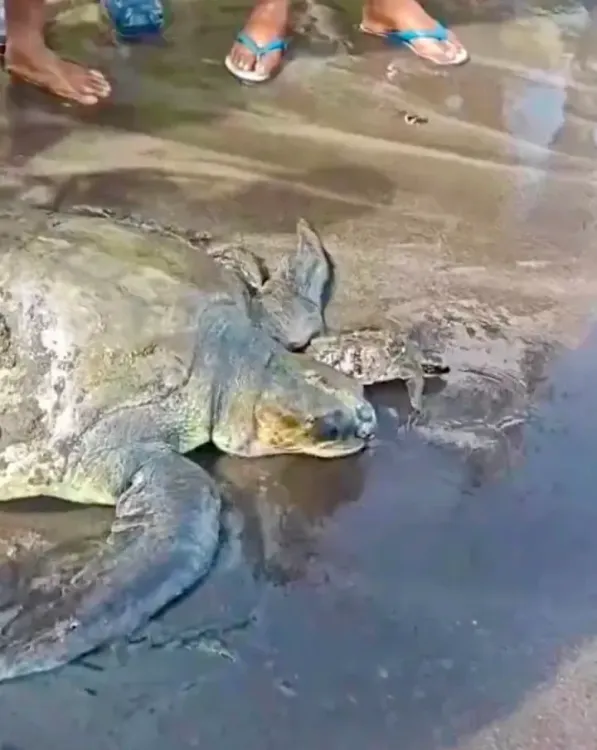
Two green sea turtles, an adult and a juvenile, were freed from discarded fishing nets on remote Narcondam Island and returned to the sea. Police released video of personnel cutting away the tangled netting.
Key Takeaways
Andaman and Nicobar Police rescued two green sea turtles on Narcondam Island , officials said on 23 November .
The turtles, an adult and a juvenile, were freed from discarded fishing nets and released into the sea.
Narcondam Island lies roughly 74 km from the main Andaman group.
Green sea turtles are protected under Schedule I of the Wildlife (Protection) Act, 1972 .
Accidental entanglement in abandoned gear, trawls and gillnets remains a threat to the species' recovery.
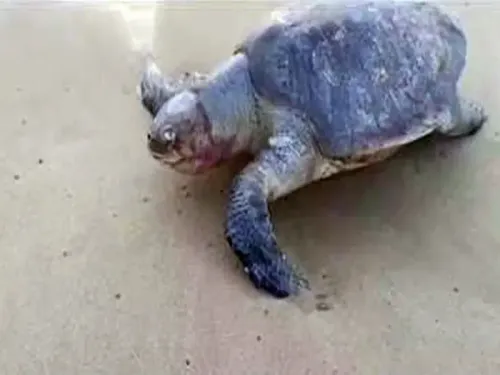
Andaman and Nicobar Police personnel rescued two green sea turtles caught in discarded fishing nets on remote Narcondam Island, officials said on 23 November. The turtles, an adult and a juvenile, were released safely into the sea after personnel cut away the netting.
A video released by the police showed the rescue. Officials did not specify when the turtles were found or how long they had been entangled.
Police response on Narcondam Island
The footage showed personnel carefully cutting through the tangled material to free both marine reptiles. The discarded gear is described as ghost fishing netting.
“The personnel acted promptly and ensured the safe rescue of both turtles. Their action reflects the commitment of the Andaman and Nicobar Police towards protecting wildlife and preserving the rich marine biodiversity of the islands,” police said in a statement. The statement added that safeguarding wildlife is a shared responsibility.
The rescue took place on Narcondam Island, described as India's easternmost island. It lies roughly 74 km from the main Andaman group and about 240 to 256 km from the capital, Sri Vijaya Puram.
Why discarded fishing gear matters
Abandoned fishing gear can entangle marine animals after it is discarded. For green sea turtles, accidental entanglement in such gear, as well as in trawls and gillnets, remains a major threat to the species' recovery despite legal protection.
The Narcondam rescue involved turtles at different stages of life: one adult and one juvenile. Both were freed and returned to the sea, according to the account provided by officials and the police video.
The information released did not identify where the netting came from. It also did not say whether either turtle needed treatment before release.
Green sea turtles and their habitat
The green sea turtle is protected under Schedule I of the Wildlife (Protection) Act, 1972. It is the largest hard-shelled sea turtle found in Indian waters, growing up to 120 cm long and weighing between 136 and 159 kg.
Its major nesting grounds in India include the Saurashtra coast of Gujarat, Lakshadweep and the Andaman and Nicobar Islands. Females return to their natal beaches to nest every two to four years.
The species has a comparatively small head, a yellowish-white plastron and a smooth carapace that can range from black and grey to green, brown and yellow. Adults primarily eat sea grasses and algae, while younger turtles also feed on small crustaceans and jellyfish during their open-ocean years.
Protection and unanswered details
The police statement linked the rescue to the protection of wildlife and the islands' marine biodiversity. The episode also illustrates the potential danger discarded nets pose to both adult and juvenile turtles.
No further action or assessment was specified in the information released. The longer-term condition of the rescued turtles after their return to the sea was not reported.
Point of View
But the source and extent of the discarded gear remain unanswered. Protecting marine wildlife also requires attention to how lost or abandoned nets are identified and removed, particularly around remote islands. Transparent reporting on such interventions would help the public understand the scale of the problem.
NationPress
23 Nov 2026
Frequently Asked Questions
What happened to the turtles on Narcondam Island?
Andaman and Nicobar Police personnel freed two green sea turtles from discarded fishing nets on Narcondam Island. The adult and juvenile were released into the sea.
Why are ghost nets dangerous for green sea turtles?
Discarded fishing nets can entangle green sea turtles. Accidental entanglement in abandoned gear, trawls and gillnets remains a major threat to the species' recovery.
Where is Narcondam Island?
Narcondam Island is a remote Indian island roughly 74 km from the main Andaman group. It is about 240 to 256 km from Sri Vijaya Puram.
Are green sea turtles protected in India?
Green sea turtles are protected under Schedule I of the Wildlife (Protection) Act, 1972. Their major Indian nesting grounds include the Saurashtra coast, Lakshadweep and the Andaman and Nicobar Islands.
What happened to the turtles after their rescue?
Both turtles were released safely into the sea after personnel cut away the netting. Their longer-term condition was not reported.