Coast Guard rescues 3 Olive Ridley turtles from ghost net off Andhra Pradesh
Synopsis
With the Olive Ridley nesting season barely underway, the Indian Coast Guard’s vessel Rani Rashmoni pulled three endangered turtles from a ghost net off Nizampatnam — a timely reminder that the six months ahead are as dangerous for the species as they are vital, and that abandoned fishing gear remains a silent killer long after the nets are left behind.
Key Takeaways
The Indian Coast Guard rescued three Olive Ridley turtles from a ghost net off Nizampatnam, Andhra Pradesh on 11 November 2026 .
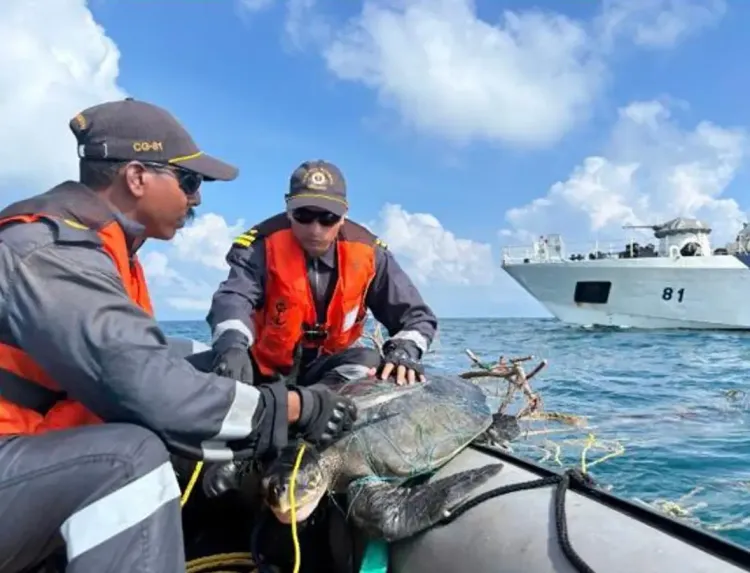
The ICG vessel Rani Rashmoni crew deployed a Gemini inflatable boat to cut the turtles free from the abandoned net.
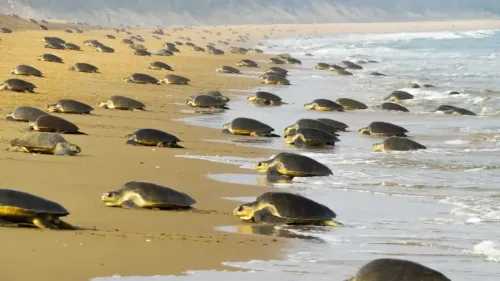
The turtles were reportedly heading toward nesting grounds on the Odisha coast , where mass nesting occurs between late January and early February .
The rescue falls under Operation Olivia , the Coast Guard’s annual initiative running from November through May to protect nesting turtles.
Olive Ridleys are protected under Schedule I of the Wildlife (Protection) Act, 1972 and CITES Appendix I .
Accidental entanglement in mechanised fishing gear remains the species’ single largest threat, historically killing thousands of adults each season.
The Indian Coast Guard (ICG) rescued three endangered Olive Ridley turtles entangled in a ghost net off the Nizampatnam coast, Andhra Pradesh, on 11 November 2026, during a scheduled surveillance patrol, releasing them safely back into the sea. The rescue underscores the growing threat that abandoned fishing gear poses to one of India's most protected marine species.
How the Rescue Unfolded
Personnel aboard the ICG vessel Rani Rashmoni spotted the three turtles drifting helplessly in marine debris during a routine patrol. The crew deployed a Gemini inflatable boat to reach the animals and carefully cut through the abandoned net to free them without injury.
The turtles were believed to be travelling toward their primary nesting grounds along the Odisha coastline, where mass nesting typically occurs between late January and early February each year. ‘Through these rescues, ICG reaffirms its commitment to protecting the ocean and the marine ecosystem,’ the maritime force stated in an official release.
Operation Olivia and the Nesting Season
The rescue falls within the ICG’s annual marine protection drive, Operation Olivia, which runs each year during the Olive Ridley nesting cycle from November–December through April–May. The operation mobilises Coast Guard assets across eastern coastal waters to shield hundreds of thousands of turtles converging on mass nesting sites.
The principal nesting corridors were identified over several decades: the Gahirmatha rookery near the mouth of the Brahmani-Baitarani (Dhamra) River was internationally recognised in 1974, followed by the Devi River mouth in 1981 and the Rushikulya River mouth in 1994.
Threats Facing the Species
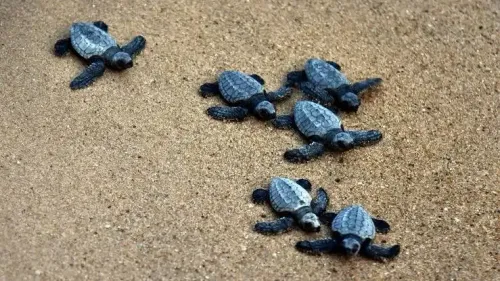
During the breeding season, female Olive Ridleys lay between 100 and 140 eggs per clutch on narrow estuarine beaches and bays. Despite this reproductive capacity, the species faces severe pressure from unregulated coastal development, tourist exploitation, illegal egg harvesting, and poaching for meat, shells, and leather.
The single most catastrophic threat, however, remains accidental entanglement and drowning in mechanised fishing trawlers, gill nets, and trawl nets operating near nesting corridors during mating periods. Historically, thousands of adult turtles have been lost to commercial fishing gear each season.
Legal Protection and Enforcement
All five sea turtle species in Indian waters, including the Olive Ridley, are listed under Schedule I of the Wildlife (Protection) Act, 1972 — the highest tier of domestic statutory protection — and under Appendix I of the Convention on International Trade in Endangered Species of Wild Fauna and Flora (CITES).
To enforce these protections, the Coast Guard imposes seasonal fishing bans near designated rookeries, conducts net inspections on commercial vessels, and runs regional environmental awareness campaigns throughout the six-month nesting cycle. The 11 November rescue marks an early intervention at the very onset of this year’s season.
Point of View
Lost, or discarded fishing gear — are a largely invisible crisis along India’s eastern coast, and this rescue illustrates why Operation Olivia’s value extends beyond its optics. The Coast Guard acts as the last line of defence for a species whose nesting infrastructure took decades to map and whose adult population cannot afford steady attrition from preventable entanglements. The deeper policy gap is upstream: India still lacks a mandatory vessel monitoring and gear-retrieval regime that would reduce ghost-net proliferation at source. Without that, Operation Olivia will keep rescuing turtles from nets that should never have been abandoned in the first place.
NationPress
11 Nov 2026
Frequently Asked Questions
What happened to the three Olive Ridley turtles off Andhra Pradesh?
The Indian Coast Guard rescued three Olive Ridley turtles entangled in a ghost net off the Nizampatnam coast, Andhra Pradesh, on 11 November 2026, and released them safely back into the sea. The turtles were spotted by the crew of ICG vessel Rani Rashmoni during a scheduled surveillance patrol.
What is Operation Olivia?
Operation Olivia is an annual Indian Coast Guard initiative to protect Olive Ridley turtles during their nesting season, which runs from November–December through April–May each year. It involves seasonal fishing bans near rookeries, net inspections on commercial vessels, and environmental awareness drives along India’s eastern coast.
Where do Olive Ridley turtles nest in India?
The primary mass nesting sites are along the Odisha coast, including the Gahirmatha rookery near the Brahmani-Baitarani (Dhamra) River mouth (recognised in 1974), the Devi River mouth (1981), and the Rushikulya River mouth (1994). Mass nesting typically occurs between late January and early February each year.
What are the main threats to Olive Ridley turtles?
The biggest threat is accidental entanglement and drowning in mechanised fishing trawlers, gill nets, and trawl nets operating near nesting corridors. Additional threats include unregulated coastal development, tourist exploitation, illegal egg harvesting, and poaching for meat, shells, and leather.
Are Olive Ridley turtles legally protected in India?
Yes. All five sea turtle species in Indian waters, including the Olive Ridley, are listed under Schedule I of the Wildlife (Protection) Act, 1972, granting them the highest level of domestic protection, and under Appendix I of CITES, which prohibits international commercial trade.