Cabinet Clears ₹62,370 Cr P&K Fertilizer Subsidy for Rabi 2026-27
Synopsis
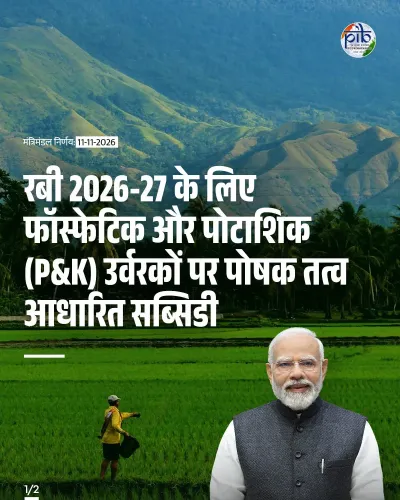
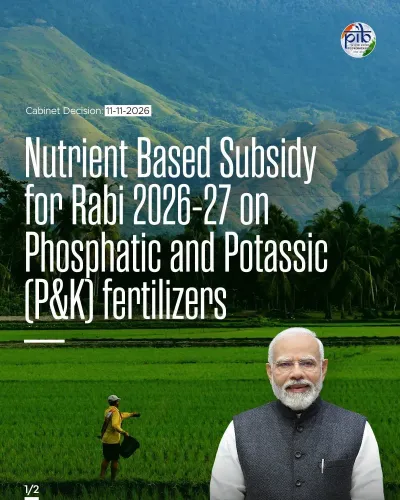
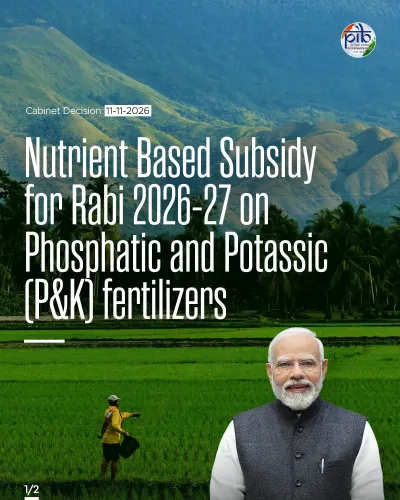
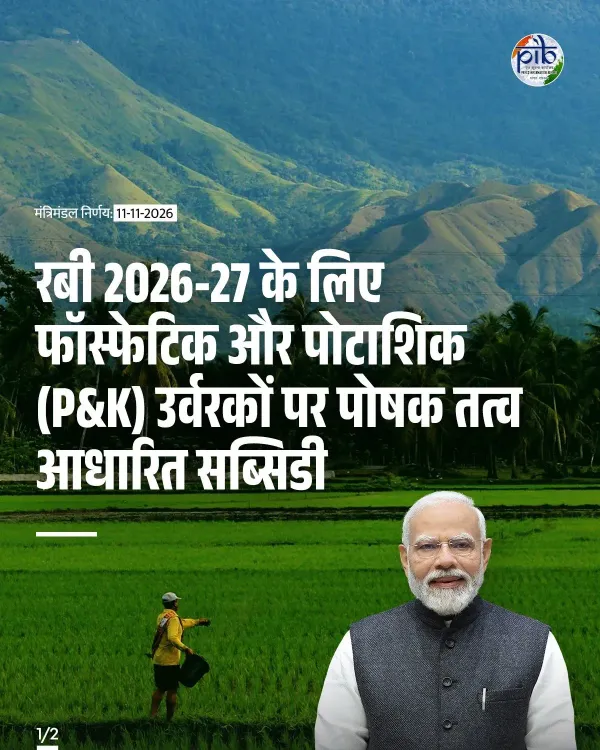
The Union Cabinet has approved roughly ₹62,370.02 crore in subsidies on phosphatic and potassic fertilizers for the Rabi 2026-27 season, ensuring affordable input prices for farmers during the critical winter sowing window, as announced by Minister Chirag Paswan.
Key Takeaways
The Union Cabinet, under PM Narendra Modi , approved P&K fertilizer subsidies for Rabi 2026-27 on November 11, 2026 .
The approved subsidy budget stands at approximately ₹62,370.02 crore for the season.
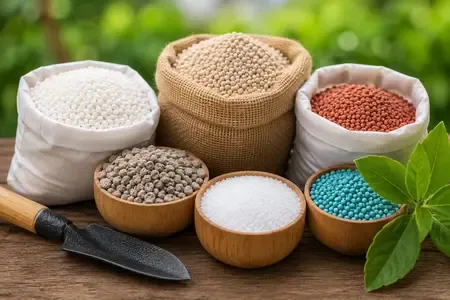
Subsidies cover phosphatic and potassic (P&K) fertilizers including DAP, MOP, and complex grades critical for Rabi crops.
The Nutrient Based Subsidy (NBS) Scheme , operational since April 2010 , governs the disbursement framework through the Department of Fertilizers .
Seasonal Cabinet approvals allow the government to adjust subsidy rates in response to volatile global phosphate and potash prices.
The timing coincides with the active Rabi sowing window (October–November), making early clearance operationally significant for supply-chain readiness.
India's farmers heading into the Rabi 2026-27 sowing season have a significant cushion in hand: the Union Cabinet, under Prime Minister Narendra Modi, has approved a subsidy of approximately ₹62,370.02 crore on phosphatic and potassic (P&K) fertilizers — ensuring that the backbone of India's winter crop cycle gets affordable nutrition. Union Food Processing Minister Chirag Paswan announced the Cabinet decision on Wednesday, November 11, 2026, calling it a major move in favour of the country's farmers.
Posting on X, Paswan wrote: 'किसानों के हित में मोदी सरकार का बड़ा फैसला!' ('A big decision by the Modi government in the interest of farmers!'), adding that the Cabinet has sanctioned a budget of nearly ₹62,370.02 crore for P&K fertilizer subsidies for the upcoming Rabi season so that 'annadata' — the providers of grain — can access fertilizers at affordable rates.
What the ₹62,370 Crore Subsidy Actually Means for Rabi Farmers
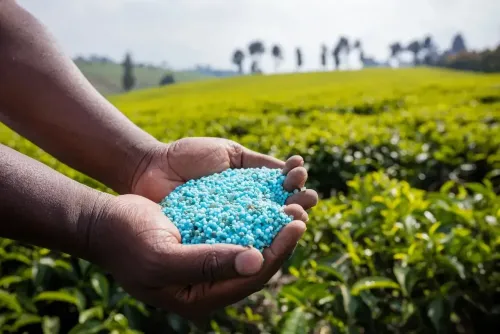
Phosphatic and potassic fertilizers — think DAP, MOP, and complex grades — are critical for Rabi crops like wheat, mustard, chickpea, and barley. Unlike urea, which is price-controlled at the retail level, P&K fertilizers are covered under the Nutrient Based Subsidy (NBS) Scheme, introduced in April 2010 by the Department of Fertilizers. Under NBS, a fixed per-kilogram subsidy is paid directly to manufacturers and importers based on the nutrient content of each fertilizer — nitrogen, phosphorus, potassium, and sulphur — rather than on a product-by-product concession basis.
The practical outcome: farmers buy these fertilizers at prices well below international market rates, with the government absorbing the gap. With global commodity markets remaining volatile in 2026, locking in a seasonal subsidy envelope provides predictability for both the supply chain and the farmer at the field level.
Seasonal Cabinet Approvals — and Why the Timing Matters
India's fertilizer subsidy architecture operates in seasonal tranches — one approval for the Kharif (summer-sown) season and one for the Rabi (winter-sown) season. This structure allows the government to recalibrate subsidy rates in response to shifts in international phosphate and potash prices, which are predominantly import-dependent. The Rabi sowing window typically opens in October–November, making a Cabinet clearance in mid-November both timely and operationally critical — delays in subsidy notification can disrupt fertilizer availability at district and village level.
The Department of Fertilizers, the nodal body for implementation, channels these funds to companies that supply fertilizers domestically, keeping retail prices stable even when import costs spike.
A Pattern of Pre-Season Farm-Support Decisions
This approval fits a consistent pattern: the Modi government has used pre-season Cabinet decisions to signal agricultural support and lock in fiscal commitments before sowing peaks. P&K subsidy outlay has grown substantially over the years as global prices for phosphate rock and potash — almost entirely imported commodities for India — have climbed. The scale of ₹62,370.02 crore for a single season underscores just how central fertilizer affordability has become to India's farm-income calculus.
For India's 120-million-plus farm households, the cost of inputs like DAP can make or break the economics of a Rabi cycle. A government-backed subsidy at this magnitude is, in effect, a direct transfer of purchasing power to the field — even if it flows through the supply chain rather than a farmer's bank account directly.
With sowing season already under way, how quickly the subsidy translates into fertilizer availability at the mandis will be the real test of this Cabinet decision.
Point of View
But the scale — over ₹62,000 crore for a single Rabi cycle — reflects how dramatically global import dependence on phosphate and potash has amplified India's subsidy burden. For the Modi government, these announcements serve a dual purpose: a fiscal commitment to supply-chain stability and a visible political signal to the farming constituency ahead of ongoing state electoral cycles. The NBS framework, now in its sixteenth year, has increasingly become the government's primary lever for insulating farmers from commodity price shocks without full retail price decontrol. The real policy question going forward is whether India accelerates domestic phosphate mining and potash alternatives — or remains structurally exposed to global price volatility season after season.
NationPress
11 Nov 2026
Frequently Asked Questions
What is the P&K fertilizer subsidy approved by the Cabinet for Rabi 2026-27?
The Union Cabinet approved approximately ₹62,370.02 crore in subsidies on phosphatic and potassic (P&K) fertilizers for the Rabi 2026-27 agricultural season to keep input costs affordable for farmers.
What is the Nutrient Based Subsidy (NBS) Scheme for fertilizers?
The Nutrient Based Subsidy (NBS) Scheme, introduced in April 2010 by the Department of Fertilizers, provides a fixed per-kilogram subsidy to manufacturers and importers of P&K fertilizers based on nutrient content, replacing the older concession-based system.
Which fertilizers are covered under P&K subsidy?
Phosphatic and potassic fertilizers — including DAP (di-ammonium phosphate), MOP (muriate of potash), and complex fertilizer grades — are covered under the P&K subsidy framework. These are essential for Rabi crops like wheat, mustard, and chickpea.
Why does India need government subsidies on P&K fertilizers?
India imports the majority of its phosphate and potash requirements, making these fertilizers highly sensitive to global commodity price swings. Government subsidies under the NBS scheme ensure that retail prices for farmers remain stable despite international market volatility.
Who announced the Cabinet decision on the Rabi 2026-27 fertilizer subsidy?
Union Food Processing Minister and LJP (Ram Vilas) national president Chirag Paswan announced the decision on X on November 11, 2026, attributing it to PM Narendra Modi's leadership.