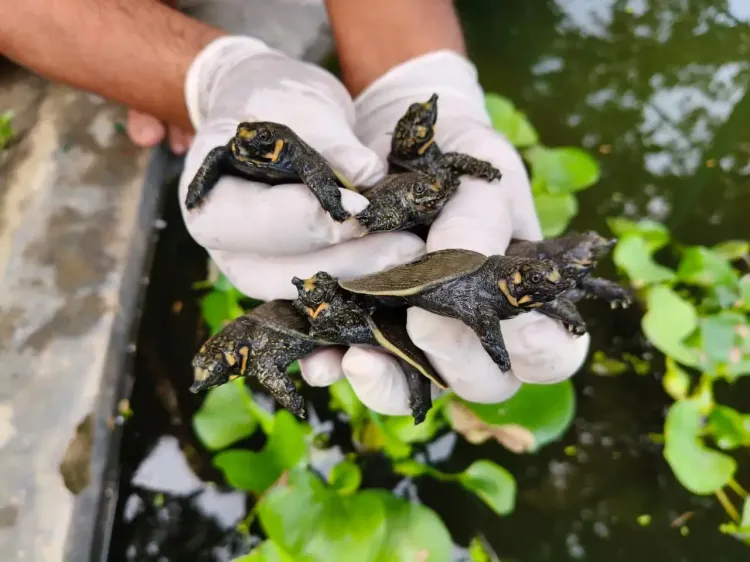
240 Black Softshell Turtle hatchlings released in Assam's Biswanath reserve
Synopsis
Declared 'Extinct in the Wild' just two decades ago, the Black Softshell Turtle is staging a quiet comeback in Assam. The release of 240 hatchlings into the Biswanath Wildlife Division on 7 November — part of a programme that has freed over 1,000 since 2021 — shows how temple ponds, artificial incubation, and a women's weaving collective can together move the needle on species recovery.
Key Takeaways
240 Black Softshell Turtle hatchlings were released on 7 November into a protected waterbody under the Biswanath Wildlife Division , Assam.
The release was jointly organised by WSAFI , the Biswanath Wildlife Division , Kaziranga Tiger Reserve , and the Assam Forest Department .
The species was declared 'Extinct in the Wild' in the early 2000s ; it now has a stable population in the Brahmaputra-Kaziranga landscape but remains 'Critically Endangered.' Since 2021 , WSAFI has released more than 1,000 hatchlings into the wild under this programme.
Eggs are collected from the Nagshankar Temple pond each March–April , artificially incubated at Biswanath Ghat , and hatchlings reared for three months before release.
The Kaso Sakhi women's livelihood group, supported by WSAFI, links community economic empowerment directly to the conservation effort.
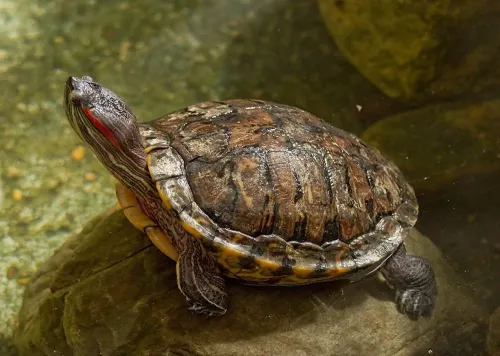
240 hatchlings of the critically endangered Black Softshell Turtle (Nilssonia nigricans), locally called Bormuria Kaso, were released on Saturday, 7 November into a protected waterbody under the Biswanath Wildlife Division in Assam, marking a significant milestone in the decade-long effort to pull the species back from the brink. The release was jointly organised by the Wildlife Survival Alliance Foundation India (WSAFI) and the Biswanath Wildlife Division, in collaboration with Kaziranga Tiger Reserve and the Assam Forest Department, under the ongoing project titled 'Conservation and Recovery of Black Softshell Turtle in Assam.'
From 'Extinct in the Wild' to Cautious Recovery
The Black Softshell Turtle was declared 'Extinct in the Wild' in the early 2000s — a sobering classification that underscored the scale of habitat loss and poaching pressure the species had endured. Sustained conservation efforts over the past two decades have since produced encouraging results: the turtle now maintains a stable population in the Brahmaputra-Kaziranga landscape, though it continues to carry the 'Critically Endangered' tag under global assessments. According to a senior forest official, the latest batch of hatchlings represents another concrete step in rebuilding that population.
How the Breeding Programme Works
The conservation pipeline begins at the historic Nagshankar Temple, which has played a central role in the programme. During the annual nesting season in March and April, eggs are collected from the temple pond and transported to Biswanath Ghat for artificial incubation under controlled conditions. This step is critical: it significantly reduces egg losses caused by predators, particularly mongooses, and improves overall hatching success rates.
Hatchlings typically emerge between July and August and are then moved to a grow-out facility, where they are reared for approximately three months. During this period, they are fed fresh small fish to build body weight and improve their odds of surviving once released into the wild. Since 2021, WSAFI — formerly known as TSA Foundation India — has released more than 1,000 Black Softshell Turtle hatchlings into protected habitats as part of this sustained effort.
Community at the Centre of Conservation
The release event was attended by Naduar MLA Padma Hazarika, the Divisional Forest Officer (DFO) of Biswanath Wildlife Division, the concerned Range Officer, Nagshankar Temple Committee Secretary Rajib Barua, WSAFI Northeast Project Coordinator Upamanyu Chakraborty, Aditya Dey, and Krishna Das. Guests were felicitated with handwoven gamosas featuring turtle motifs — crafted by members of Kaso Sakhi, a local women's alternative livelihood group supported by WSAFI under its community livelihood initiative.
The Kaso Sakhi initiative is designed to provide sustainable income sources for communities living near the river, reducing their dependence on river-based livelihoods. The approach deliberately links biodiversity conservation with economic empowerment, recognising that long-term species recovery depends as much on community buy-in as on scientific breeding protocols.
Why Softshell Turtles Matter to River Ecosystems
Often described as the 'water vultures' of river systems, softshell turtles perform an outsized ecological role relative to their visibility. As scavengers, they break down organic waste and help maintain the cleanliness and health of aquatic environments, contributing to the broader ecological balance of river systems like the Brahmaputra. Their loss from a waterbody can set off a chain of ecosystem degradation that affects fish populations, water quality, and downstream communities alike.
What Comes Next
With more than a thousand hatchlings released since 2021 and a stable breeding pipeline now in place, conservationists are cautiously optimistic about the species' long-term prospects in Assam. The programme's next phase will likely focus on expanding protected release sites and monitoring survival rates in the wild — data that will determine whether the Black Softshell Turtle can eventually move off the 'Critically Endangered' list altogether.
Point of View
And it deserves more national attention than it typically receives. What makes the Assam model notable is its integration of temple custodianship, scientific incubation, and women's livelihood programmes into a single pipeline; most conservation projects treat these as separate verticals. The unresolved question is scale: releasing around 250 hatchlings a year is meaningful, but survival-to-adulthood data in the wild is rarely published, making it hard to assess whether population recovery is genuinely self-sustaining or still dependent on annual top-ups from captive breeding.
NationPress
8 Nov 2026
Frequently Asked Questions
What is the Black Softshell Turtle and why is it endangered?
The Black Softshell Turtle (Nilssonia nigricans), locally known as Bormuria Kaso in Assam, is a freshwater turtle classified as 'Critically Endangered' that was declared 'Extinct in the Wild' in the early 2000s due to habitat loss and poaching. Sustained conservation efforts have since established a stable population in the Brahmaputra-Kaziranga landscape, though the species remains under threat.
How many Black Softshell Turtle hatchlings have been released so far?
Since 2021, WSAFI has released more than 1,000 Black Softshell Turtle hatchlings into protected habitats in Assam. The latest batch of 240 hatchlings was released on 7 November into a waterbody under the Biswanath Wildlife Division.
What role does the Nagshankar Temple play in the conservation programme?
The historic Nagshankar Temple is a key part of the breeding pipeline: eggs are collected from the temple pond during the nesting season in March and April, then transported to Biswanath Ghat for artificial incubation. This controlled process reduces egg losses from predators such as mongooses and significantly improves hatching success rates.
Who organised the hatchling release in Biswanath on 7 November?
The release was jointly organised by the Wildlife Survival Alliance Foundation India (WSAFI) and the Biswanath Wildlife Division, in collaboration with Kaziranga Tiger Reserve and the Assam Forest Department. Naduar MLA Padma Hazarika, forest officials, temple committee representatives, and WSAFI coordinators attended the event.
How does the Kaso Sakhi group connect community livelihoods to turtle conservation?
Kaso Sakhi is a women's alternative livelihood group supported by WSAFI that produces handwoven gamosas featuring turtle motifs, creating income for local communities. By offering sustainable earnings that reduce dependence on river-based livelihoods, the initiative aligns economic incentives with the protection of the Black Softshell Turtle's habitat.