Political Tensions Rise in Madhya Pradesh Over UCC and Its Impact on Dalit and Tribal Rights

Synopsis
The introduction of the Uniform Civil Code in Madhya Pradesh is stirring political conflict as Congress warns against potential threats to Dalit and tribal rights. With legislative changes on the horizon, the urgency for stakeholder engagement is paramount.
Key Takeaways
Proposed UCC in Madhya Pradesh is causing political unrest.
Concerns raised by Congress about its impact on Dalit and tribal communities.
Leader of the Opposition demands clarity on cultural protections.
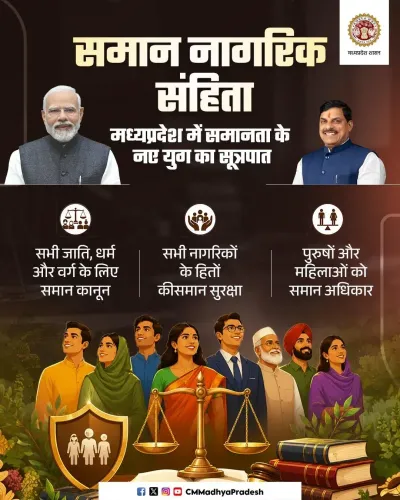
State government plans to draft UCC bill within six months.
Wheat procurement issues highlight governance challenges.
Bhopal, April 9 (NationPress) The impending implementation of the Uniform Civil Code (UCC) in Madhya Pradesh has ignited a new wave of political tension, as the Congress party raises alarms about its potential repercussions on Dalit and tribal populations within the state.
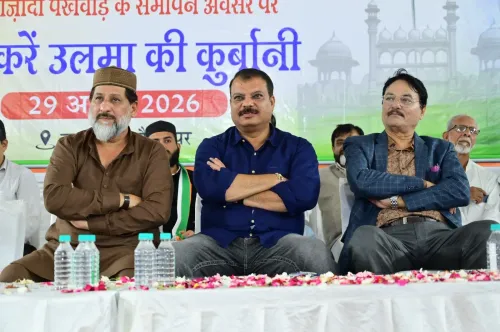
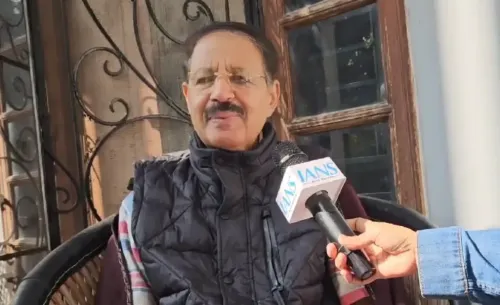
On Thursday, the Leader of the Opposition in the State Assembly and seasoned Congress figure, Umang Singhar, expressed skepticism regarding the Bharatiya Janata Party (BJP)-governed state administration's motives and readiness concerning the proposed legislation.
During a press briefing in Bhopal, LoP Singhar sought clarification on whether the UCC would encompass Dalits and tribal groups and how their cultural practices would be preserved.
He warned that implementing a uniform legal framework without ensuring the constitutional rights of these communities could result in significant injustices.
Singhar asserted that the Congress would vehemently resist any actions that threaten the identity and rights of marginalized factions.
As a member of the tribal community from the Dhar district, Singhar's comments came just a day after the state government revealed that efforts to roll out the UCC are gaining momentum, with a draft bill expected within the next six months.
A state-level committee is likely to be established soon to examine the UCC frameworks of Gujarat and Uttarakhand, focusing on the processes they undertook, their implementation, and other relevant considerations.
Nevertheless, the Opposition Congress contends that such a pivotal legal change necessitates extensive dialogue with stakeholders, especially those communities likely to be directly impacted.
In addition to discussing the UCC, LoP Singhar criticized the state government for the delays in wheat procurement across Madhya Pradesh.
He claimed that farmers are facing difficulties in selling their crops due to inadequate arrangements at procurement centers, contradicting the state’s assertions of seamless operations.
Linking the two issues, LoP Singhar indicated that they reflect governance failures that adversely affect vulnerable demographics.
He emphasized that while tribal communities are left uncertain about their rights under the UCC, farmers are grappling with urgent economic challenges.
These dual concerns, LoP Singhar stated, underscore the necessity for increased transparency, improved planning, and timely action from the state government.
Point of View
The proposed UCC in Madhya Pradesh presents a complex issue that highlights the delicate balance between legal uniformity and the preservation of cultural identities. Engaging with affected communities will be crucial to ensuring that reforms do not exacerbate existing inequalities.
NationPress
21 Sept 2026
Frequently Asked Questions
What is the Uniform Civil Code?
The Uniform Civil Code is a proposal to replace personal laws based on the scriptures and customs of each major religious community in India with a common set governing every citizen.
Why is Congress opposing the UCC?
Congress is concerned that the UCC may undermine the rights and cultural practices of Dalit and tribal communities in Madhya Pradesh.
What are the implications of the UCC for Dalit and tribal rights?
The UCC could potentially alter legal protections and traditional practices of Dalit and tribal groups, leading to fears of injustice if their rights are not safeguarded.
What is the timeline for the UCC implementation in Madhya Pradesh?
The state government plans to prepare a draft bill for the UCC within six months.
How is the state government addressing wheat procurement issues?
The state government has faced criticism for delays in wheat procurement, with claims of poor arrangements at procurement centers affecting farmers.