MP UCC report submitted: CM Mohan Yadav challenges Congress to reveal stand
Synopsis
Madhya Pradesh's UCC committee has handed Chief Minister Mohan Yadav a 3-volume report with a 404-section draft Bill — and Yadav wasted no time turning it into a political challenge, demanding Congress declare where it stands. With Scheduled Tribes carved out and 9.58 lakh public suggestions logged, the BJP is framing this as a people's mandate. Congress has not responded.
Key Takeaways
CM Mohan Yadav on 14 July challenged Congress to clarify its stand on the Uniform Civil Code (UCC) in Madhya Pradesh .
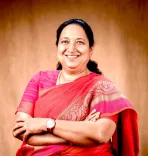
The state's high-level UCC committee, chaired by retired Supreme Court judge Justice Ranjana Prakash Desai , submitted its final report to the Chief Minister.
The report spans three volumes ; the draft Bill contains 4 parts , 404 sections , and 7 schedules .
More than 9.58 lakh public suggestions were received and analysed during the consultation process.
The committee recommends keeping Scheduled Tribes outside the UCC's ambit, citing constitutional safeguards and customary practices.
The state government will now examine the report before deciding on introducing the Bill in the Madhya Pradesh Assembly .
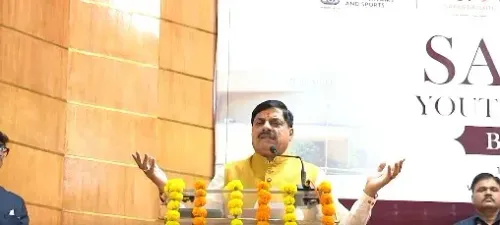
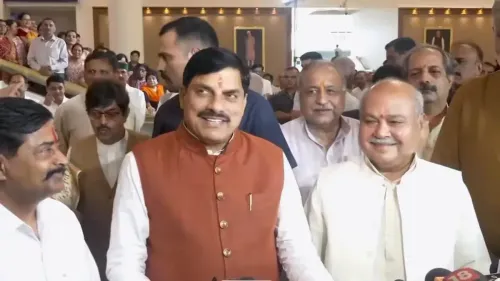
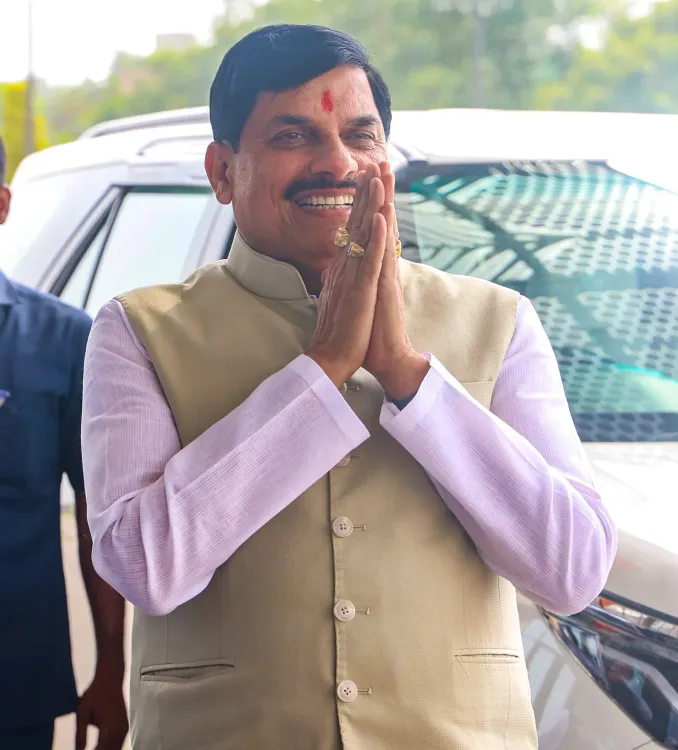
Madhya Pradesh Chief Minister Mohan Yadav on Tuesday, 14 July challenged the Congress to publicly declare its position on the Uniform Civil Code (UCC), a day after the state government's high-level committee submitted its final report recommending a legal framework for implementing the code in Madhya Pradesh. The remarks, made at the Assembly premises in Bhopal, sharpened the political battle lines over one of the most contested civil law reforms in Indian politics.
What the Chief Minister Said
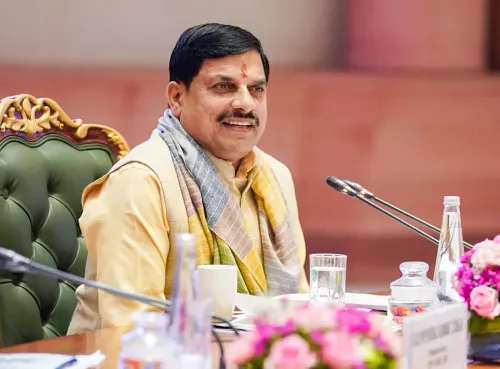
Addressing reporters, Yadav alleged that the Congress consistently views sensitive issues through the lens of communal vote-bank calculations. 'The committee has submitted the UCC report to me. Now the Congress should also make its stand clear on this issue. Whether it is the UCC or the Bhojshala issue, the Congress looks at every matter only from the perspective of Hindu-Muslim politics and vote-bank politics,' the Chief Minister claimed.
He further noted that the committee's extensive public consultation had drawn participation from citizens across religious communities. 'It is a positive development that people from all religions expressed their views openly and clearly on the Uniform Civil Code. However, the Congress has still not made its position clear,' Yadav said.
About the High-Level Committee and Its Report
The committee was constituted by the Madhya Pradesh government to assess the feasibility of a state-level UCC and draft a legislative framework. It was chaired by retired Supreme Court judge Justice Ranjana Prakash Desai, with members including Prof Gopal Sharma, Budhpal Singh, Shobha Paithankar, and Member Secretary Ajay Katesaria.
The report has been compiled in three volumes. The first contains the committee's recommendations after examining constitutional provisions, international practices, and existing laws and customs. The second volume carries the draft UCC Bill for Madhya Pradesh — a proposed legislation with four parts, 404 sections, and seven schedules. The third volume documents the public consultation process, conducted through district-level and state-level interactions as well as an online portal.
Scale of Public Consultation
According to the state government, more than 9.58 lakh suggestions were received and analysed on the basis of questions, gender, and communities — a figure that the government has cited as evidence of broad civic engagement. Notably, one of the panel's key recommendations is to keep Scheduled Tribes outside the ambit of the proposed code, in recognition of constitutional safeguards and the distinct customary practices of tribal communities.
What the UCC Seeks to Do
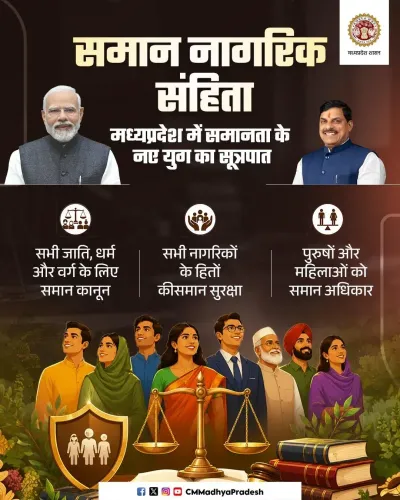
The Uniform Civil Code is envisaged under Article 44 of the Constitution, a Directive Principle of State Policy, which calls upon the state to endeavour to secure a uniform civil framework for all citizens. The code aims to replace religion-based personal laws with a common legal structure governing civil matters such as marriage, divorce, adoption, inheritance, and succession — while preserving constitutional protections available to specified communities.
What Happens Next
The state government is expected to examine the committee's recommendations and the draft legislation before deciding on the next step towards introducing the Bill in the Madhya Pradesh Legislative Assembly. The submission of the report marks a significant milestone in the Bharatiya Janata Party (BJP) government's stated push to enact a UCC in the state — a move that, if legislated, would make Madhya Pradesh only the second state after Uttarakhand to do so.
Point of View
Chief Minister Yadav has signalled that the BJP intends to use the UCC as an electoral wedge in Madhya Pradesh, much as it did in Uttarakhand. The carve-out for Scheduled Tribes is a pragmatic concession that insulates the bill from its most constitutionally vulnerable flank — but it also narrows the 'uniform' in Uniform Civil Code. Congress's silence, which Yadav is now weaponising, reflects the Opposition's genuine dilemma: opposing the UCC risks alienating majority voters, while supporting it undercuts its minority-outreach politics. The 9.58 lakh suggestions figure will be contested — the quality and representativeness of online consultations in India have rarely been independently audited.
NationPress
12 Oct 2026
Frequently Asked Questions
What is the Madhya Pradesh UCC report and what does it contain?
The Madhya Pradesh UCC report is a three-volume document submitted by a state-appointed high-level committee to Chief Minister Mohan Yadav on 14 July. It includes constitutional analysis and recommendations in Volume 1, a draft UCC Bill with 404 sections and seven schedules in Volume 2, and details of the public consultation — covering over 9.58 lakh suggestions — in Volume 3.
Who headed the MP UCC committee?
The committee was chaired by retired Supreme Court judge Justice Ranjana Prakash Desai. Its members included Prof Gopal Sharma, Budhpal Singh, Shobha Paithankar, and Member Secretary Ajay Katesaria.
Why are Scheduled Tribes excluded from the proposed MP UCC?
The committee recommended keeping Scheduled Tribes outside the UCC's ambit to honour their constitutional protections and distinct customary practices. This exemption mirrors the approach taken in Uttarakhand's UCC legislation.
What does the Uniform Civil Code seek to replace?
The UCC aims to replace religion-based personal laws with a single legal framework governing civil matters such as marriage, divorce, adoption, inheritance, and succession for all citizens, as envisaged under Article 44 of the Constitution.
What happens next after the MP UCC report submission?
The Madhya Pradesh government will examine the committee's recommendations and the draft Bill before deciding whether to introduce the legislation in the state Assembly. No timeline has been officially announced yet.