Udaipur panther captured after 5 attacks in Kheda village, Rajasthan
Synopsis
A panther that killed one person and injured four others in Kheda village near Udaipur was captured after a two-day operation involving 40 forest personnel, camera traps, and sand-patch pugmark tracking. The entire village had evacuated before the animal was finally tranquilised and moved to Sajjangarh Biological Park.
Key Takeaways
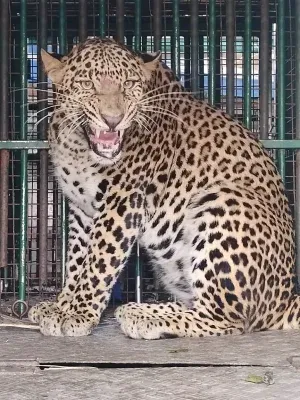
A panther was captured on Saturday, 30 August in a Forest Department cage in Kheda village, Umarda , near Udaipur .
Logarlal Meena, 45 , died in the attacks; four others — Jagga Meena , Hitesh , Kalu , and Logri Bai — were injured and are stable.
The panther carried out multiple attacks over two consecutive days , prompting full evacuation of Kheda village.
Deputy Conservator of Forests D.K.
Tiwari led a team of 40 forest personnel who camped at the site to monitor and trap the animal.
The panther was tranquilised and transported to Sajjangarh Biological Park in Udaipur.
Villagers have not yet returned home; officials have not confirmed a safe-return timeline.
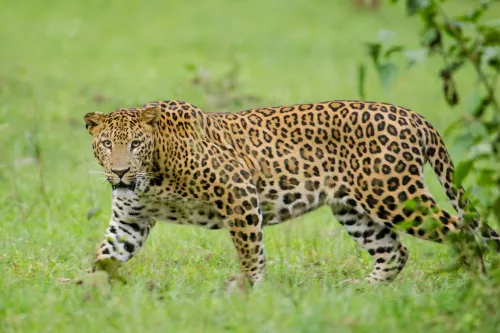
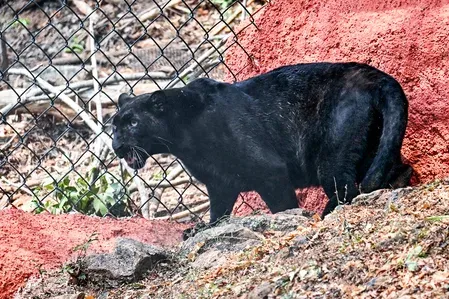
A leopard that attacked five people over two consecutive days in Kheda village, Umarda, near Udaipur, was captured in a Forest Department cage on Saturday morning, 30 August, ending a tense standoff that had forced the entire village to evacuate. The animal has since been transported to Sajjangarh Biological Park.
How the Capture Unfolded
Forest officials had tracked the panther's movements through camera traps, which confirmed it had returned to the area in the early hours of Friday. Although the animal approached the cage, it did not enter. Officials noted it was moving within a radius of roughly 1.5 kilometres from the original attack site.
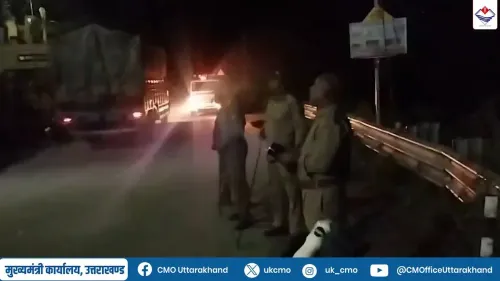
Sand patches were laid along identified movement routes to track pugmarks, allowing personnel to narrow the animal's range. An additional cage was deployed, along with more camera traps and extra staff. Deputy Conservator of Forests (North) D.K. Tiwari led a team of approximately 40 forest personnel who camped at the site overnight. By Saturday morning, the panther was trapped, tranquilised, and transported to Sajjangarh Biological Park.
The Attacks and Their Toll
Logarlal Meena, 45, died in the attacks. Four others — Jagga Meena, 60, Hitesh, 20, Kalu, 40, and Logri Bai, 45 — were injured and are reported to be in stable condition.
The first attack occurred late Tuesday evening, injuring a young man. Villagers resumed normal activity the following morning, but at 6 am on Wednesday, the panther struck again, injuring three people. A further attack at 1 pm the same day targeted a woman, deepening the panic. The cluster of attacks in under 48 hours is rare for the region and underscores the urgency with which officials responded.
Village Evacuation and Community Impact
Following the series of incidents, residents of Kheda evacuated entirely, taking shelter in government buildings and relatives' homes. The village remains unoccupied, though the successful capture has brought significant relief. Officials have not yet confirmed when residents can safely return.
What Happens Next
The panther is now housed at Sajjangarh Biological Park in Udaipur. Forest authorities are expected to assess the animal's condition and determine whether it can eventually be relocated to a wildlife corridor. The department's use of camera traps, pugmark tracking, and multi-cage deployment is being cited as a model response for human-wildlife conflict situations in semi-urban forest fringes.
Point of View
Pugmark tracking, round-the-clock surveillance — was effective, but it came after casualties had already mounted. Rajasthan's leopard population has grown in recent years, and without proactive buffer-zone management and community alert protocols, Kheda will not be the last such episode.
NationPress
14 Oct 2026
Frequently Asked Questions
Where was the Udaipur panther captured and when?
The panther was captured in a Forest Department cage in Kheda village, Umarda, near Udaipur, on Saturday morning, 30 August. It was subsequently tranquilised and transported to Sajjangarh Biological Park.
How many people were attacked and what were the casualties?
Five people were attacked over two consecutive days. Logarlal Meena, 45, died in the attacks, while Jagga Meena, 60, Hitesh, 20, Kalu, 40, and Logri Bai, 45, were injured. All four injured victims are reported to be in stable condition.
How did the Forest Department track and capture the panther?
Officials used camera traps to monitor the animal's movements and laid sand patches along likely routes to track pugmarks. An additional cage was deployed after the panther failed to enter the first one, and a team of around 40 personnel led by Deputy Conservator of Forests D.K. Tiwari camped at the site until the animal was trapped.
Why did villagers evacuate Kheda?
Residents evacuated after a series of attacks within 48 hours left one person dead and four injured. Villagers took shelter in government buildings and relatives' homes and have not yet returned, though the capture of the panther has brought significant relief.
What will happen to the captured panther?
The panther has been housed at Sajjangarh Biological Park in Udaipur. Forest authorities are expected to assess its condition and determine whether it can be relocated to a wildlife corridor at a later stage.