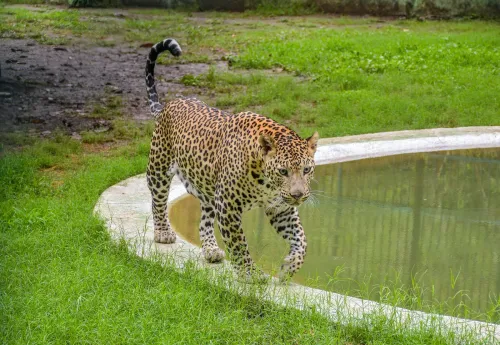
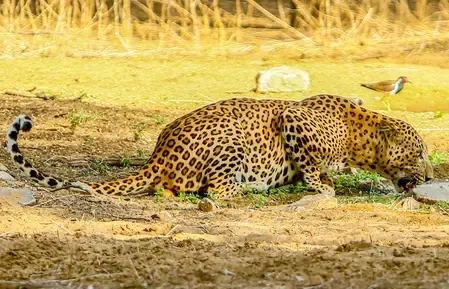
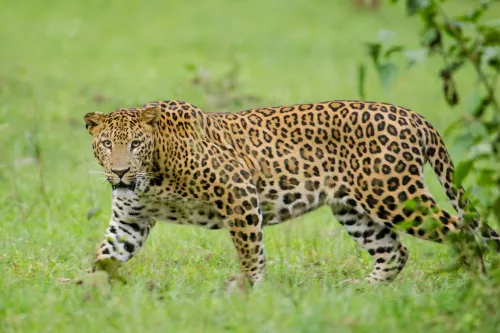
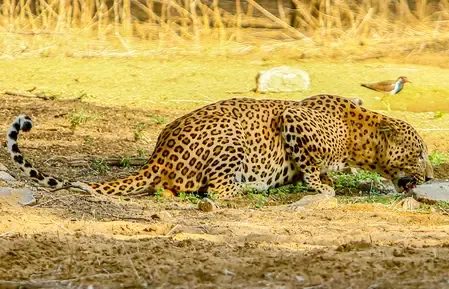
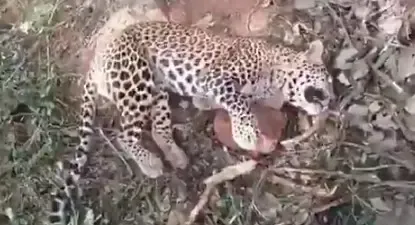
Two leopards captured in Budgam, J&K; residents relieved
Synopsis
Two leopards prowling a residential area in Budgam, central Kashmir, have been captured by the J&K Wildlife Protection Department — but the operation is a symptom of a far larger crisis: over 17,000 human-wildlife conflict cases and more than 100 deaths in J&K over five years, with shrinking forests and expanding settlements pushing predators ever closer to people.
Key Takeaways
Two leopards were captured in the Lakhripora area of Budgam district , central Kashmir, on 10 August .
The operation was conducted by the J&K Wildlife Protection Department following reports of leopard movement near residential areas.
The animals will be relocated and released into their natural habitat, according to officials.
Jammu and Kashmir has recorded over 17,000 human-wildlife conflict cases and more than 100 deaths in a recent five-year period.
Government data shows 32 deaths and over 269 injuries in just a two-year window , with Shopian among the worst-affected districts.
Habitat loss, shrinking forest cover, and open garbage dumps are identified as key drivers of wildlife entering human settlements.
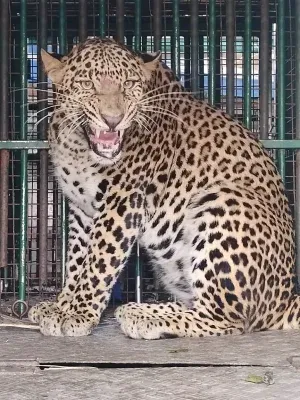
A Jammu and Kashmir Wildlife Protection Department team successfully captured two leopards in the Lakhripora area of Budgam district in central Kashmir on 10 August, bringing relief to residents who had been living in fear of the animals' presence in their locality. The operation, conducted following reports of leopard movement in the area, marks a swift response to community concerns.
How the Operation Unfolded
The Wildlife Protection Department launched the capture operation after receiving reports of the leopards moving through residential parts of Lakhripora. “The capture has eased concerns among residents, particularly those living in areas where the leopards had been spotted,” an official said. The department has confirmed the animals will be relocated and released into their natural habitat.
Locals expressed visible relief at the intervention. “The presence of the animals had created apprehension among residents. The intervention by the Wildlife Protection Department has helped address the immediate concern,” the official added.
The Broader Human-Wildlife Conflict Crisis in J&K
The Budgam capture is not an isolated incident. Jammu and Kashmir has recorded over 17,000 human-wildlife conflict cases and more than 100 deaths over a recent five-year period, according to government data. In a particularly alarming two-year window, 32 deaths and over 269 injuries were documented, reflecting the persistent danger faced by communities living near wildlife corridors.
North and South Kashmir register the highest volumes of such encounters, with districts like Shopian frequently reporting elevated incident rates. Pastoral communities, farmers working in apple orchards, and children near forest fringes are among the most vulnerable groups. Beyond physical harm, repeated proximity to predators reportedly leaves many residents with chronic anxiety and post-traumatic stress.
Why Leopards Are Venturing into Villages
Wildlife experts point to a combination of structural factors driving carnivores into human settlements. Rapid conversion of buffer zones, farmland, and forest patches into residential colonies and commercial orchards has fragmented animal territory and shrunk wildlife corridors. Degraded forests offer reduced natural prey, pushing carnivores such as leopards to scavenge near livestock. Open garbage dumps near habitations further attract omnivores like Asiatic black bears, compounding the conflict dynamic.
Notably, expanding human settlements along the edges of Kashmir's forests have effectively narrowed the boundary between wild and inhabited space, making such encounters increasingly frequent across the region.
What Happens Next
The two captured leopards are set to be relocated by the J&K Wildlife Protection Department and released into suitable natural habitat away from human settlements. Authorities have not yet specified the release site. The successful Budgam operation is likely to renew calls for a more comprehensive, long-term human-wildlife conflict mitigation strategy in the Union Territory, including habitat restoration and early-warning systems for communities at risk.
Point of View
But it papers over a structural failure. With over 17,000 conflict cases in five years, J&K's human-wildlife interface is not a fringe problem — it is a governance one. Relocation is a short-term fix; without habitat restoration and corridor protection, relocated leopards or others will return to the same villages. The real accountability question is whether the Union Territory administration has a credible long-term mitigation plan, or whether each capture is simply crisis management dressed as conservation.
NationPress
24 Sept 2026
Frequently Asked Questions
Where were the two leopards captured in Jammu and Kashmir?
The two leopards were captured in the Lakhripora area of Budgam district in central Kashmir. The operation was carried out by the J&K Wildlife Protection Department following reports of the animals moving through residential parts of the locality.
What will happen to the captured leopards?
The J&K Wildlife Protection Department has confirmed the two leopards will be relocated and released into their natural habitat. The specific release site has not been publicly disclosed.
How serious is the human-wildlife conflict problem in Jammu and Kashmir?
It is a critical and worsening issue. Government data shows over 17,000 conflict cases and more than 100 deaths over a recent five-year period, with 32 deaths and over 269 injuries recorded in just a two-year window. North and South Kashmir, including Shopian district, register the highest incident rates.
Why are leopards and other wild animals entering human settlements in Kashmir?
The primary drivers are habitat loss and fragmentation — conversion of buffer zones and forests into residential colonies and commercial orchards has shrunk wildlife corridors. Degraded forests with reduced natural prey force carnivores toward livestock, while open garbage dumps near villages attract animals like Asiatic black bears.
Who is most at risk from human-wildlife conflict in J&K?
Pastoral communities, farmers working in apple orchards, and children living near forest fringes face the highest risks. Beyond physical injuries, experts note that repeated exposure to predator encounters causes chronic anxiety and post-traumatic stress among affected residents.