GLOF preparedness: Home Secy Govind Mohan reviews Himalayan states' readiness
Synopsis
Days after glacial floods ravaged Nepal, Union Home Secretary Govind Mohan called Himalayan states to account — pushing them to move past reactive disaster response toward risk-informed prevention. With 2024-sanctioned GLOF mitigation projects still lagging, the meeting signals that the Centre is tightening the clock on mountain-state preparedness.
Key Takeaways
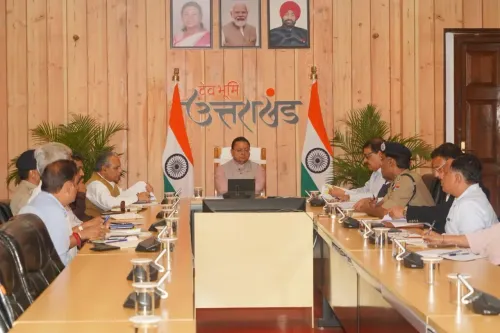
Union Home Secretary Govind Mohan chaired a GLOF preparedness review on 3 September in New Delhi .
States reviewed: Uttarakhand , Himachal Pradesh , Sikkim , Arunachal Pradesh , and Jammu & Kashmir .
Mohan directed states to expedite GLOF mitigation projects sanctioned in 2024 by the Central Government.
Agencies present included NDMA , CWC , IMD , and DGRE .
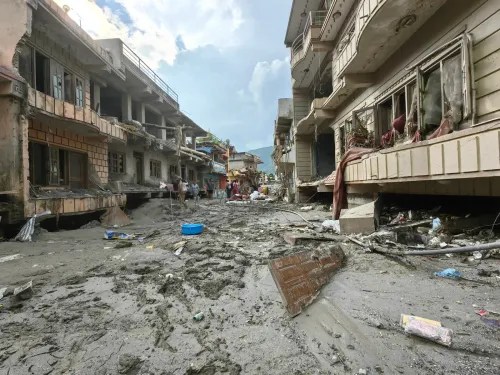
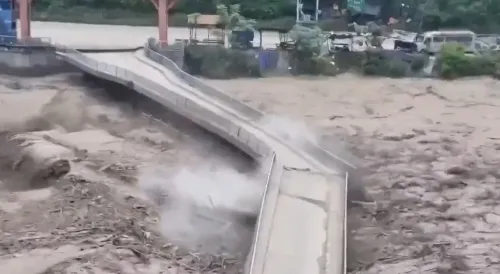
The review was triggered in part by recent glacial flood devastation in Nepal .
Focus areas: early warning systems, last-mile alert dissemination, flow path planning, and community-level preparedness.
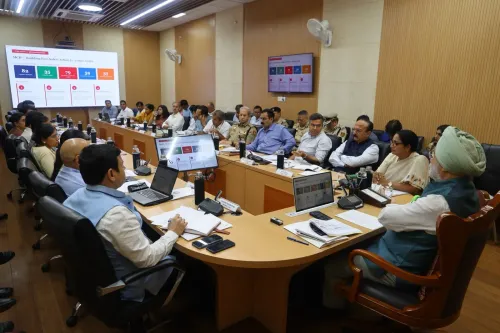
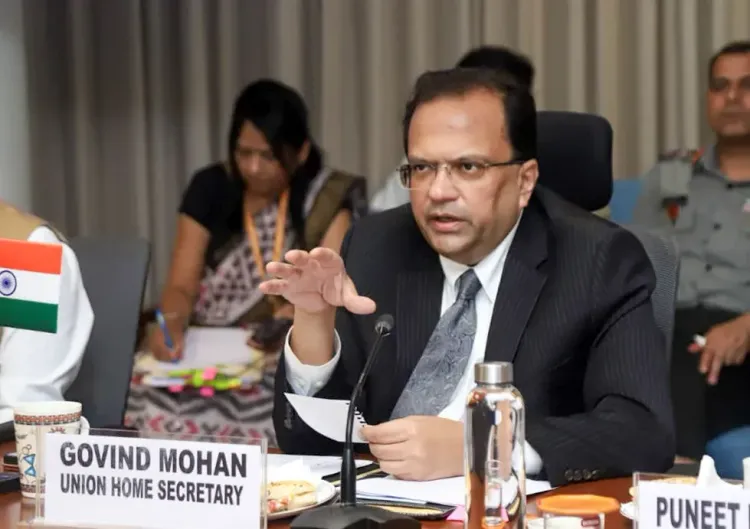
Union Home Secretary Govind Mohan on Thursday, 3 September chaired a high-level review meeting in New Delhi to assess the preparedness of Himalayan states and Union Territories against glacial lake outburst floods (GLOFs) and snow avalanches — hazards that recently caused widespread destruction in Nepal. The meeting underscored the Centre's urgency to move disaster management in mountain regions from reactive response to risk-informed, preventive planning.
Who Was at the Table
The review was attended by Chief Secretaries and State Disaster Management Authorities from Uttarakhand, Himachal Pradesh, Sikkim, Arunachal Pradesh, and Jammu & Kashmir. Senior officials from the Ministry of Home Affairs (MHA), National Disaster Management Authority (NDMA), Central Water Commission (CWC), India Meteorological Department (IMD), and the Defence Geoinformatics Research Establishment (DGRE) were also present.
Key Directives from the Home Secretary
Mohan stressed the need for continuous and proactive monitoring of vulnerable glacial lakes and avalanche-prone zones, especially during periods of heightened risk. He called for close coordination among state agencies, district administrations, and scientific institutions to ensure that early warnings translate into prompt, effective action on the ground.
Notably, he urged states to expedite GLOF mitigation projects sanctioned by the Central Government in 2024, signalling that progress on already-approved schemes has been slower than expected.
What States Presented
Each state and UT outlined its preparedness and mitigation strategies, covering monitoring of vulnerable glacial lakes, strengthening of early warning systems, last-mile alert dissemination, flow path planning, community preparedness, and deployment of response resources in high-risk areas. State-specific vulnerabilities were examined in detail, with emphasis on converting mitigation plans into concrete action at the district and local levels.
The Broader Risk Context
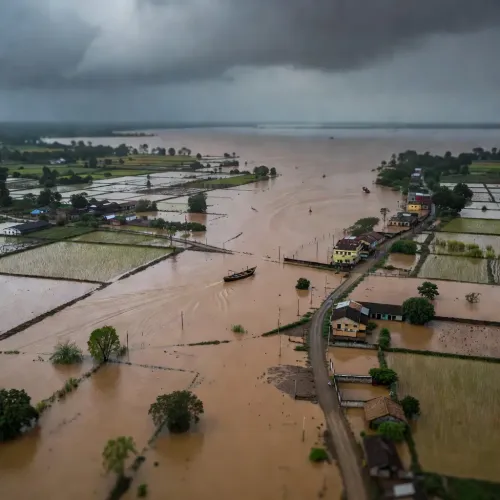
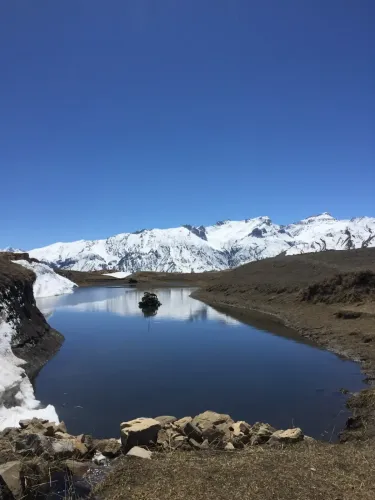
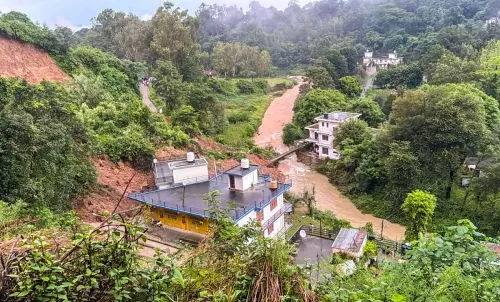
The Himalayan arc is home to thousands of glacial lakes, many of which have expanded significantly due to accelerating glacial melt. GLOFs — sudden, high-volume discharges triggered by the breach of a glacial lake — can travel hundreds of kilometres downstream, devastating settlements, bridges, and agricultural land within hours. Sikkim experienced a catastrophic GLOF in October 2023, which killed dozens and caused infrastructure losses running into thousands of crores. The Nepal events that prompted this review serve as a fresh reminder that the threat is active and escalating across the broader Himalayan region.
What Comes Next
The Home Secretary's direction to shift preparedness 'beyond response-oriented measures towards risk-informed planning' signals a policy recalibration. States are expected to accelerate pending mitigation projects and ensure that district-level administrations are equipped and drilled for GLOF scenarios. Further coordination reviews are likely as the high-risk monsoon and post-monsoon season continues.
Point of View
Multi-state reckoning with GLOF risk in India. The Home Secretary's pointed nudge on 2024-sanctioned mitigation projects that are still pending speaks to a persistent gap between central funding and state execution. India's Himalayan states sit atop one of the world's densest concentrations of glacial lakes, many swelling with meltwater, yet early warning infrastructure at the last mile remains patchy. Reviewing preparedness after a neighbour's disaster is necessary, but the real test is whether district-level administrations — the actual first responders — are drilled, resourced, and empowered to act in the minutes that a GLOF warning affords.
NationPress
3 Sept 2026
Frequently Asked Questions
What is a glacial lake outburst flood (GLOF) and why is it a threat to India?
A GLOF is a sudden, large-scale release of water from a glacial lake, typically caused by the breach of an ice or moraine dam. India's Himalayan states — including Uttarakhand, Sikkim, Himachal Pradesh, and Arunachal Pradesh — are highly vulnerable, as thousands of glacial lakes in the region have expanded due to accelerating glacial melt, raising the risk of catastrophic downstream flooding.
Why did Union Home Secretary Govind Mohan call this review meeting on 3 September?
The meeting was convened in the wake of recent glacial flood events in Nepal that caused widespread destruction, prompting the Centre to assess whether Indian Himalayan states have adequate early warning, monitoring, and evacuation systems in place. The review also examined the status of GLOF mitigation projects sanctioned by the Central Government in 2024.
Which states and agencies participated in the GLOF preparedness review?
Chief Secretaries and State Disaster Management Authorities from Uttarakhand, Himachal Pradesh, Sikkim, Arunachal Pradesh, and Jammu & Kashmir attended. Central agencies present included the MHA, NDMA, CWC, IMD, and DGRE.
What specific actions did the Home Secretary direct states to take?
Govind Mohan directed states to maintain continuous monitoring of vulnerable glacial lakes and avalanche-prone areas, strengthen last-mile alert dissemination, coordinate closely between state agencies and district administrations, and expedite GLOF mitigation projects already sanctioned by the Centre in 2024.
How does this review connect to the Sikkim GLOF disaster of 2023?
Sikkim suffered a devastating GLOF in October 2023 that killed dozens and caused massive infrastructure damage, highlighting the real and immediate nature of the threat. The current review builds on lessons from that disaster and the recent Nepal events, pushing states toward preventive and risk-informed planning rather than post-disaster response alone.