How Does the Trade Deal Unlock a $30 Trillion US Market for India’s Exports?
Synopsis
The India-US Bilateral Trade Agreement has opened up a monumental opportunity for Indian exports, providing preferential access to the enormous $30 trillion US market. This landmark agreement introduces significant tariff reductions and fosters collaboration in various sectors, paving the way for enhanced trade relations between the two nations. Discover how this impacts the economy!
Key Takeaways
India-US Bilateral Trade Agreement opens up a $30 trillion market.
Significant tariff reductions enhance competitiveness.
Zero-duty access for key product categories.
Protection for sensitive sectors like dairy and meat.
Strengthens trade ties between India and the US.
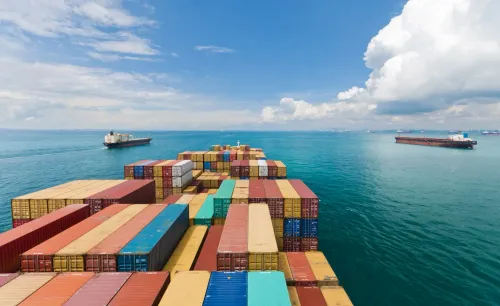
New Delhi, Feb 9 (NationPress) The India-US Bilateral Trade Agreement (BTA) represents a significant achievement in India's global trade relations, ensuring lasting preferential access for exports within the US market, which is estimated to exceed $30 trillion, as noted in an official announcement released on Monday.
This agreement provides extensive tariff adjustments, duty-free entry for a wide range of products, improved cooperation in digital and technological sectors, and a strategically designed framework to protect India's farmers, MSMEs, and local industries.
With India's overall exports to the United States recorded at $86.35 billion in 2024, the agreement greatly boosts competitive access in vital sectors such as textiles, leather, gems and jewellery, agriculture, machinery, home decor, pharmaceuticals, and technology-driven fields.
According to the agreement, tariffs on $30.94 billion worth of these exports have been decreased from 50 percent to 18 percent, while tariffs on an additional $10.03 billion have been entirely eliminated. This translates to a significant portion of Indian products entering the US market facing either dramatically reduced tariffs or completely duty-free entry, thereby enhancing price competitiveness.
Indian textiles and apparel exports, which are labor-intensive, will see tariff reductions from 50 percent to 18 percent, with silk receiving zero-duty access in a $113 billion US market for these products. Similarly, machinery exports will benefit from reduced tariffs to 18 percent, opening up opportunities in a $477 billion US market, as highlighted in the statement.
The agreement also greatly benefits India's leather and footwear sectors, establishing the country as the most preferred supplier in the US market. Tariffs on these exports have been cut from 50 percent to 18 percent, enhancing access to a $42 billion market.
Given the labor-intensive character of the leather and footwear industry, increased market access is anticipated to bolster manufacturing growth and job creation, particularly within MSMEs and production hubs.
Additionally, tariffs on gems and jewellery exports have been lowered from 50 percent to 18 percent, allowing preferential access to a $61 billion US market. Furthermore, zero-duty market access has been achieved for key product categories, including diamonds, platinum, and coins, covering a US market worth $29 billion.
In another notable achievement, Indian agricultural exports valued at $1.36 billion have gained zero additional US duties, while essential products like spices, tea, coffee, fruits, nuts, and processed foods enjoy zero-duty status.
Sensitive sectors such as dairy, meat, poultry, and cereals remain fully protected under the India-US trade agreement, as further explained in the statement.
The agreement creates a distinct tariff advantage for India. While duties on Indian goods have been minimized, numerous competing suppliers still endure high tariffs in the US market, such as China (35 percent), Vietnam (20 percent), Bangladesh (20 percent), Malaysia (19 percent), Indonesia (19 percent), Philippines (19 percent), Cambodia (19 percent), and Thailand (19 percent), the statement noted.
Point of View
I believe the India-US Bilateral Trade Agreement marks a pivotal moment in our nation’s economic journey. This agreement not only strengthens trade ties but also safeguards our domestic industries, ensuring that India's farmers and MSMEs benefit from this new landscape. It's a step towards a more resilient and competitive economy, aligning with our national growth aspirations.
NationPress
14 Oct 2026
Frequently Asked Questions
What is the India-US Bilateral Trade Agreement?
The India-US Bilateral Trade Agreement is a comprehensive trade deal that enhances preferential access for Indian exports to the US market, valued at over $30 trillion .
How does the trade agreement benefit Indian exporters?
The agreement provides tariff reductions, zero-duty access for various products, and improved competitive access in key sectors such as textiles, agriculture, and technology.
What sectors are expected to gain from this agreement?
Sectors such as textiles, leather, gems and jewellery, machinery, agriculture, and technology-driven industries are expected to benefit significantly from the agreement.
Are there any product categories that are protected?
Yes, sensitive sectors like dairy, meat, poultry, and cereals remain fully protected under the agreement.
How do tariffs on Indian exports compare to those of competing countries?
The agreement lowers tariffs on Indian exports, while competing countries like China and Vietnam continue to face elevated tariffs in the US market.