Was Savarkar the Most Radiant ‘Guiding Star’ from 1857 to 1947? - Mohan Bhagwat
Synopsis
At a significant event in New Delhi, RSS chief Mohan Bhagwat and Union Home Minister Amit Shah unveiled a grand tribute to Vinayak Damodar Savarkar, highlighting his immense contributions and calling him the brightest guiding star of India's freedom struggle. The event also emphasized the importance of national unity and cultural strength.
Key Takeaways
Vinayak Damodar Savarkar is celebrated for his contributions to India's freedom struggle.
The event highlighted the need for national unity and cultural pride.
Mohan Bhagwat urged the current generation to contribute to the nation's progress.
Education should serve the country , not just personal gain.
Despite hardships, Savarkar remained committed to his vision of a united India.
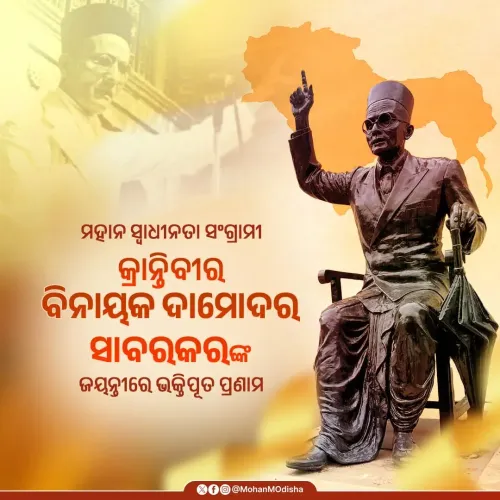
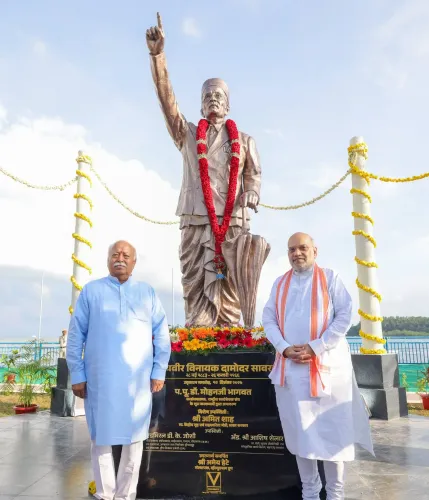
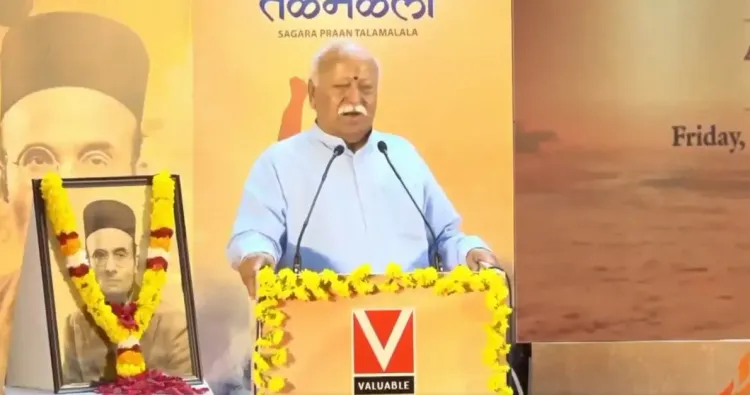
New Delhi, Dec 12 (NationPress) RSS chief Mohan Bhagwat and Union Home Minister Amit Shah unveiled an impressive statue of Vinayak Damodar Savarkar on Friday. During the event, Bhagwat referred to Savarkar as “the brightest guiding star between 1857 and 1947.”
The ceremony took place at the B.R. Ambedkar Institute of Technology Auditorium in Pahargaon, commemorating 115 years since Savarkar’s inspirational poem Sagara Pran Talamalala. It attracted numerous dignitaries and a substantial audience.
From the podium, Bhagwat highlighted Savarkar’s unparalleled contributions across various fields, including literature, poetry, law, theatre, and social reform, in the presence of senior leaders like Home Minister Amit Shah, Admiral (Retd) Devendra Kumar Joshi, the Lieutenant Governor of Andaman and Nicobar Islands, and Maharashtra Minister Ashish Shelar.
He recalled Savarkar’s dedication, noting his letters from imprisonment alongside his brothers, which expressed a profound love for India, stating that even if there had been seven brothers, all would have willingly endured imprisonment for their homeland.
According to Bhagwat, Savarkar viewed every skill he acquired—be it writing, singing, or legal knowledge—as an offering to the nation.
“He believed education was meaningless if it didn’t serve the country,” he emphasized.
Bhagwat underscored the necessity for national unity, asserting that there should be no room in India for divisive ideas. He added that Savarkar never confined himself to any caste or region but identified solely as a servant of the nation.
He highlighted that while past generations sacrificed their lives for the country’s freedom, the current generation must strive for the nation’s progress. He stressed the importance of self-reliance and swadeshi, encouraging parents to instill hard work and success in their children, always with an eye toward contributing to India’s development.
Bhagwat portrayed Savarkar’s vision for the nation as one deeply rooted in cultural strength and unity, stating that Savarkar perceived the nation itself as divine.
Despite facing significant hardships, he harbored no bitterness, with Bhagwat reiterating Savarkar as “the brightest guiding star between 1857 and 1947.”
Point of View
Reinforcing the importance of national unity and cultural pride. As leaders reflect on Savarkar's contributions, it is vital to consider the broader implications of his vision for a unified India as we navigate through contemporary challenges.
NationPress
22 Sept 2026
Frequently Asked Questions
Who was Vinayak Damodar Savarkar?
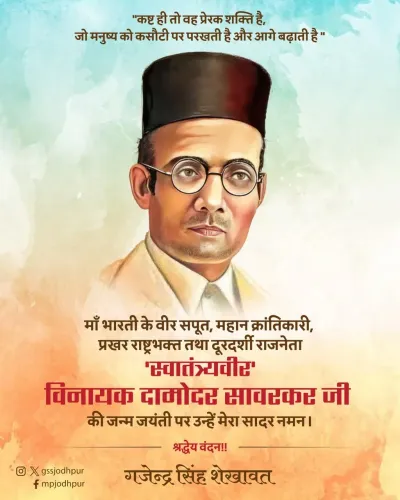
Vinayak Damodar Savarkar was an Indian independence activist, lawyer, politician, poet, and playwriter, known for his influential role during the freedom struggle.
What did Mohan Bhagwat say about Savarkar?
Mohan Bhagwat referred to Savarkar as 'the brightest guiding star between 1857 and 1947,' highlighting his vast contributions to literature, law, and social reform.
Where was the statue of Savarkar unveiled?
The statue was unveiled at the B.R. Ambedkar Institute of Technology Auditorium in Pahargaon, New Delhi.
What is the significance of Savarkar's story?
Savarkar's story is significant as it reflects the spirit of sacrifice and dedication to the nation during India's struggle for independence.
What themes were emphasized during the event?
Themes of national unity, cultural strength, and the importance of contributing to India's progress were emphasized during the event.