UP Cabinet clears Pragati Robotics Park in Greater Noida, targets 1 lakh jobs
Synopsis
In a sweeping single-day Cabinet session, Yogi Adityanath's government approved a ₹17,542-crore expressway expansion and a 69-acre robotics-and-AI park in Greater Noida that promises one lakh jobs — a dual bet on hard infrastructure and deep-tech industry that signals UP's ambitions to challenge India's established technology corridors.
Key Takeaways
Pragati Robotics Park approved in Greater Noida across 69.52 acres , targeting over 1 lakh jobs and ₹2,000 crore annual GVA.
Four Link Expressways — Farrukhabad , Jhansi , Agra-Lucknow–Purvanchal , and Jewar — approved at a combined cost of ₹17,542.06 crore .
Expressway projects expected to generate 760 lakh man-days of employment; construction targeted within three years .
Four Global Capability Centres cleared with a combined investment of ₹1,709.84 crore in Gautam Buddha Nagar .
UP-CSOC cybersecurity centre approved at ₹104.28 crore ; to be operated by C3iHub at IIT-Kanpur .
Overall, the Cabinet passed 22 proposals in a single session on 27 October 2026 .
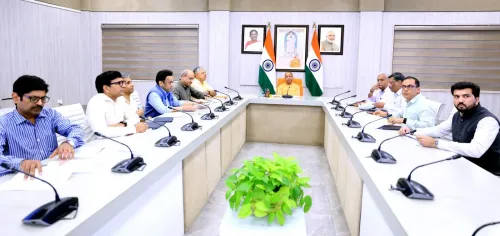
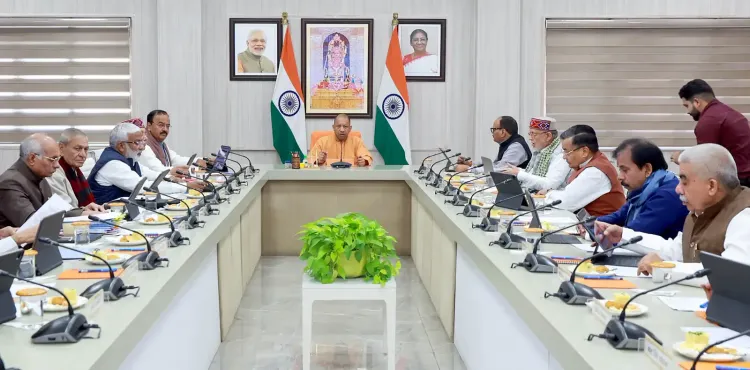
The Uttar Pradesh Cabinet on Tuesday, 27 October 2026, approved 22 proposals, including the establishment of the Pragati Robotics Park in Greater Noida — a technology hub projected to generate over one lakh direct and indirect jobs — and the construction of four new Link Expressways at a combined estimated cost of ₹17,542.06 crore. The decisions, taken under Chief Minister Yogi Adityanath's administration, mark one of the most ambitious single-day infrastructure and technology approvals by the state government in recent years.
Pragati Robotics Park: What It Entails
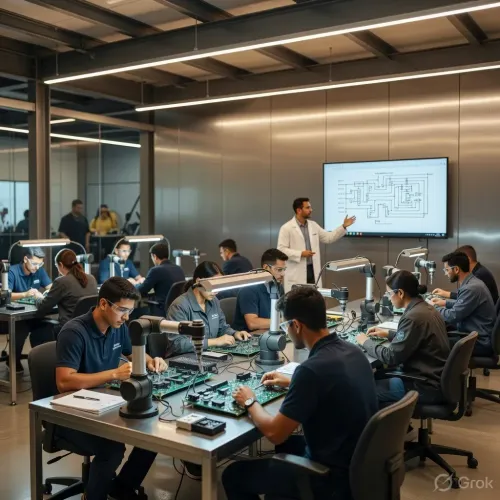
The Pragati Robotics Park — an acronym for Platform for Robotics and AI Growth Through Technology and Innovation — will be spread across approximately 69.52 acres in Greater Noida. State Finance Minister Suresh Kumar Khanna said the project is expected to generate more than 1,00,000 direct and indirect jobs and contribute around ₹2,000 crore annually in gross value addition to the state economy once fully operational.
The park will be divided into two zones: Zone 1, spanning 8 acres, will be developed through a Special Purpose Vehicle (SPV) under a Public-Private Partnership (PPP) model, while Zone 2 will cover the remaining 61.52 acres. Commercial operations in Zone 1 are targeted to begin within 36 months of SPV registration, extendable to 48 months if required.
The facility will offer shared infrastructure including robotics testing and certification centres, rapid prototyping services, AI computing infrastructure, motion capture laboratories, and data laboratories — positioning Greater Noida as a potential national anchor for robotics manufacturing and AI-based industries.
Four New Link Expressways Approved
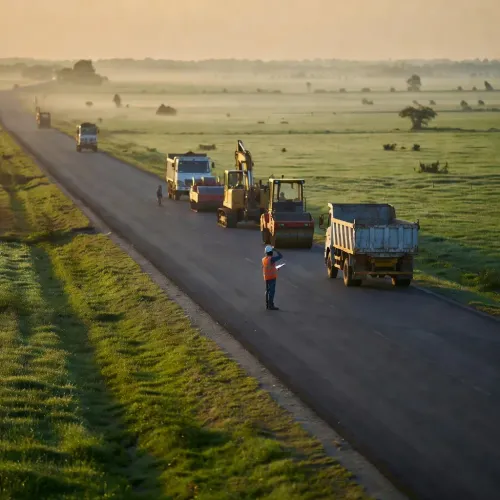
The Cabinet cleared four expressway projects aimed at strengthening connectivity across western, central, and eastern Uttar Pradesh. The approved links are the Farrukhabad Link Expressway, the Jhansi Link Expressway, a link connecting the Agra-Lucknow Expressway with the Purvanchal Expressway, and the Jewar Link Expressway.
The Uttar Pradesh Expressways Industrial Development Authority (UPEIDA) will implement all four projects through the Engineering, Procurement and Construction (EPC) model. Developers have been selected for two packages each for the Farrukhabad, Jhansi, and Jewar links. Construction is targeted for completion within three years, followed by a five-year maintenance period.
The expressway projects are collectively expected to generate approximately 760 lakh man-days of direct and indirect employment. Notably, the Agra-Lucknow–Purvanchal link will bolster east-west travel, while the Jewar Link Expressway will enhance connectivity to the Jewar region — home to the upcoming Noida International Airport.
Global Capability Centres and Cyber Security
The Adityanath government also approved Letters of Comfort to four companies proposing a combined investment of ₹1,709.84 crore in Gautam Buddha Nagar under the Uttar Pradesh Global Capability Centres Policy-2024, signalling the state's intent to attract multinational technology operations.
In a separate cybersecurity move, the Cabinet sanctioned the creation of the Uttar Pradesh Cyber Security Operations Centre (UP-CSOC) at an estimated cost of ₹104.28 crore including GST. The proposed operator is the C3iHub Cyber Security Innovation Hub at IIT-Kanpur. The centre will provide round-the-clock monitoring of the State Data Centre, the UP State Wide Area Network (UPSWAN), and critical government applications, deploying Artificial Intelligence, Machine Learning, and Threat Intelligence to detect and respond to cyberattacks, data theft, and suspicious activity. The project spans three years of operations, maintenance, and security audits.
Significance and What Comes Next
Tuesday's Cabinet session reflects a broader pattern in the Adityanath government's strategy: pairing hard infrastructure — expressways — with technology-driven industry to attract investment ahead of the state's next investors' summit cycle. The Pragati Robotics Park, in particular, positions Uttar Pradesh to compete with established tech corridors in Bengaluru, Hyderabad, and Pune. With SPV registration and developer selection processes now set to commence, stakeholders will closely watch whether project timelines translate into ground-level execution at the pace the state has promised.
Point of View
Expressways, global capability centres, and a cyber ops centre sends a strong signal to investors ahead of any future UP Global Investors Summit. Yet the record on UP expressways, while improving, shows a persistent gap between sanction and commissioning dates. The one-lakh-jobs projection for the Pragati Robotics Park is ambitious: India's existing robotics ecosystem is nascent, and without a pipeline of anchor tenants committed before SPV registration, the park risks becoming premium industrial land awaiting takers. The cyber ops centre, anchored at IIT-Kanpur's C3iHub, is arguably the most credible piece — a rare instance of state-level cyber infrastructure backed by a proven academic institution rather than a greenfield procurement.
NationPress
27 Oct 2026
Frequently Asked Questions
What is the Pragati Robotics Park approved by the UP Cabinet?
The Pragati Robotics Park is a planned technology hub in Greater Noida, approved by the Uttar Pradesh Cabinet on 27 October 2026, spread across 69.52 acres. It will focus on robotics manufacturing, AI-based technologies, research, and startups, and is projected to generate over one lakh direct and indirect jobs and contribute ₹2,000 crore annually to the state's economy once operational.
Which four Link Expressways did the UP Cabinet approve?
The Cabinet approved the Farrukhabad Link Expressway, the Jhansi Link Expressway, a link connecting the Agra-Lucknow Expressway with the Purvanchal Expressway, and the Jewar Link Expressway. Together, these four projects carry an estimated cost of ₹17,542.06 crore and will be implemented by UPEIDA through the EPC model.
When will construction on the new UP expressways be completed?
Construction on all four Link Expressways is targeted for completion within three years of commencement, followed by a five-year maintenance period. Developers have already been selected for two packages each for the Farrukhabad, Jhansi, and Jewar links.
What is the UP Cyber Security Operations Centre (UP-CSOC)?
UP-CSOC is a proposed round-the-clock cybersecurity monitoring centre approved by the UP Cabinet at an estimated cost of ₹104.28 crore including GST. It will be operated by the C3iHub Cyber Security Innovation Hub at IIT-Kanpur and will monitor the State Data Centre, UPSWAN, and critical government applications using AI, Machine Learning, and Threat Intelligence.
What are the Global Capability Centres approved by the UP Cabinet?
Under the Uttar Pradesh Global Capability Centres Policy-2024, the Cabinet issued Letters of Comfort to four companies planning a combined investment of ₹1,709.84 crore in Gautam Buddha Nagar. These centres are intended to attract multinational technology and business-process operations to the state.