Is Uttar Pradesh Prepared for the Babri Masjid Demolition Anniversary?
Click to start listening
Synopsis
Security measures have been intensified across Uttar Pradesh as the anniversary of the Babri Masjid demolition approaches. With heightened vigilance in sensitive areas like Ayodhya and Mathura, authorities are taking all necessary precautions to maintain peace. This article explores the security arrangements, historical context, and the implications of this significant date.
Key Takeaways
- Heightened Security: Enhanced security measures have been implemented across Uttar Pradesh.
- Significant Historical Context: December 6 is a polarizing date linked to the Babri Masjid demolition.
- Ongoing Disputes: The dispute over the Shahi Idgah Mosque continues to influence security protocols.
- Community Observances: Different communities observe the day in contrasting ways, necessitating careful policing.
- Supreme Court Ruling: The Supreme Court's 2019 verdict has shaped the current landscape regarding the disputed site.
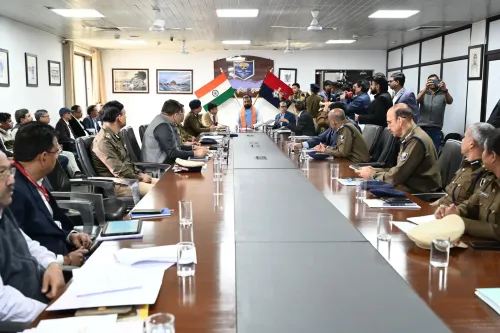
New Delhi, Dec 6 (NationPress) Security has been heightened throughout Uttar Pradesh in anticipation of December 6, the anniversary of the 1992 Babri Masjid demolition. Officials have issued a high alert in Ayodhya and Mathura, two of the state's most sensitive regions. Law enforcement has been instructed to remain observant, with multi-layered security protocols implemented to avert any incidents.
Several cities have been placed on high alert due to the significance of this date and the events that transpired in Ayodhya on December 6, 1992.
In Mathura, barricades have been established around the Shri Krishna Janmabhoomi complex and the Shahi Eidgah Mosque, with a substantial deployment of security personnel. The region has been systematically divided into two zones, four super zones, and eight sectors to facilitate effective monitoring. Authorities are actively overseeing the area through CCTV systems and drone surveillance. Similar security enhancements have also been enacted in Ayodhya.
In Vrindavan, security has been tightened around prominent temples such as the Banke Bihari Temple and Prem Mandir. Police teams are conducting checks near these religious sites, screening vehicles, and observing visitor movements. Additional personnel from the Agra-Aligarh range have been assigned to assist local law enforcement.
Units from the Provincial Armed Constabulary (PAC) and the Rapid Action Force (RAF) are on standby, while police officers in civilian attire are stationed near major temples and mosques to monitor crowd behavior and ensure quick responses if necessary.
This security escalation is also influenced by the ongoing dispute regarding the Shahi Idgah Mosque in Mathura. The Hindu community asserts that the mosque was erected during Mughal emperor Aurangzeb's reign after demolishing a temple believed to be the birthplace of Lord Krishna. The Supreme Court is currently hearing this matter, adding to the region's sensitivity.
December 6 is a divisive date; it is observed as 'Shaurya Diwas' by certain Hindu organizations and as a 'Black Day' by various Muslim groups. These contrasting observances necessitate careful policing and preventive measures to uphold communal harmony.
Ayodhya holds profound historical significance for December 6, 1992, when the Babri Masjid was demolished, leading to decades of legal and political turmoil regarding the site.
A pivotal moment occurred on November 9, 2019, when the Supreme Court unanimously ruled to grant the disputed land to Ram Lalla Virajman. The court mandated the formation of a trust by the Central and Uttar Pradesh governments to oversee the construction and management of a Ram temple, while also allotting five acres of land in Ayodhya to the Sunni Waqf Board for a new mosque.
The foundation-laying ceremony for the Ram temple took place on August 5, 2020, with Prime Minister Narendra Modi, members of the Trust, and numerous dignitaries in attendance. Construction officially began on the site where the Babri Masjid once stood.
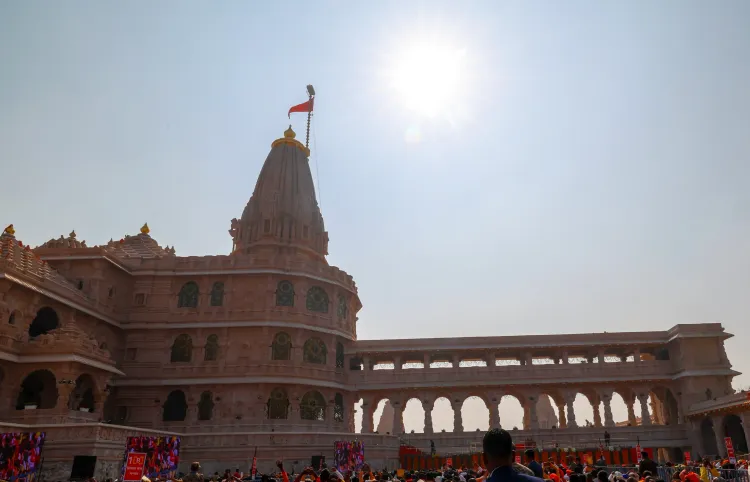
As of December 6, 2025, the Shri Ram Janmabhoomi Mandir has been fully constructed. On November 25, Prime Minister Modi raised the saffron Dharma Dhwaj atop the temple’s spire, symbolizing the successful completion of the Ram Mandir project.
Point of View
It is imperative to approach this sensitive issue with the utmost respect for all communities involved. The historical events surrounding December 6 are deeply polarizing, and while security measures are necessary to maintain peace, fostering dialogue and understanding among diverse groups is equally important. NationPress stands committed to delivering unbiased news that reflects the complexities of such matters.
NationPress
06/12/2025
Frequently Asked Questions
What is the significance of December 6 in India?
December 6 marks the anniversary of the Babri Masjid demolition in 1992, a pivotal event that triggered numerous legal disputes and political movements in India.
What security measures are being implemented in Uttar Pradesh?
Authorities have heightened security by deploying police forces, erecting barricades, and utilizing CCTV and drone surveillance in sensitive areas like Ayodhya and Mathura.
How do different communities observe December 6?
The day is observed as 'Shaurya Diwas' by some Hindu organizations and as 'Black Day' by various Muslim groups, reflecting the contrasting perspectives on the event.
What was the Supreme Court's ruling regarding the Babri Masjid site?
On November 9, 2019, the Supreme Court ruled to grant the disputed land to Ram Lalla Virajman and directed the establishment of a trust for the construction of a Ram temple.
What is the current status of the Ram temple construction?
The Shri Ram Janmabhoomi Mandir was completed by December 6, 2025, with the foundation laid in 2020 and a ceremonial flag raised by Prime Minister Modi.