UP Panchayati Raj Minister pushes modern amenities for Gram Panchayats
Synopsis
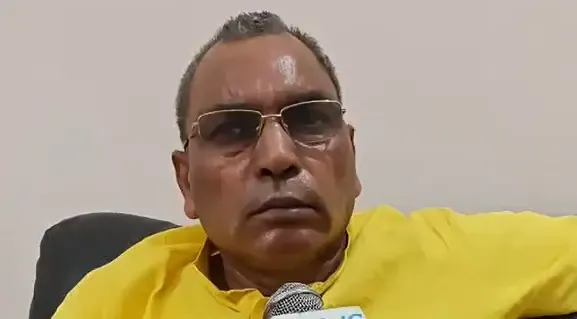
UP Panchayati Raj Minister Om Prakash Rajbhar has put officials on notice: rural schemes must show real results on the ground, not just on paper. From solar-powered street lights in villages of 2,500-plus to digital libraries and Aadhaar centres, the state is pushing a wide-ranging modernisation agenda for Gram Panchayats — with tight timelines and direct ministerial oversight.
Key Takeaways
Om Prakash Rajbhar , UP's Panchayati Raj Minister, reviewed departmental schemes at Vidhan Bhavan, Lucknow on 25 September 2025 .
Officials directed to ensure scheme benefits are visible on the ground, with strict adherence to implementation timelines.
Progress on Faecal Sludge Treatment Plants (FSTP) under Swachh Bharat Mission (Gramin) Phase-2 and rural sanitation IEC activities reviewed.
Mukhyamantri Gram Saur Yojana to provide solar-powered high-mast lights in Gram Panchayats with populations above 2,500 .
Digital libraries , Aadhaar service centres , and smart phones for Gram Panchayat Secretaries among digital infrastructure initiatives under review.
Handpump verification, water-quality testing, and geo-tagging of assets also assessed, with transparency and quality mandated.
Uttar Pradesh Panchayati Raj Minister Om Prakash Rajbhar on Friday, 25 September directed state officials to accelerate rural development schemes and ensure that modern amenities reach Gram Panchayats across the state, stressing that the benefits of government programmes must be visible on the ground and not remain confined to official records.
Key Directives from the Review Meeting
The instructions were issued during a departmental review meeting held at the Vidhan Bhavan in Lucknow, where officials assessed the progress of various Panchayati Raj Department schemes, budget utilisation, and ongoing development activities at the panchayat level. Rajbhar directed officials to monitor scheme progress regularly and adhere strictly to prescribed timelines, warning against delays that could stall rural infrastructure delivery.
Rajbhar underlined that Gram Panchayats are the most fundamental units of rural development. 'Therefore, the actual benefits of every scheme implemented at the panchayat level must reach the villagers,' he said.
Sanitation, Solar Power and Clean Energy Push
Officials reviewed the utilisation of funds and progress on establishing Faecal Sludge Treatment Plants (FSTP) under Swachh Bharat Mission (Gramin) Phase-2. The meeting also emphasised the need to strengthen Information, Education, and Communication (IEC) activities on sanitation and raise public awareness about cleanliness in rural areas.
A key agenda item was the rollout of solar-powered high-mast lights in Gram Panchayats with populations exceeding 2,500, under the state's 'Mukhyamantri Gram Saur Yojana'. Officials were directed to expedite the initiative to promote clean energy use alongside improved lighting in public spaces.
Digital Infrastructure at the Panchayat Level
The meeting also took stock of the expansion of digital facilities in Gram Panchayats, funded through state, central, and supplementary budgets. The initiatives under review include setting up digital libraries and Aadhaar service centres, and providing smart mobile phones to Gram Panchayat Secretaries to facilitate official duties.
Rajbhar specifically directed officials to ensure that digital libraries are equipped with books, furniture, electronic equipment, and digital study materials. According to the state government, the objective is to connect rural students and youth with modern learning resources and deepen digital access at the panchayat level.
Water Quality and Transparency in Field Work
The minister also reviewed handpump verification, water-quality testing activities, and the status of geo-tagging of assets. Officials were instructed to maintain transparency and quality in these tasks and to make efficient use of available resources.
Taken together, the directives signal a concerted push by the Uttar Pradesh government to bridge the gap between policy announcements and ground-level delivery in the state's vast rural belt, with implementation timelines and accountability emerging as the administration's stated focus areas.
Point of View
Sluggish delivery at the bottom. The breadth of the agenda — sanitation plants, solar lights, digital libraries, geo-tagging, water quality — suggests ambition, but also a fragmentation of focus that has historically diluted accountability. The real test for UP's Panchayati Raj push will be whether the directed timelines translate into measurable outcomes in a state with over 58,000 Gram Panchayats, most of which struggle with capacity constraints. Without publicly disclosed metrics and independent verification, the risk is that this, too, remains a meeting that generated minutes rather than milestones.
NationPress
25 Sept 2026
Frequently Asked Questions
What did UP Panchayati Raj Minister Om Prakash Rajbhar announce at the review meeting?
Rajbhar directed officials to accelerate rural development schemes, ensure ground-level delivery of benefits, and adhere to prescribed timelines. The review covered sanitation infrastructure, solar lighting, digital facilities, and water-quality work in Gram Panchayats across Uttar Pradesh.
What is the Mukhyamantri Gram Saur Yojana?
The Mukhyamantri Gram Saur Yojana is a state scheme to provide solar-powered high-mast lights in Gram Panchayats with populations exceeding 2,500. It aims to promote clean energy use alongside improved lighting in rural public spaces.
What digital facilities are being expanded in UP's Gram Panchayats?
The UP government is setting up digital libraries and Aadhaar service centres at the panchayat level and providing smart mobile phones to Gram Panchayat Secretaries. Digital libraries are to be equipped with books, furniture, electronic equipment, and digital study materials for rural students and youth.
What is being done under Swachh Bharat Mission (Gramin) Phase-2 in Uttar Pradesh?
Officials reviewed fund utilisation and the establishment of Faecal Sludge Treatment Plants (FSTP) under the scheme. The meeting also stressed conducting Information, Education, and Communication (IEC) activities to raise awareness about sanitation and cleanliness in rural areas.
Why are Gram Panchayats central to UP's rural development push?
According to Minister Rajbhar, Gram Panchayats are the most crucial units of rural development, as they are the last-mile delivery point for government schemes. He stressed that the benefits of every panchayat-level programme must directly reach villagers rather than remain on paper.