UP to install 1,000 mini biogas plants across all districts in bioenergy push
Synopsis
Uttar Pradesh is betting on cow dung to power its villages. With 1,000+ mini biogas plants planned across all districts, IIT Delhi on board for technical support, and 15+ companies ready to invest, the Yogi Adityanath government is turning gaushalas into rural energy hubs — and pitching carbon credits as the long-term payoff.
Key Takeaways
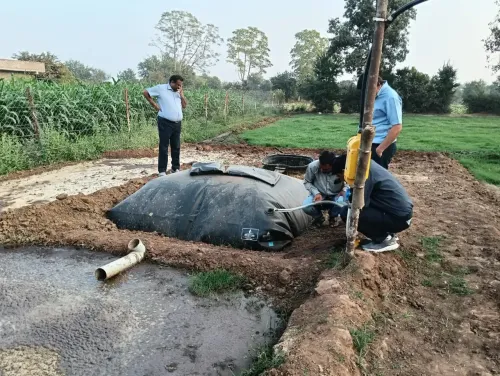
The Uttar Pradesh government plans to install mini biogas plants in over 1,000 households across all districts of the state.
Both fixed and portable plant models will be deployed; a subsidy framework for villagers is under development.
More than 15 major companies have expressed interest in joining the rural rollout.
IIT Delhi will provide technical oversight and run training programmes to create 'green technicians' from local youth.
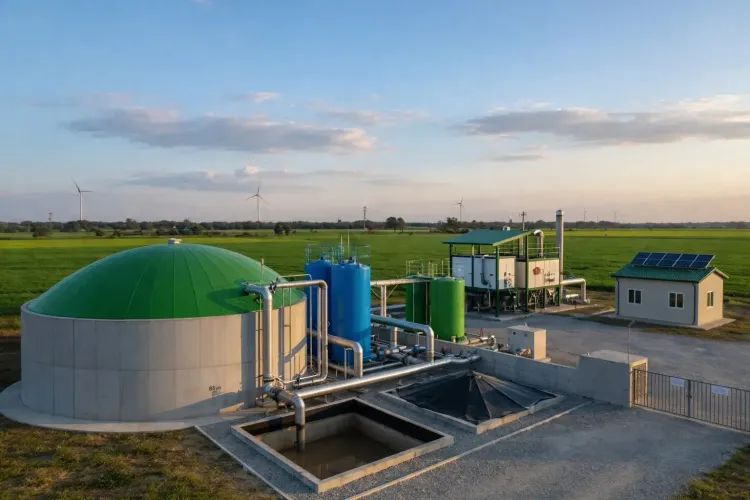
Gaushalas will be converted into 'Rural Resource and Energy Hubs' producing biogas, bio-CNG, organic fertiliser, and potentially carbon credits.
The initiative aims to cut rural LPG costs and reduce reliance on chemical fertilisers through organic slurry use.
The Uttar Pradesh government has unveiled a detailed blueprint to install mini biogas plants in over 1,000 households spread across all districts of the state, marking a significant step in the state's bioenergy transition. The initiative, driven by the Yogi Adityanath administration, aims to convert cow-based resources into sustainable sources of income, energy, and employment for rural communities.
What the Plan Covers
The scheme will deploy both fixed and portable biogas plant models across rural Uttar Pradesh. A subsidy framework is currently being developed to ease the financial burden on villagers who wish to install these units. More than 15 leading companies operating in the biogas sector have already expressed interest in participating in the rollout, according to an official statement.
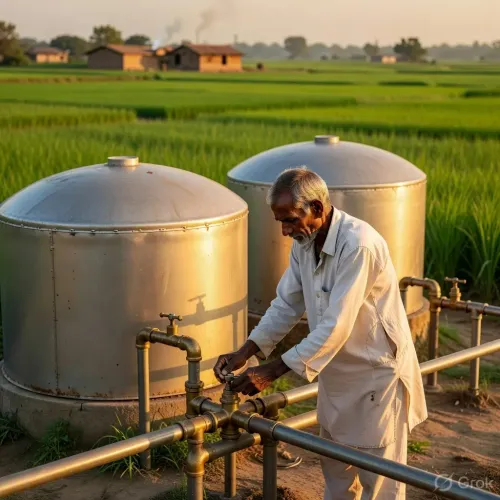
The gas produced by these plants will serve as domestic cooking fuel, directly reducing household expenditure on LPG. The organic slurry discharged as a by-product will be channelled into fields as high-quality fertiliser, reducing dependence on chemical inputs and supporting natural farming practices.
IIT Delhi's Technical Role
The state government has partnered with the Indian Institute of Technology (IIT) Delhi to provide technical oversight across plant design, installation, operations, and maintenance. IIT Delhi will also run a structured training programme to equip youth across the state with skills in biogas plant management, creating what officials describe as a new generation of 'green technicians.'
This training component is expected to generate self-employment opportunities for self-help groups and rural entrepreneurs, adding a livelihood dimension to the energy initiative.
Gaushalas as Rural Energy Hubs
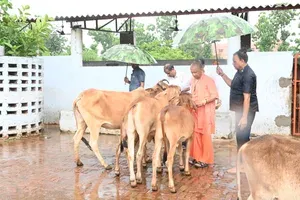
Cow shelters (gaushalas) across Uttar Pradesh will be redeveloped as 'Rural Resource and Energy Hubs', anchoring a complete value chain that spans biogas production, bio-CNG, and organic fertiliser from cow dung. Authorities have also flagged the potential for future carbon credit generation from these hubs, signalling ambitions beyond immediate energy output.
Shyam Bihari Gupta, Chairman of the Uttar Pradesh Gau Seva Aayog (Cow Service Commission), said the scheme's core strength lies in its technical and industrial collaboration. 'The objective of this campaign is to make rural areas self-reliant in terms of energy and to boost the production of organic manure,' he stated.
Broader Policy Context
This comes amid a broader national push toward decentralised renewable energy, with the Centre promoting biogas under its GOBAR-Dhan scheme. Uttar Pradesh, which has one of the largest cattle populations in India, is positioned to leverage its livestock base as a feedstock advantage. Notably, the integration of private-sector players alongside an IIT institution signals a departure from purely government-led rural energy programmes.
With guidelines and subsidy frameworks still being finalised, the pace of on-ground implementation will be the key variable to watch in the months ahead.
Point of View
And past biogas initiatives in India, including Central schemes, have struggled with plant abandonment rates once subsidies are disbursed and technical support lapses. The carbon credit angle is forward-looking but speculative at this stage. The real test will be whether the 'green technician' training pipeline is sustained long enough to build local maintenance capacity — without that, 1,000 plants risk becoming 1,000 monuments to good intentions.
NationPress
18 Oct 2026
Frequently Asked Questions
What is the UP government's mini biogas plant scheme?
The Uttar Pradesh government plans to install mini biogas plants in over 1,000 households across all districts of the state, using both fixed and portable models. The initiative is designed to provide rural households with cooking fuel, reduce LPG costs, and generate organic fertiliser from cow dung.
Which institution is providing technical support for the scheme?
The Indian Institute of Technology (IIT) Delhi is the technical partner for the initiative, overseeing plant design, installation, operations, and maintenance. IIT Delhi will also train local youth as 'green technicians' to manage the plants independently.
How will gaushalas be involved in the bioenergy plan?
Cow shelters (gaushalas) across Uttar Pradesh will be redeveloped as 'Rural Resource and Energy Hubs,' anchoring a value chain that produces biogas, bio-CNG, and organic fertiliser from cow dung, with future carbon credit generation also envisaged.
Who else is participating in the UP biogas initiative?
More than 15 leading companies operating in the biogas sector have expressed interest in joining the rural rollout, according to an official statement. Their involvement is intended to bring private-sector expertise and modern technology to village-level implementation.
What are the benefits for rural households under this scheme?
Rural households will receive biogas as a domestic cooking fuel, cutting LPG expenditure. The organic slurry by-product can be used as high-quality fertiliser, reducing chemical fertiliser costs. The scheme also aims to create self-employment for self-help groups and rural entrepreneurs through IIT Delhi's training programme.