Haryana CM Office Touts Land Registry Reforms at 12-Year Mark
Synopsis
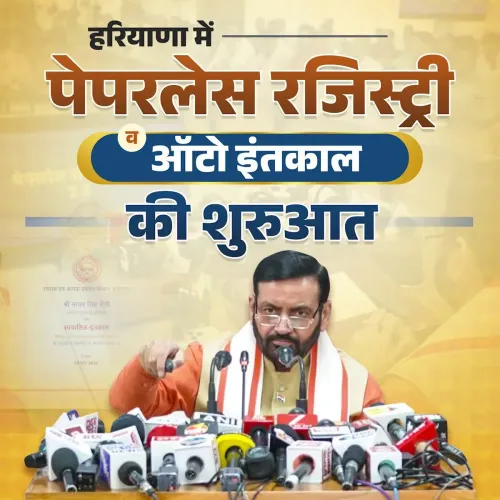
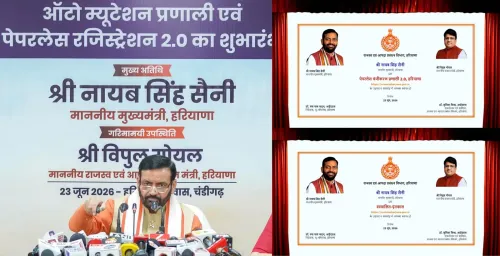
The Chief Minister's Office of Haryana on 18 October 2026 highlighted Paperless Registry 2.0, automated mutation records, and a WhatsApp chatbot as cornerstones of digitised land administration, framed within a 12-year governance journey and two years of a renewed BJP mandate in the state.
Key Takeaways
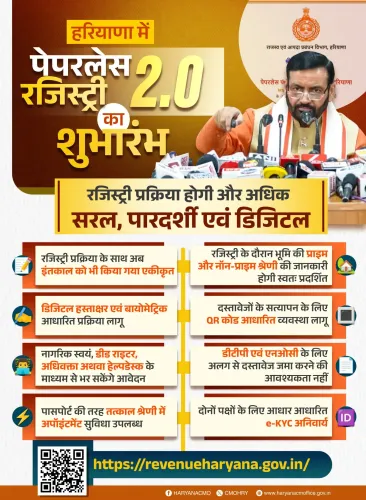
Paperless Registry 2.0 has been rolled out to digitise property registration in Haryana, reducing physical paperwork.
Automated intkal (mutation) removes the separate post-registration step historically linked to delays and disputes in land ownership updates.
A WhatsApp chatbot gives citizens a low-barrier, familiar channel to access land-related government services.
The reforms sit within India's National Land Records Modernization Programme (launched 2008) and the broader Digital India framework.
The CMO frames these milestones as part of 12 years of development and two years of fresh commitments under the current BJP government.
Integration with national platforms such as Bhudhaar and official adoption metrics remain the next key indicators to watch.
Twelve years into what it calls a continuous development journey, the Haryana government is now marking two additional years of renewed commitments — and at the centre of that pitch sits a quiet but consequential overhaul of how citizens deal with land records. On Sunday, 18 October 2026, the Chief Minister's Office of Haryana announced that Paperless Registry 2.0, automated mutation (intkal), and a WhatsApp chatbot have together made land-related services simpler and more transparent for residents across the state.
What Paperless Registry 2.0 and Auto-Intkal Actually Change
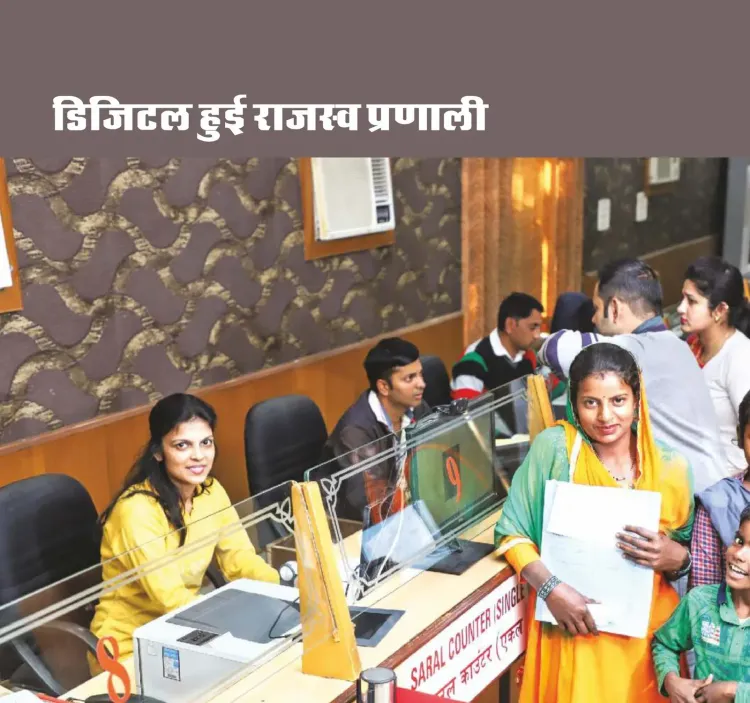
The post describes a trifecta of digital tools: Paperless Registry 2.0 for property registration, automated intkal (the formal mutation of land ownership records after a transaction), and a WhatsApp chatbot for citizen queries. Together, the government says, they deliver savings in 'time and labour' — the two costs that have historically made a visit to a revenue office a dreaded ordeal for Haryana's landowners.
Automated mutation is particularly significant. Traditionally, once a property sale was registered, the buyer still had to file a separate application for intkal — updating the revenue record to reflect new ownership. Delays at that stage have historically been a breeding ground for disputes and, critics have long alleged, for petty corruption. Automating the step removes a key friction point.
Building on a Decade of National Land Digitisation
Haryana's push sits within a longer national arc. India's National Land Records Modernization Programme (NLRMP), launched in 2008, set out to computerise land records across all states and reduce the litigation burden that unclear titles impose on millions of farmers and urban property holders alike. Haryana has been one of the states progressively building on that foundation, aligning its reforms with the broader Digital India framework that seeks to shift government services online and reduce physical-office dependence.
The addition of a WhatsApp chatbot reflects a pragmatic recognition: the most widely used mobile app in rural and semi-urban India is already in citizens' hands. Routing government queries through a familiar interface lowers the digital literacy barrier that formal web portals often impose.
The '12 Years + 2 Years' Frame
The CMO's framing — '12 varshon ki vikas yatra aur naye sankalpone ke do varsh' ('12 years of a development journey and two years of new resolutions') — places these reforms inside a larger political narrative. BJP has governed Haryana continuously since 2014, and the current government entered its latest term after the October 2024 state elections. The '2 years of new resolutions' timestamp points squarely at that second mandate, using land-reform milestones as evidence of delivery on governance pledges.
What to watch next: whether Haryana releases adoption metrics — number of paperless registrations completed, average mutation turnaround times — and whether these systems integrate with the national Bhudhaar land-identity framework that aims to give each land parcel a unique digital identifier, much as Aadhaar did for citizens.
Point of View
Not direction. Automated mutation is the most politically sensitive step: removing human discretion from that queue directly attacks a corruption node that affects millions of rural landowners. The WhatsApp chatbot play is savvy optics, embedding the government in a platform citizens already trust, but its value depends entirely on whether the back-end records are accurate and updated. The '12+2 years' framing signals the BJP intends to run on governance delivery in Haryana well before the next electoral cycle.
NationPress
18 Oct 2026
Frequently Asked Questions
What is Paperless Registry 2.0 in Haryana?
Paperless Registry 2.0 is Haryana's upgraded system for registering property transactions digitally, replacing physical stamp-paper processes and enabling citizens to complete registrations without visiting offices multiple times.
What is automated intkal (mutation) in Haryana land records?
Automated intkal means that once a property sale is registered, the ownership change in the revenue record (mutation) is processed automatically — without the buyer filing a separate application, cutting delays and reducing scope for discretionary interference.
How does Haryana's WhatsApp chatbot help with land services?
Haryana's WhatsApp chatbot lets citizens query land records, track application status, and access property-related information directly through the WhatsApp app, lowering the barrier compared to using formal government web portals.
Is Haryana's land digitisation linked to the national NLRMP?
Yes. Haryana's reforms build on India's National Land Records Modernization Programme launched in 2008, which aimed to computerise land records across all states to reduce disputes and improve transparency.
Why is the Haryana government highlighting 12 years of governance now?
The BJP has governed Haryana since 2014 and won re-election in October 2024. The '12 years of development' framing marks that cumulative tenure, while '2 years of new resolutions' refers to milestones under the current government term that began after the 2024 state election.