UP cowsheds to drive rural industry under 'One District-One Innovation' model
Synopsis
Uttar Pradesh is turning its vast cattle shelter network into a rural jobs engine. Under a 'One District-One Innovation' model, every district will get a unique cow-based economic identity — from biogas plants to eco-paint units — with women's self-help groups and rural youth at the centre. It is the Adityanath government's most concrete attempt yet to make cow conservation pay its own way.
Key Takeaways
The Yogi Adityanath government has launched a cow-based rural industry scheme across all districts of Uttar Pradesh .
The Uttar Pradesh Gau Seva Aayog has completed a state-wide survey of cattle shelters covering land, cattle population, water, and market potential.
Each district will receive a unique cow-based economic identity under the 'One District-One Innovation' model.
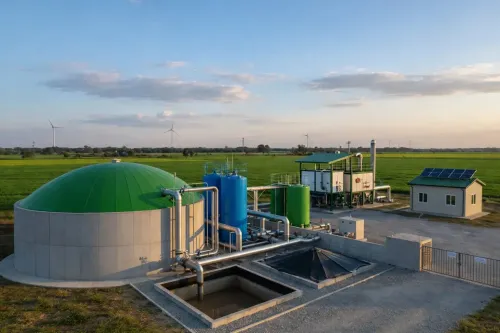
Promoted activities include biogas production , eco-paint manufacturing , organic manure , vermicompost , and Panchagavya products .
Women's self-help groups , rural youth, and local entrepreneurs will be trained in production, processing, and marketing.
The scheme aims to simultaneously advance cow conservation, rural development, and the Atmanirbhar Bharat agenda.
The Yogi Adityanath-led Uttar Pradesh government has launched a state-wide initiative to transform cattle shelters into productive rural industry hubs, linking cow conservation directly with employment generation and economic self-reliance. The programme, anchored in the 'One District-One Innovation' model, will assign a unique cow-based economic identity to each of the state's districts.
What the Initiative Entails
The Uttar Pradesh Gau Seva Aayog (Cattle Welfare Commission) has completed a comprehensive survey of cattle shelters across the state, covering land availability, cattle population, water resources, Panchagavya units, and local market potential. District-specific innovation plans are now being drawn up based on these findings.
In districts with high resource potential, the scheme will promote activities including biogas production, eco-paint manufacturing, organic manure and vermicompost production, and the manufacture of cow-dung-based and Panchagavya products. Each district will be encouraged to develop a distinct cow-based identity, creating both a ready local market and fresh avenues for job creation.
What the Government Said
Shyam Bihari Gupta, Chairman of the Uttar Pradesh Gau Seva Aayog, said that distinct innovation models are being prepared for each district based on state-wide inspections. 'A strategy has been devised to convert local resources into income and employment through these district-specific innovation models,' Gupta said.
He added that the Aayog believes the model will enhance the economic self-reliance of cattle shelters, encourage natural farming, and strengthen the broader rural economy.
Who Will Be Trained and Integrated
Under the scheme, women's self-help groups, rural youth, and local entrepreneurs will be trained and integrated into production, processing, and marketing operations. Officials say this is designed to give fresh momentum to self-employment in villages and reduce the need for rural youth to migrate to urban centres for work.
Small-scale industries at the local level are expected to emerge as a direct outcome, with the cattle shelter serving as the anchor institution rather than a passive sanctuary for stray animals.
Broader Policy Context
The initiative is being positioned as a convergence of three policy goals: cow conservation, rural development, and the Centre's Atmanirbhar Bharat framework. It comes amid a wider push by the Adityanath government to integrate cattle welfare policy with economic productivity, moving away from a model where government-run shelters were seen primarily as a fiscal burden.
Notably, Uttar Pradesh already operates one of the largest networks of government-run cattle shelters in the country, and converting this infrastructure into an income-generating ecosystem represents a significant operational shift. The success of the district-level pilots is expected to determine the pace of state-wide rollout.
Point of View
The scheme produces units that manufacture products no one buys. The ODOP model has had mixed results in other sectors in UP, and replicating it in an agri-allied, niche product space is a harder ask. Whether women's self-help groups receive genuine working capital support or merely nominal training will be the real indicator of intent.
NationPress
19 Sept 2026
Frequently Asked Questions
What is the Uttar Pradesh cow-based rural industry initiative?
It is a state-wide scheme launched by the Yogi Adityanath government to convert cattle shelters into rural production hubs, assigning each district a unique cow-based economic identity under the 'One District-One Innovation' model. Activities promoted include biogas production, eco-paint manufacturing, organic manure, vermicompost, and Panchagavya products.
What is the role of the Uttar Pradesh Gau Seva Aayog in this scheme?
The Uttar Pradesh Gau Seva Aayog (Cattle Welfare Commission) has conducted a comprehensive state-wide survey of cattle shelters and is now preparing district-specific innovation plans based on local land, cattle population, water resources, and market potential. Aayog Chairman Shyam Bihari Gupta is leading the implementation planning.
Who will benefit from the cow-based rural industry scheme in UP?
Women's self-help groups, rural youth, and local entrepreneurs are the primary target beneficiaries. They will be trained and integrated into the production, processing, and marketing of cow-based products, with the aim of generating self-employment within their own districts.
How does this scheme align with Atmanirbhar Bharat?
The initiative is designed to reduce rural dependence on external employment by creating local industry anchored in cattle shelter infrastructure. Officials say it converges the goals of cow conservation, rural development, and economic self-reliance — the three pillars of the Atmanirbhar Bharat framework.
What products will be made under this scheme?
Depending on district-level resources, products will include biogas, eco-paint, organic manure, vermicompost, cow-dung-based goods, and Panchagavya products. Each district is also expected to develop a signature cow-based product that can serve as a local market identity.