CM Yogi: 34 UP Districts Advancing Cow-Based Farming
Synopsis
Chief Minister Yogi Adityanath has stated that 34 districts in Uttar Pradesh are rapidly advancing toward cow-based natural farming, reinforcing the state government's push to integrate cattle-derived inputs into mainstream agriculture and reduce reliance on synthetic fertilisers.
Key Takeaways
34 districts in Uttar Pradesh are actively advancing cow-based or go-aadharit kheti farming practices, according to CM Yogi Adityanath .
The initiative relies on cattle dung and urine as primary agricultural inputs, reducing dependence on synthetic fertilisers.
Uttar Pradesh began integrating cow-based inputs into agricultural extension programmes after the Yogi Adityanath government took office in March 2017 .
The state-level push aligns with central government schemes promoting organic and zero-budget natural farming since the mid-2010s.
Key stakeholders include farmers and livestock keepers who stand to benefit from reduced input costs and new demand for cattle-derived products.
District-level adoption data and future state budget allocations will determine the scale and pace of expansion.
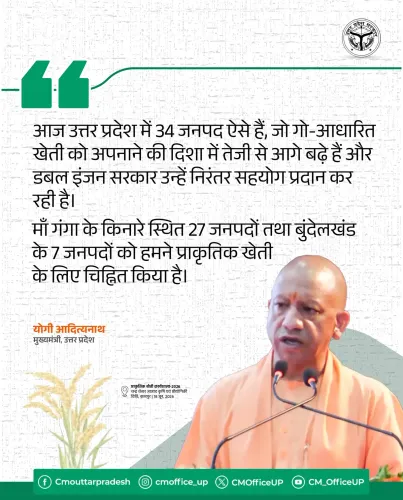
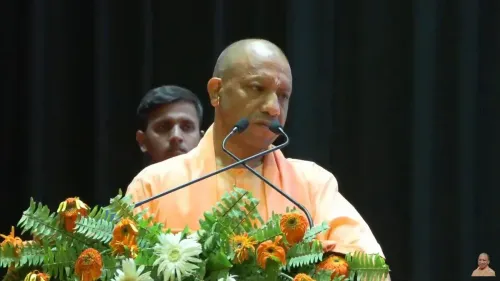
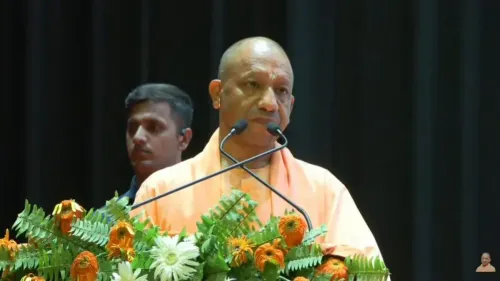
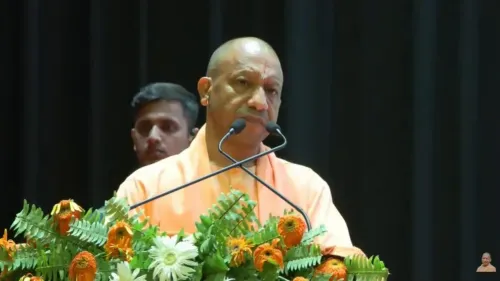
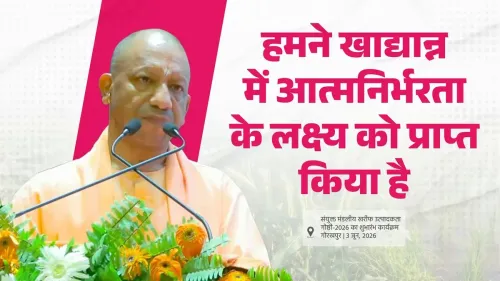
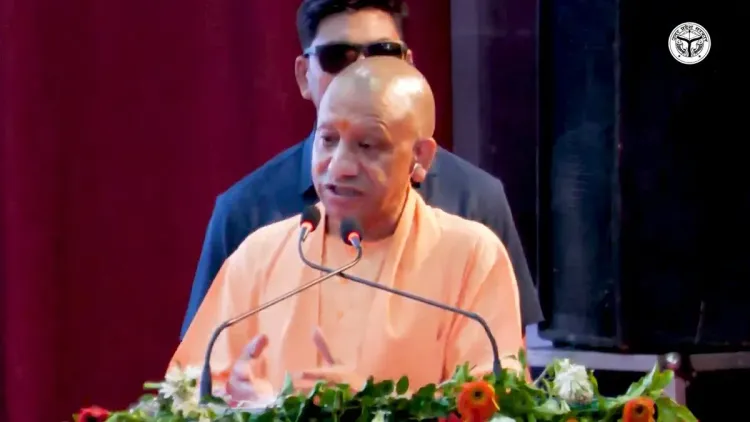
The Chief Minister's Office of Uttar Pradesh on Thursday, 18 June 2026, quoted Chief Minister Yogi Adityanath stating that 34 districts across the state are rapidly advancing toward cow-based farming, signalling a significant push for natural agriculture anchored in cattle-derived inputs.
Context
The post, attributed directly to CM Yogi Adityanath, reads: 'Aaj Uttar Pradesh mein 34 aise janpad hain jo go-aadharit kheti ki disha mein tezi se aage badh rahe hain' — 'Today in Uttar Pradesh, there are 34 such districts that are rapidly moving forward in the direction of cow-based farming.' The statement underlines the state government's sustained focus on integrating livestock welfare with agricultural productivity.
Uttar Pradesh is India's most populous state and home to one of the country's largest agrarian economies, making any shift in farming practice at this scale consequential for millions of cultivators. Cow-based or go-aadharit kheti typically refers to natural farming systems that use cattle dung and urine as primary inputs, reducing dependence on synthetic fertilisers and pesticides.
Policy Backdrop
Since the Yogi Adityanath government took office in March 2017, Uttar Pradesh has progressively woven cow-based inputs into its agricultural extension programmes. The integration aligns with the broader national push for natural and zero-budget farming that gained momentum through central government schemes from the mid-2010s onward.
Several Indian states have pursued similar models, but Uttar Pradesh's scale — with 34 districts now cited as active participants — positions it among the larger state-level efforts in this space. The emphasis also dovetails with the government's longstanding policy posture on animal husbandry and the protection of cattle as an economic and cultural resource.
Stakeholders and Impact
The primary beneficiaries of this shift are farmers and livestock keepers across the participating districts, who stand to gain from lower input costs if synthetic fertiliser use declines. For smallholder farmers in particular, access to cattle-derived inputs can reduce cash expenditure on chemical inputs during each cropping cycle.
Livestock keepers benefit indirectly as demand for cattle maintenance and cow dung products grows within local agricultural ecosystems. The model also carries environmental implications, potentially reducing chemical runoff into soil and water bodies across affected districts.
What's Next
Attention will now turn to the release of district-level adoption data that could quantify how deeply go-aadharit kheti has penetrated farming households across the 34 districts. State budget allocations in upcoming agricultural seasons will be a key indicator of whether the government intends to scale this model to the remaining districts of Uttar Pradesh.
If the initiative gathers further institutional support, it could serve as a template for other large agrarian states looking to reduce synthetic input dependency while simultaneously promoting cattle-based livelihoods — a dual policy objective that resonates strongly with the current national agricultural agenda.
Point of View
Not merely a fringe initiative. The framing of go-aadharit kheti simultaneously serves economic goals — lower input costs for farmers — and cultural ones, reinforcing the government's longstanding emphasis on cattle protection. At a national level, this positions Uttar Pradesh as a potential flagship for the Centre's natural farming agenda ahead of the next agricultural budget cycle. The critical test will be whether district-level data, when released, shows genuine adoption depth or remains confined to demonstration plots.
NationPress
18 Sept 2026
Frequently Asked Questions
What is cow-based farming or go-aadharit kheti in Uttar Pradesh?
Cow-based farming, known as go-aadharit kheti , is a natural farming system that uses cattle dung and urine as primary agricultural inputs in place of synthetic fertilisers and pesticides, reducing cultivation costs for farmers.
How many districts in Uttar Pradesh are doing cow-based farming?
According to Chief Minister Yogi Adityanath , 34 districts in Uttar Pradesh are currently advancing rapidly toward cow-based farming practices, as stated on 18 June 2026 .
When did Uttar Pradesh start promoting natural farming?
The Uttar Pradesh government began integrating cow-based inputs into agricultural extension programmes from 2017 onward, following the formation of the Yogi Adityanath ministry in March of that year.
How does cow-based farming benefit farmers in UP?
Farmers benefit primarily through reduced cash expenditure on chemical inputs, as cattle dung and urine serve as low-cost or no-cost substitutes for synthetic fertilisers, particularly advantageous for smallholder cultivators.
Is cow-based farming part of a national scheme in India?
Yes, the model aligns with central government schemes promoting organic and zero-budget natural farming that have been active since the mid-2010s, with multiple Indian states adopting similar practices at varying scales.