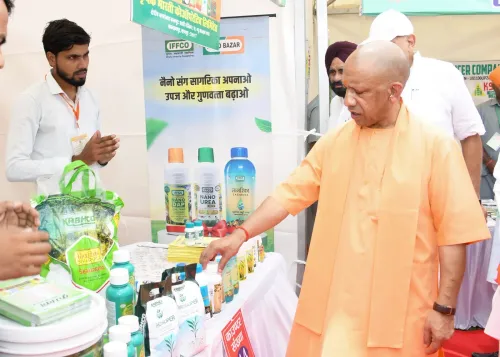
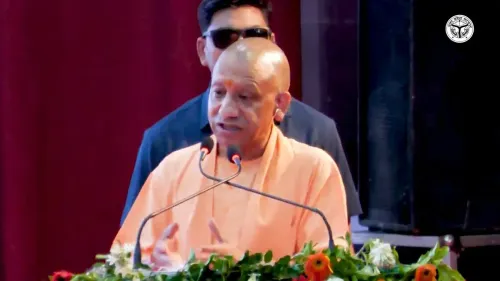
CM Yogi Flags 34 UP Districts for Cow-Based Natural Farming
Synopsis
Chief Minister Yogi Adityanath says 34 Uttar Pradesh districts are advancing cow-based natural farming. Of these, 27 lie along the Ganga and 7 are in Bundelkhand, all receiving sustained support from the double-engine government to transition away from chemical agriculture.
Key Takeaways
34 districts in Uttar Pradesh are actively adopting cow-based, chemical-free farming.
27 districts along the Ganga riverbank have been formally identified for natural farming promotion.
7 Bundelkhand districts are also targeted, addressing the region's chronic soil stress and input costs.
The initiative aligns with the Namami Gange programme goal of reducing agrochemical runoff into the river.
The 'double-engine government' framework signals coordinated state-centre funding and farmer support.
Further convergence with the Paramparagat Krishi Vikas Yojana is expected in the next agricultural season.
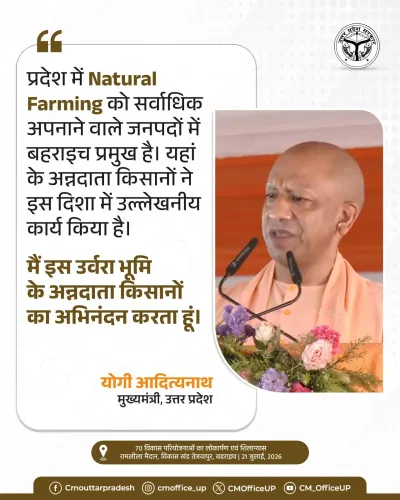
The Chief Minister's Office of Uttar Pradesh, quoting Chief Minister Yogi Adityanath, announced on Thursday, 18 June 2026 that 34 districts across the state are actively advancing cow-based agriculture, with the double-engine government providing sustained support to each of them.
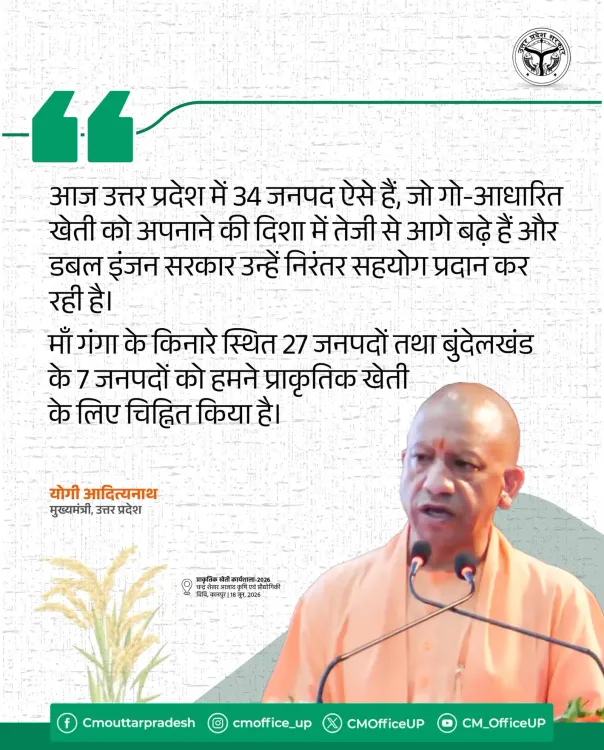
Speaking in the context of the state's natural farming drive, CM Yogi stated: 'Today there are 34 districts in Uttar Pradesh that have moved rapidly toward adopting cow-based farming, and the double-engine government is continuously providing them support.' He further noted that 27 districts situated along the banks of Maa Ganga and 7 districts of Bundelkhand have been specifically identified for natural farming.
Context
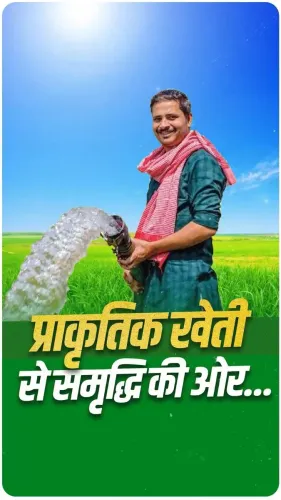
The statement reflects Uttar Pradesh's multi-year effort to transition ecologically sensitive zones away from chemical-intensive agriculture. The phrase 'gau-aadharit kheti' (cow-based farming) refers to a cultivation model that uses cow dung and cow urine as primary inputs for composting and bio-pesticides, reducing dependence on synthetic fertilisers and agrochemicals. This approach has been associated with Subhash Palekar's zero-budget natural farming methodology, which gained traction in several Indian states from 2018 onward.Policy Backdrop
The identification of Ganga riverbank districts for natural farming connects directly to the Namami Gange programme, launched in 2015, which includes components aimed at reducing chemical runoff into the river through organic farming corridors. Cutting fertiliser use along the river basin is considered a key lever for improving water quality and soil health in the floodplain. Uttar Pradesh began piloting natural farming in select districts as early as 2019-20, and the current announcement signals a significant scaling of that effort. The initiative also aligns with the centrally sponsored Paramparagat Krishi Vikas Yojana, which provides cluster-based support to farmers transitioning to organic methods.Stakeholders and Impact
Bundelkhand, a drought-prone region in southern Uttar Pradesh covering 7 districts, stands to benefit particularly from reduced input costs that cow-based farming promises. Farmers in this region have historically faced water stress and soil degradation, making chemical-free methods an economically attractive alternative. The 27 Ganga-basin districts span some of the state's most densely farmed land, meaning adoption at scale could meaningfully reduce agrochemical load in one of India's most important river systems. The 'double-engine government' framing signals coordinated state-centre resource mobilisation for farmer training, subsidy linkages, and market access.What's Next
Policy watchers will look for the rollout of farmer training clusters and formal convergence with central schemes in the upcoming agricultural season. The explicit geographic targeting — Ganga corridor and Bundelkhand — suggests the state may announce district-level implementation plans, including input supply chains for bio-inputs and certification support for natural farming produce. Broader adoption across the 34 identified districts could position Uttar Pradesh as a leading state in India's push to cut chemical fertiliser consumption and revive soil health at scale.Point of View
Moving from pilot language to district-level targeting across two ecologically distinct zones. Anchoring the Ganga-corridor push to the Namami Gange framework gives the state a ready channel for central co-funding and lends environmental legitimacy beyond agrarian optics. The inclusion of Bundelkhand — a perennially distressed region — signals that the government is framing cow-based farming as both an ecological and a rural-income intervention. Taken together, the announcement positions Yogi Adityanath's administration within a competitive national narrative where multiple states are racing to claim leadership on chemical-free agriculture.
NationPress
19 Sept 2026
Frequently Asked Questions
Which districts in Uttar Pradesh are identified for natural farming?
The Uttar Pradesh government has identified 27 districts along the Ganga riverbank and 7 districts in Bundelkhand for natural farming, totalling 34 districts advancing cow-based agriculture.
What is cow-based farming or gau-aadharit kheti?
Cow-based farming uses cow dung and cow urine as bio-inputs for composting and pest management, replacing synthetic fertilisers and chemicals. It is associated with zero-budget natural farming methods and aims to cut cultivation costs while improving soil health.
How does natural farming along the Ganga help the river?
Reducing chemical fertiliser and pesticide use on Ganga-bank farmland lowers agrochemical runoff into the river, directly supporting water quality goals under the Namami Gange programme launched in 2015 .
What is the double-engine government model CM Yogi refers to?
The 'double-engine government' refers to the same political alignment between the state government in Lucknow and the central government in New Delhi , which the ruling party argues enables faster resource flow and policy coordination for schemes like natural farming.
What central scheme supports natural farming in Uttar Pradesh?
The Paramparagat Krishi Vikas Yojana is the central government's flagship cluster-based programme for organic and natural farming, and Uttar Pradesh's district-level push is expected to increasingly converge with it in the coming agricultural season.