How is the US Attempting to Reshape Global Energy Dynamics?
Synopsis
US President Donald Trump has made bold claims about reshaping Venezuela's oil industry, but how will this affect global energy dynamics? This article delves into the geopolitical and economic implications of these moves and their impact on countries like India.
Key Takeaways
US President's declaration signifies a shift in energy policy.
Tariffs could strain India-US trade relations.
Venezuela's oil industry remains under tight constraints.
China's energy imports from Venezuela may face challenges.
Geopolitical tensions are affecting global energy dynamics.
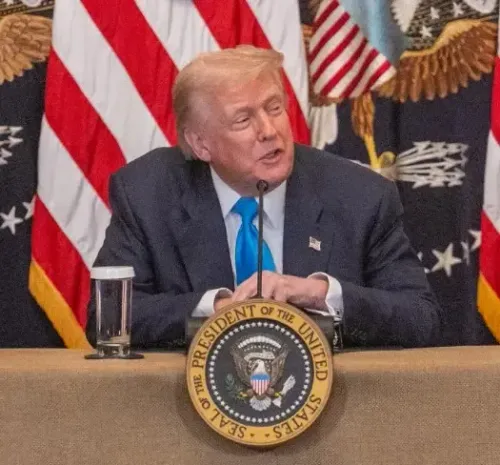
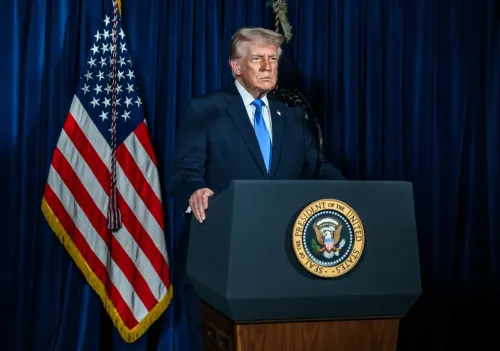
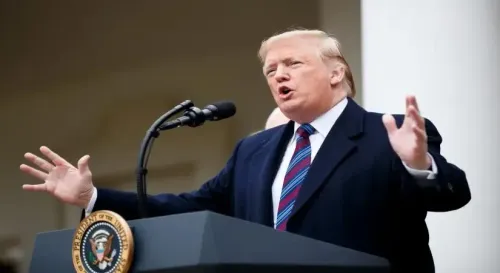
New Delhi, Jan 5 (NationPress) US President Donald Trump's declaration that the United States is now set to "run the country" and that American firms would help in revitalizing Venezuela's struggling oil sector has been making waves in the media, with outlets in Washington eagerly seeking more information.
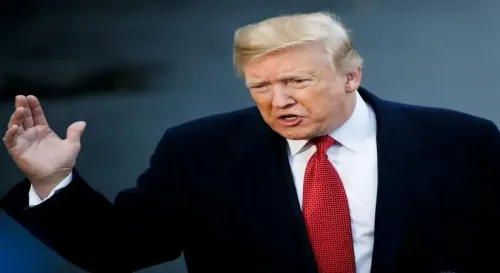
Following the weekend raid in Caracas, Trump hinted that Washington might impose higher tariffs on Indian imports if it continues to purchase Russian oil.
The US has already enacted additional punitive tariffs against India concerning a "reciprocal tariff" related to this matter.
The Western nations have criticized New Delhi for acquiring discounted Russian seaborne crude, arguing that it supports Moscow's war efforts in Ukraine, even as several European nations continue to import Russian energy.
These seemingly unrelated incidents converge on a single focal point—oil.
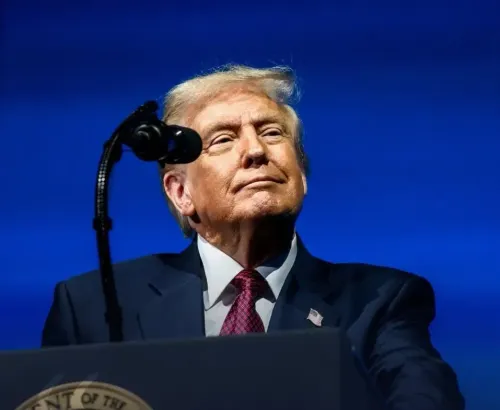
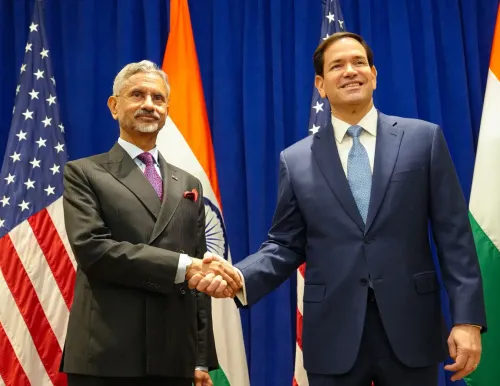
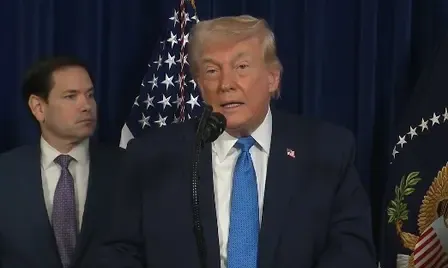
On March 24 of this year, President Trump issued an executive order instructing Secretary of State Marco Rubio to pinpoint countries that could incur an additional 25% tariff on all goods imported into the US if they bring in oil from Venezuela.
"Starting April 2, 2025, a tariff of 25% may be imposed on all imports into the United States from any nation that imports Venezuelan oil, whether directly from Venezuela or through intermediaries," the executive order specified.
Reports indicate that despite having the largest oil reserves globally, Venezuela accounted for less than 1% of world supply last year.
This is largely due to reduced investment from Caracas, stemming from government policies and sanctions.
As Trump noted, increasing extraction could require billions of dollars.
Moreover, refining Venezuelan crude is costly.
This raises the question of how companies can achieve substantial profits.
Once under US control, with sanctions lifted—including physical blockades by US forces—Venezuelan oil could start flowing to other nations, albeit at international prices, not discounted rates.
China, which imports over half of Venezuela's crude exports at more than 400,000 barrels per day (bd) in 2025 (year-to-date), according to analytics firm Kpler, could face losses if export policies change.
US sanctions waivers permit India to import small amounts, roughly 30,000 bd.
Unlike Russia, Venezuela has struggled to redirect crude to alternative markets.
Other nations such as Spain, Cuba, Italy, Singapore, and Vietnam also import Venezuelan oil, though in smaller or less regular quantities.
The recent US actions concerning Venezuela, Russia, China, and India—while different in execution—are fundamentally driven by energy priorities.
The US is leveraging sanctions, trade controls, military pressure, and strategic cooperation to alter global energy leverage in various ways.
Washington has consistently targeted Venezuelan oil companies and tankers to disrupt revenue streams while President Nicolas Maduro was in power.
Throughout, it has signaled a willingness to transform Venezuela's hydrocarbon sector—a shift that could modify global heavy-crude flows and impact buyers like India.
Indian refiners and state oil companies stand to either benefit or suffer based on how US pressure and potential restructuring unfold, with reports suggesting a possible recovery of long-standing dues and a resumption of Venezuelan oil supplies if US sanctions are relaxed.
In the wake of the Ukraine conflict, US sanctions have been fine-tuned to undermine oil and LNG revenue streams by targeting producers, traders, and maritime networks involved in Russian crude transport.
With China, Washington's strategy is less focused on crude oil and more on essential minerals and industrial resources that sustain clean energy and defense supply chains.
Meanwhile, the US views India as both a market for energy collaboration and a strategic ally to diversify supply chains.
Initiatives like the Strategic Clean Energy Partnership and recent efforts to enhance civil nuclear and critical minerals cooperation underscore Washington's aim to align New Delhi with resilient, low-carbon energy paths while providing alternatives to Russian and Middle Eastern energy sources.
New Delhi's passage of the SHANTI Bill and its commercial ties reflect converging energy security interests.
Point of View
It is crucial to recognize that the US's aggressive stance towards Venezuela and energy trading not only aims to influence global markets but also to exert political pressure on nations like India. This situation demands a careful examination of the implications for energy security and international relations.
NationPress
2 Oct 2026
Frequently Asked Questions
What are the implications of US tariffs on Indian imports?
The US tariffs could significantly impact India's trade balance and energy security, pushing it to reconsider its oil sourcing strategies and relations with Russia.
How does Venezuela's oil situation affect global markets?
Venezuela's limited oil supply contributes to volatility in global markets, influencing prices and supply chains, especially for countries reliant on its crude.
What role does China play in Venezuela's oil exports?
China is a major importer of Venezuelan crude, and any shifts in US policy could adversely affect its oil supply, impacting its energy security.
Why are Western nations critical of India's oil imports from Russia?
Western nations argue that India's purchases of discounted Russian oil support Moscow's military actions in Ukraine, complicating geopolitical relations.
What are the US's broader goals in energy policy?
The US aims to reshape global energy leverage through sanctions and partnerships, focusing on diversifying supply chains and reducing reliance on adversarial nations.