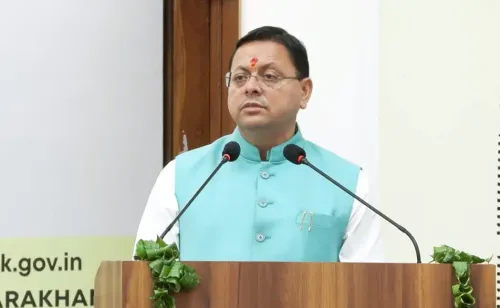
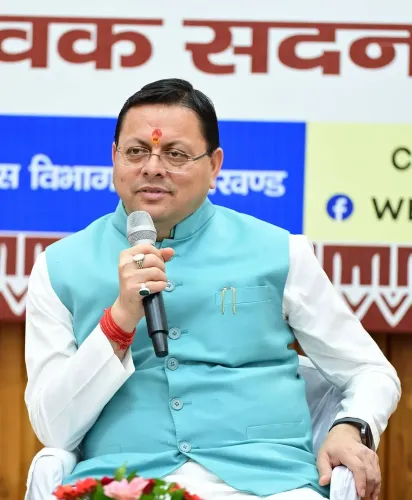
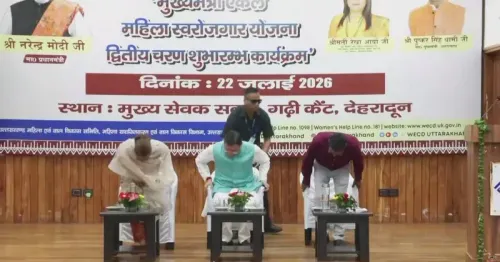
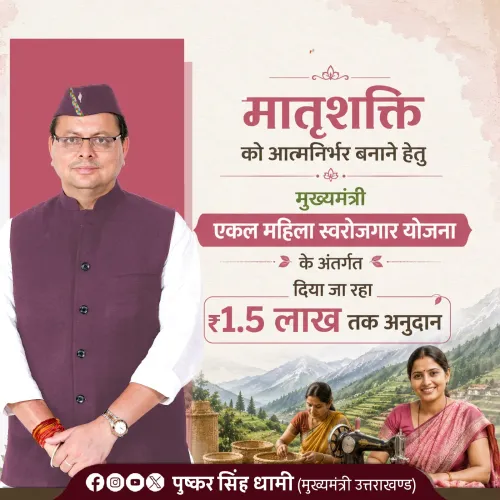
CM Dhami: Uttarakhand gives single women ₹2 lakh for self-employment
Synopsis
Uttarakhand CM Pushkar Singh Dhami spotlighted the state's Ekal Mahila Swarozgar Yojana on 2 November 2026, which offers single women up to ₹2 lakh to establish self-employment ventures, framing it as a push for economic dignity and self-reliance.
Key Takeaways
Uttarakhand's Ekal Mahila Swarozgar Yojana provides up to ₹2 lakh in financial assistance to single women for self-employment.
The scheme specifically targets single women — including widows and separated women — rather than the general population.
CM Pushkar Singh Dhami framed the initiative around three goals: economic empowerment, self-reliance, and living with dignity.
The scheme aligns with the broader Atmanirbhar Bharat vocabulary and BJP-governed states' pattern of direct assistance to marginalised women.
Uttarakhand's high share of women-headed households — driven by male out-migration — makes such targeted grants especially significant in the state.
Rollout metrics, including beneficiary registrations and fund disbursements, will be the key indicators of ground-level impact in coming months.
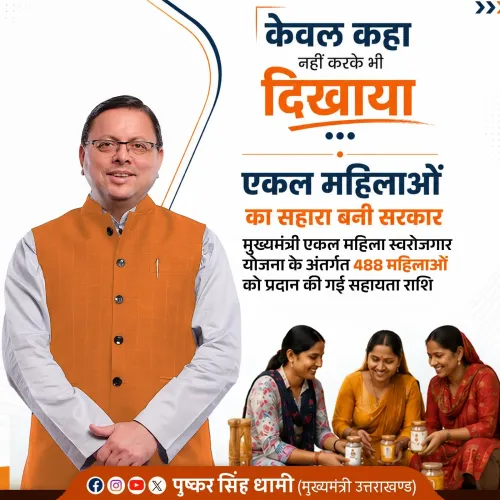
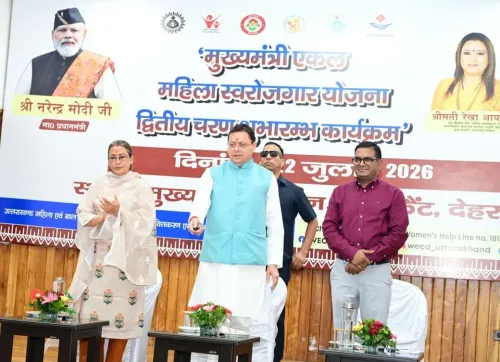
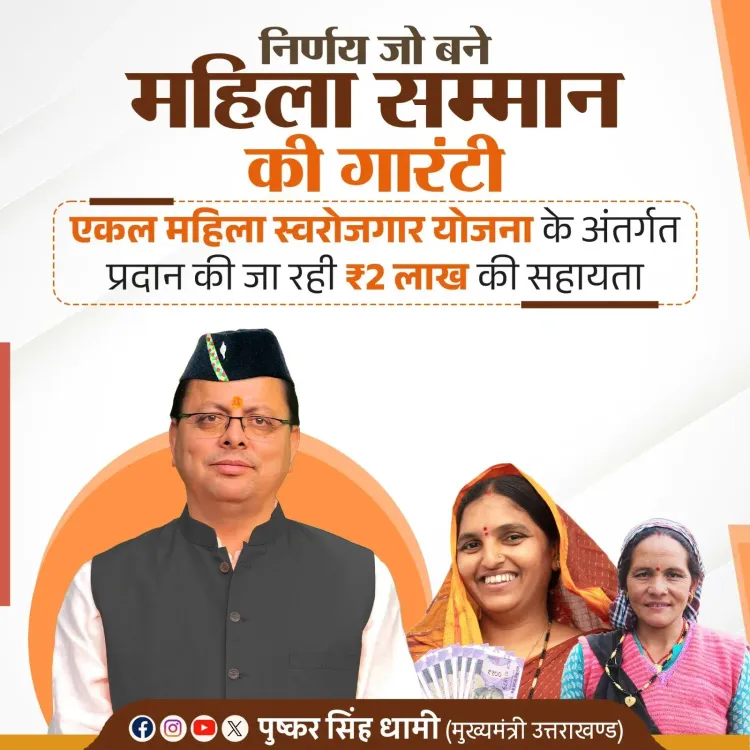
A financial lifeline is reaching some of Uttarakhand's most vulnerable women — and Uttarakhand Chief Minister Pushkar Singh Dhami wants the state to know about it. On Monday, 2 November 2026, CM Dhami took to X to highlight the Ekal Mahila Swarozgar Yojana, a state government scheme providing up to ₹2 lakh in assistance to single women seeking to set up their own enterprises.
Posting in Hindi, CM Dhami described the initiative as central to three interlocking goals: economic empowerment (arthik sashaktikaran), self-reliance (swavalamban), and the right to live with dignity (aatmsamman ke saath jeevan). 'This initiative will play an important role in providing women the opportunity to move forward on the path of self-reliance and to live life with self-respect,' he wrote.
What the Ekal Mahila Swarozgar Yojana offers
The scheme, run by the Uttarakhand state government, is specifically targeted at single women — a category that typically includes widows, separated women, and others without a male earning partner. The grant of up to ₹2 lakh is intended to help them establish micro-enterprises or self-employment ventures, giving them a direct capital injection rather than a loan burden.
This kind of targeted direct-assistance model — ring-fenced for a specific, vulnerable demographic — distinguishes the scheme from broader women's entrepreneurship programmes. The focus on swavalamban (self-sufficiency) echoes the vocabulary of the central government's Atmanirbhar Bharat push, but applies it at the granular, household level for women who may otherwise fall through larger safety nets.
Uttarakhand's women-welfare pattern and what comes next
Uttarakhand, a BJP-governed hill state, has increasingly positioned women's economic inclusion as a policy priority under CM Dhami's tenure. The state's geography — a large rural and semi-urban population, significant male out-migration for work, and consequently a high proportion of women-headed households — makes schemes like this particularly consequential on the ground.
The scheme slots into a broader national pattern: across BJP-ruled states, self-employment grants and micro-finance-linked assistance for marginalised women have become a signature welfare instrument. The key measure of impact will come in the months ahead — how quickly beneficiary registrations scale, how fast funds are disbursed, and whether a subsequent budget round expands the scheme's reach or its per-beneficiary ceiling.
For Uttarakhand's single women, the question is no longer whether a scheme exists — it is how fast it reaches them.
Point of View
With large-scale male out-migration leaving women as de-facto household heads, gives this scheme more structural weight than it might carry in a state with different labour dynamics. The real test will be administrative: whether disbursement machinery matches the political promise.
NationPress
2 Nov 2026
Frequently Asked Questions
What is the Ekal Mahila Swarozgar Yojana in Uttarakhand?
The Ekal Mahila Swarozgar Yojana is a scheme run by the Uttarakhand state government that provides up to ₹2 lakh in financial assistance to single women to help them establish self-employment or micro-enterprise ventures.
Who is eligible for the Ekal Mahila Swarozgar Yojana?
The scheme is targeted at single women — a category that typically includes widows, separated women, and women without a male earning partner — in Uttarakhand. Exact eligibility criteria have not been officially detailed in publicly available sources.
How much money does Uttarakhand give single women under this scheme?
The scheme provides up to ₹2 lakh (two lakh rupees) per beneficiary to support self-employment or small enterprise establishment.
What did CM Pushkar Singh Dhami say about the scheme?
CM Dhami stated that the initiative will play an important role in economically empowering women, moving them toward self-reliance, and giving them the opportunity to live life with dignity and self-respect.
How does this scheme fit into national women-empowerment initiatives?
The scheme mirrors the broader Atmanirbhar Bharat push and a wider pattern across BJP-governed states of offering direct financial grants to marginalised women, helping them access capital without taking on debt burdens.