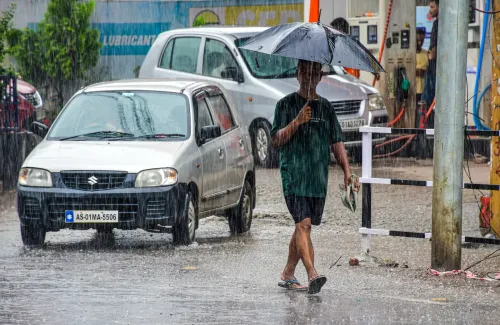
Uttarakhand yellow alert: 8 districts brace for rain, gusty winds
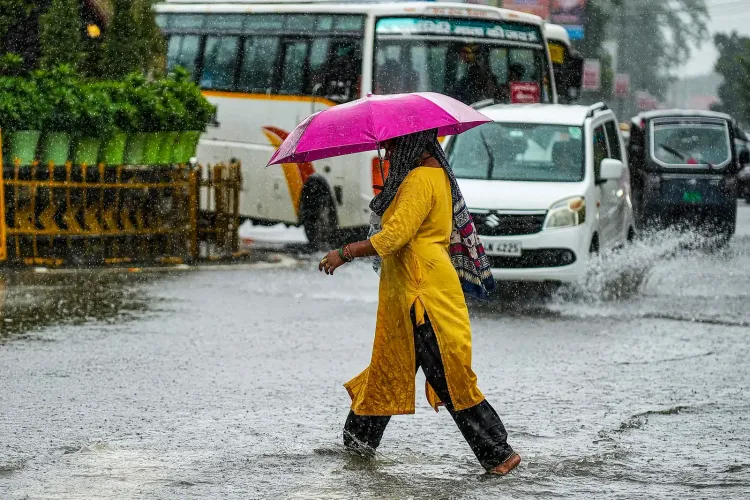
Synopsis
With the monsoon barely out the door, a western disturbance has put eight Uttarakhand districts on yellow alert for rain and 30-40 kmph winds — and could dust the high Himalayas above 4,200 metres with early snowfall. The same system is pushing rain and thunderstorms toward Delhi-NCR, where air quality has already reached 'very poor' in several areas.
Key Takeaways
The IMD issued a yellow alert for 8 Uttarakhand districts on 6 October 2026 , including Dehradun , Nainital , Haridwar , and Champawat .
Gusty winds of 30–40 kmph and moderate rainfall are forecast for the next five days .
Snowfall is possible in areas above 4,200 metres altitude.
The weather shift is driven by the activation of a western disturbance , days after the monsoon withdrew from the state last Saturday.
Delhi-NCR is also forecast to receive rain and thunderstorms on Tuesday and Wednesday , offering brief relief from 'poor' to 'very poor' air quality.
The India Meteorological Department (IMD) has issued a yellow alert for eight districts in Uttarakhand, forecasting moderate rainfall and gusty winds over the next five days starting 6 October 2026. The alert covers Dehradun, Haridwar, Tehri, Pauri Garhwal, Almora, Nainital, Champawat, and Udham Singh Nagar.
What the Alert Covers
The IMD has warned of wind speeds ranging between 30 and 40 kilometres per hour alongside the rainfall in the alerted districts. Most parts of the state are currently experiencing partly cloudy skies with light drizzle at several locations. Beyond the eight highlighted districts, the weather department has forecast light to moderate rain across all districts of the state over the coming five days.
Notably, areas situated at an altitude of 4,200 metres and above could see snowfall, according to the IMD's assessment — an early seasonal signal for Uttarakhand's higher reaches.
Western Disturbance Behind the Shift
The IMD attributed the renewed weather activity to the activation of a western disturbance, which has triggered atmospheric changes just days after the monsoon officially withdrew from the state last Saturday. The post-monsoon window in Uttarakhand is frequently accompanied by such western disturbance events, which can bring abrupt rainfall even as the larger monsoon system retreats. This pattern has been observed consistently in recent years across the western Himalayan region.
Delhi-NCR Weather Outlook
The IMD also flagged a sudden weather change in New Delhi and the adjoining National Capital Region (NCR), with rain and thunderstorms forecast for Tuesday and Wednesday. The development is expected to bring some relief from prevailing pollution, which has pushed air quality in several areas into the 'poor' to 'very poor' category.
On Tuesday, the maximum temperature is expected to hover around 35 degrees Celsius, with a minimum of 22 degrees Celsius and humidity levels between 45 and 55 per cent. Conditions on 7 and 8 October are forecast to remain partly cloudy, with temperatures ranging between 34 and 22 degrees Celsius. A slight dip is expected by 9 October, when the maximum temperature could ease to 32 degrees Celsius, with partly cloudy conditions persisting through 10 and 11 October and highs between 32 and 33 degrees Celsius.
Air Quality and What Comes Next
Strong winds accompanying the weather change have already produced a marginal improvement in air quality across parts of Delhi-NCR, according to officials. However, pollution levels remain a concern. For Uttarakhand residents and travellers to the higher hills, the IMD advisory recommends vigilance given the combination of gusty winds and the possibility of snowfall above 4,200 metres.
Point of View
Compressing the dry window that hill communities and tourism operators depend on. For Delhi-NCR, the rain is a short-term reprieve, not a structural fix for air quality: once the winds die down, the same combination of stubble burning and stagnant air will reassert itself. The more important signal here is the snowfall threshold at 4,200 metres — if early snowfall events become more frequent, they will have downstream consequences for water availability and road connectivity in Uttarakhand's higher districts.
NationPress
6 Oct 2026
Frequently Asked Questions
Which Uttarakhand districts are on yellow alert for rain on 6 October 2026?
Eight districts — Dehradun, Haridwar, Tehri, Pauri Garhwal, Almora, Nainital, Champawat, and Udham Singh Nagar — have been placed on yellow alert by the IMD. The alert warns of moderate rainfall and gusty winds of 30–40 kmph over the next five days.
Why is Uttarakhand receiving rain after the monsoon withdrew?
The IMD says the renewed rainfall is due to the activation of a western disturbance, which triggered a weather change shortly after the monsoon withdrew from the state last Saturday. Western disturbances frequently bring post-monsoon rain and snowfall to the western Himalayan region.
Is there a risk of snowfall in Uttarakhand?
Yes. The IMD has flagged the possibility of snowfall in areas at an altitude of 4,200 metres and above. Residents and travellers heading to the higher hills are advised to exercise caution.
How will the weather affect Delhi-NCR this week?
Delhi-NCR is expected to see rain and thunderstorms on Tuesday and Wednesday, which may temporarily improve air quality in areas currently recording 'poor' to 'very poor' pollution levels. Temperatures are forecast between 22 and 35 degrees Celsius through 6–7 October, easing slightly to a maximum of 32 degrees Celsius by 9 October.
What does a yellow alert mean in India's IMD warning system?
A yellow alert from the IMD signals 'watch and stay updated' conditions — moderate weather that warrants awareness but not immediate emergency action. It is the lowest of the four alert levels (green, yellow, orange, red) and typically accompanies forecasts of moderate rain, strong winds, or similar conditions likely to cause localised disruption.