Uttarakhand madrasa grant cut: Muslim leaders slam BJP govt's move
Synopsis
Uttarakhand's BJP government has approved the abolition of state grants to all 456 Arabia madrasas — the third consecutive move against state-supported Islamic education after shutting 150 unauthorised madrasas and dissolving the Madrasa Education Board. Muslim leaders call it unconstitutional; one prominent cleric says government-funded madrasas should be shut, but Zakat-funded ones are beyond the state's reach.
Key Takeaways
The Uttarakhand cabinet, led by CM Pushkar Singh Dhami , approved ending grants to all 456 Arabia madrasas , effective 2027-28 .
This follows earlier state moves to close 150 unauthorised madrasas and abolish the Uttarakhand Madrasa Education Board .
Maulana Shahabuddin Razvi Bareilvi (All India Muslim Jamaat) alleged the move is designed to keep Muslim children from educational progress.
Mohammed Saleem Engineer (Jamaat-e-Islami Hind) called the decision unconstitutional, citing minority rights under the Constitution.
SP MP Ziaur Rahman Barq said the move amounts to interference with constitutionally guaranteed rights.
Maulana Sajid Rashidi (All India Imam Association) drew a distinction: Zakat-funded madrasas are beyond government reach as they accept no state grants or teachers.
Muslim leaders across India on Saturday, 11 July sharply criticised the Bharatiya Janata Party (BJP)-led Uttarakhand government after it approved a proposal to abolish standard budget grants to all 456 Arabia madrasas in the state, effective from the 2027-28 financial year. The decision has drawn accusations that the government is deliberately obstructing religious education for the Muslim community.
What the Uttarakhand Government Decided
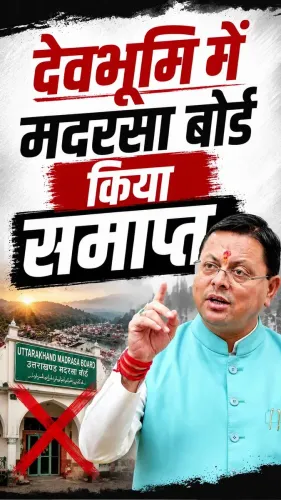
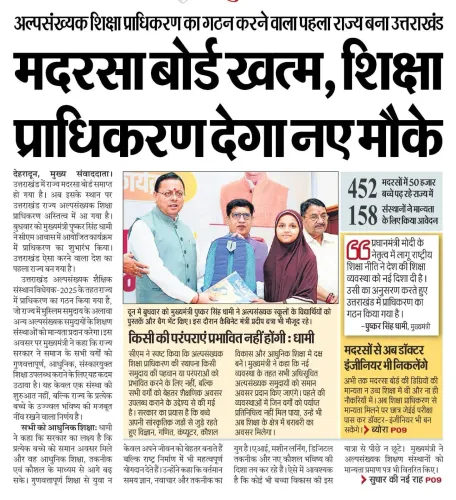
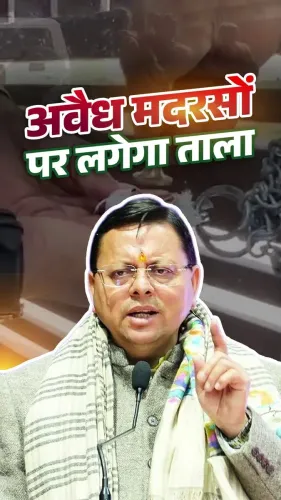
The Chief Minister Pushkar Singh Dhami-led state cabinet cleared the proposal to end financial grants to all 456 Arabia madrasas in Uttarakhand from the next financial cycle. This follows two earlier moves by the same administration — a directive to shut down 150 unauthorised madrasas and the abolition of the Uttarakhand Madarsa Education Board — making the grant withdrawal the third significant step in what critics describe as a systematic rollback of state support for Islamic educational institutions.
What Muslim Leaders Said
Maulana Shahabuddin Razvi Bareilvi, President of the All India Muslim Jamaat, alleged that the Uttarakhand government does not want the new generation of Muslims to receive religious education. Referring to the earlier closure of unauthorised madrasas and the dissolution of the madrasa education board, he said: 'Now they are ending the grant as well.' He further alleged: 'It wants that the Muslim children should lag behind in terms of education and are not able to progress.'
Mohammed Saleem Engineer, Vice President of Jamaat-e-Islami Hind, accused the state government of fostering 'an atmosphere of hatred' against Muslims. He argued that the Constitution guarantees every religious community the right to run its own institutions, and that madrasas — operating in line with government regulations — actively contribute to broadening educational access. 'Today, madrasas are not institutions that teach only Arabic and the Quran; all subjects are taught there. Hindi, English, and various other subjects are also part of the curriculum,' he asserted, adding that the state is setting 'a wrong example' with this decision.
Samajwadi Party (SP) Member of Parliament Ziaur Rahman Barq called the move 'a poor decision' and alleged that wherever the BJP is in power, it is 'attempting to make a particular community happy by being unfair with others.' He argued the decision amounts to interference with constitutionally guaranteed rights.
A Dissenting Voice Within the Community
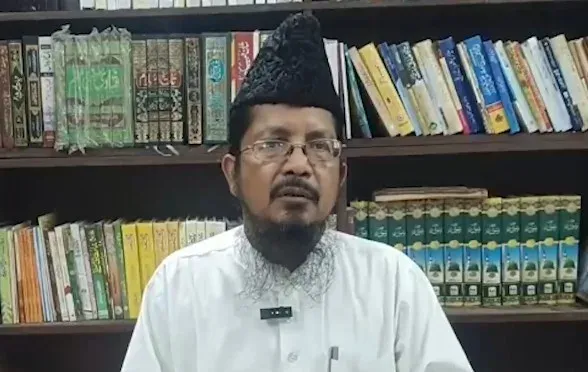
Not all reactions were uniformly opposed to the government's direction. Maulana Sajid Rashidi, President of the All India Imam Association, urged the Union government to shut down madrasas that operate on state grants, drawing a distinction between government-funded institutions and those running on Zakat — private Islamic charitable funds. 'For those madrasas which are functioning on Zakat, the government can't even touch them since they don't take grants or teachers from the government,' he said, noting that such institutions are only required to be registered.
Broader Context and What Comes Next
The Uttarakhand government's move is part of a wider national debate over the role and regulation of madrasas. Several BJP-governed states have moved to audit, restructure, or defund madrasa networks in recent years, framing the measures as transparency and modernisation reforms. Critics, however, argue these steps disproportionately target Muslim educational institutions and erode minority rights protected under Articles 29 and 30 of the Constitution. The grant withdrawal is set to take effect from the 2027-28 financial year, leaving a window for legal or political challenges. Whether opposition parties or Muslim bodies approach courts over the decision remains to be seen.
Point of View
Not an isolated policy call. What is missing from the government's framing is a credible alternative: if grants end, what replaces the educational function these institutions serve for thousands of children in a hilly, resource-thin state? Critics invoking Articles 29 and 30 have a constitutional point worth testing in court, but the community's own internal divide — illustrated by Rashidi's position — complicates a unified legal or political response. The BJP's calculation appears to be that the political upside of this signalling outweighs the governance cost; whether that holds depends on how courts and the electorate read minority rights in the coming months.
NationPress
10 Oct 2026
Frequently Asked Questions
What has the Uttarakhand government decided about madrasa grants?
The Uttarakhand cabinet, led by Chief Minister Pushkar Singh Dhami, has approved a proposal to abolish standard budget financial grants to all 456 Arabia madrasas in the state, effective from the 2027-28 financial year. The decision is the latest in a series of moves that also included shutting 150 unauthorised madrasas and dissolving the Uttarakhand Madrasa Education Board.
Why are Muslim leaders opposing the Uttarakhand madrasa grant cut?
Muslim leaders argue the move violates constitutional rights that guarantee every religious community the right to run its own educational institutions. They allege it is aimed at depriving Muslim children of religious education and that madrasas already contribute to broader public education by teaching Hindi, English, and other subjects alongside religious studies.
When will the madrasa grant abolition take effect?
The grant abolition is set to take effect from the 2027-28 financial year, giving a window for potential legal or political challenges before implementation.
Are all madrasas in Uttarakhand affected by this decision?
The decision specifically targets the 456 Arabia madrasas that receive standard state budget grants. According to Maulana Sajid Rashidi of the All India Imam Association, madrasas funded through Zakat — private Islamic charitable contributions — do not receive government grants or teachers and are therefore not directly affected, though they are required to be registered.
How does this fit into the broader national debate on madrasas?
Several BJP-governed states have moved in recent years to audit, restructure, or defund madrasa networks, framing such measures as transparency and modernisation reforms. Critics counter that these steps disproportionately target Muslim educational institutions and erode minority rights protected under Articles 29 and 30 of the Constitution.