CM Dhami: Unrecognised Madrasas to Shut from July 2026
Synopsis
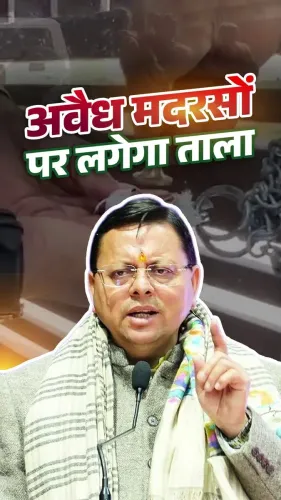
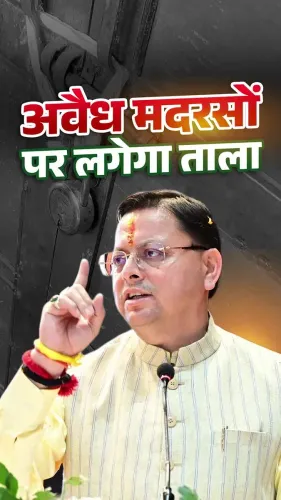
Uttarakhand Chief Minister Pushkar Singh Dhami has announced that madrasas not teaching state-government-recognised courses will be shut from 1 July 2026. The move, framed as a modernisation drive, mirrors similar madrasa regulation efforts in other BJP-ruled states and is likely to face scrutiny from community organisations.
Key Takeaways
Uttarakhand CM Pushkar Singh Dhami announced on 13 June 2026 that unrecognised madrasas will be closed from 1 July 2026 .
Madrasas must teach courses recognised by the Uttarakhand state government to continue operating; the full list of qualifying courses has not yet been released.
The stated goal is to connect madrasa students with modern education and mainstream academic frameworks.
Similar madrasa regulation drives have been carried out in Uttar Pradesh and Assam under BJP-led governments.
The central Scheme for Providing Quality Education in Madrasas (SPQEM) encouraged but did not mandate modern curricula; Dhami's order sets a binding closure deadline.
Legal challenges from madrasa boards before the July 2026 deadline remain a key watch-point.
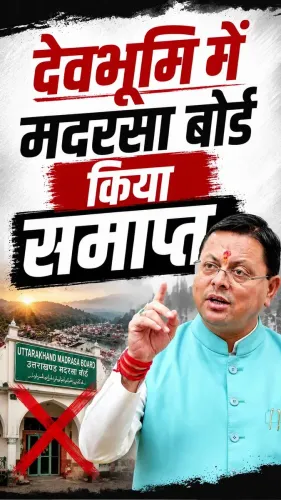
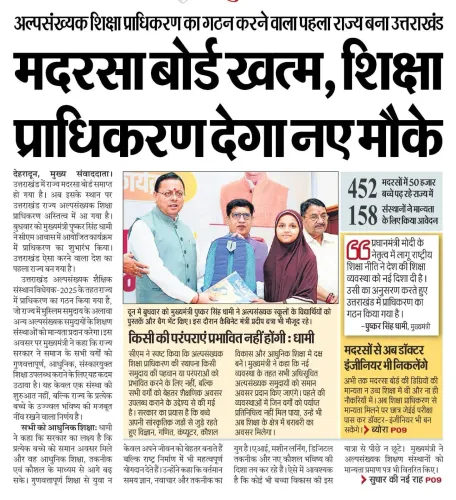
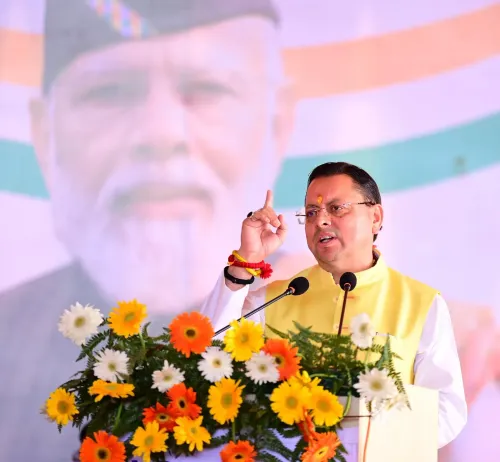
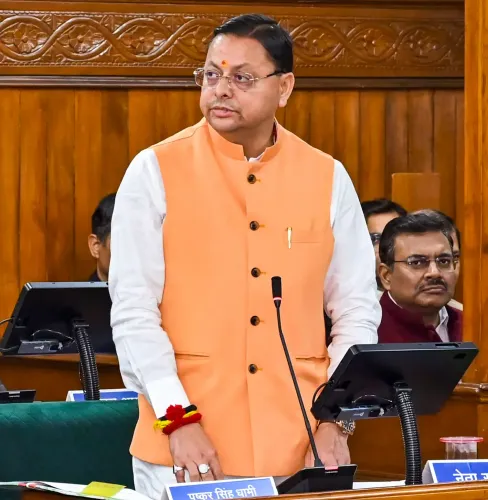
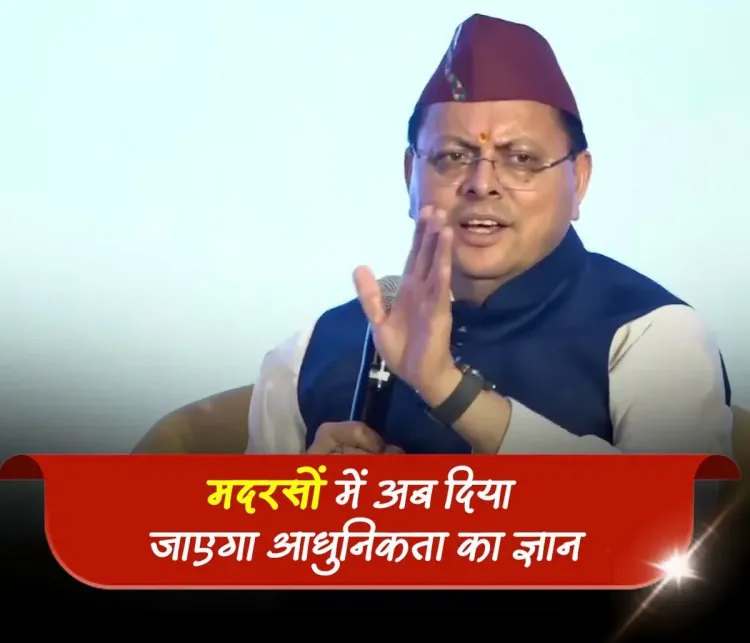
Uttarakhand Chief Minister Pushkar Singh Dhami announced on Saturday, 13 June 2026 that madrasas in the state failing to teach state-government-recognised courses will be shut down from 1 July 2026. Dhami framed the move as an effort to connect madrasa students with modernity, signalling one of the most direct regulatory actions on minority religious education in the state's recent history.
Posting in Hindi on X, the Chief Minister stated: 'हमारा प्रयास मदरसों में पढ़ने वाले बच्चों को आधुनिकता से जोड़ना है' ('Our effort is to connect children studying in madrasas with modernity'). He added that from 1 July 2026, those madrasas that do not teach courses recognised by the state government will be closed.
Context
Uttarakhand has been governed by the Bharatiya Janata Party (BJP) since 2017, and Dhami has served as Chief Minister since 2021. The announcement reflects a broader regulatory push by BJP-led state governments to bring madrasa education under mainstream academic frameworks. Similar drives have been undertaken in Uttar Pradesh and Assam, where state authorities conducted surveys and recognition exercises to assess whether madrasas comply with prescribed curricula.
The move places Uttarakhand alongside a growing number of states that have made state-curriculum compliance a condition for a madrasa's continued legal operation — a step that goes further than earlier advisory or funding-linked approaches.
Policy Backdrop
At the central level, the Scheme for Providing Quality Education in Madrasas (SPQEM), introduced in the mid-2000s under the Ministry of Minority Affairs, sought to introduce modern subjects such as science, mathematics, and social studies alongside traditional religious instruction. The scheme incentivised — but did not mandate — curriculum upgrades, and its reach has been uneven across states.
Dhami's announcement goes a step further by setting a hard deadline and linking non-compliance directly to closure, rather than to the withdrawal of funding alone. The state government has not yet publicly released the full list of recognised courses that madrasas must adopt to remain operational.
Stakeholders and Impact
Madrasa students — the stated beneficiaries of the modernisation push — stand at the centre of the debate. Proponents argue that exposure to a state-recognised curriculum improves employment prospects and integrates students into the mainstream education system. Muslim community organisations and madrasa management bodies are expected to scrutinise the recognised-course list closely, and legal petitions before the 1 July 2026 deadline remain a possibility.
The precise number of madrasas in Uttarakhand that currently operate without state recognition has not been officially disclosed, making the scale of potential closures difficult to assess at this stage.
What's Next
The immediate watch-points are formal government notifications specifying which courses qualify as 'state-recognised,' and whether the state coordinates with the central Ministry of Minority Affairs on any linked funding or transition support. Any legal challenge mounted by madrasa boards before the July 2026 deadline could delay or reshape implementation.
If enforced as announced, the policy would mark a significant shift in how Uttarakhand regulates minority religious education — and could set a precedent that other BJP-governed states choose to replicate or reference in their own madrasa reform efforts.
Point of View
Uttarakhand is testing a more assertive legal instrument than its predecessors. The move will likely sharpen the debate between those who see state-curriculum mandates as a path to educational equity and those who view them as an encroachment on the autonomy of religious minority institutions. How the state defines 'recognised courses' and whether courts intervene before July 2026 will determine whether this becomes a durable policy model or a contested legal precedent.
NationPress
13 Sept 2026
Frequently Asked Questions
Which madrasas will be closed in Uttarakhand from July 2026?
Madrasas that do not teach courses recognised by the Uttarakhand state government will be closed from 1 July 2026, according to Chief Minister Pushkar Singh Dhami's announcement on 13 June 2026. The state has not yet publicly released the full list of qualifying recognised courses.
Why is the Uttarakhand government closing madrasas?
CM Dhami stated the goal is to connect madrasa students with modernity by ensuring they receive a state-recognised curriculum alongside or instead of purely religious instruction.
How many madrasas in Uttarakhand could be affected?
The state government has not officially disclosed the number of madrasas currently operating without state recognition, so the precise scale of potential closures is not yet known.
Has any other state closed madrasas for not following a state curriculum?
States such as Uttar Pradesh and Assam have conducted madrasa surveys and recognition drives under BJP-led governments, but Uttarakhand's binding closure deadline from July 2026 represents a more direct regulatory step.
Can madrasas challenge the Uttarakhand government's order in court?
Legal petitions by madrasa management bodies before the 1 July 2026 deadline are considered a likely possibility by policy observers, though no such challenge has been filed publicly as of the announcement.