Uttarakhand CM Office Backs Rural Women, Folk Arts in Almora
Synopsis
The Uttarakhand government has reaffirmed its push to make rural women in Almora self-reliant while giving new recognition to traditional Kumaoni folk arts, combining livelihood missions with cultural preservation in one of the state's most heritage-rich hill districts.
Key Takeaways
The Chief Minister's Office of Uttarakhand posted on 24 July 2026 about efforts to make rural women self-reliant and revive traditional folk arts.
The focus district is Almora in the Kumaon region, known for Kumaoni folk traditions such as aipan and woollen weaves.
The central government's Deendayal Antyodaya Yojana – National Rural Livelihoods Mission (DAY-NRLM) , launched in 2011 , underpins SHG-based skill and livelihood support in the state.
Uttarakhand has linked handicraft promotion with tourism-linked livelihood schemes since its formation in 2000 .
Rural out-migration and limited formal employment make women the primary economic actors in hill households, raising the stakes of such programmes.
Sustained implementation with market linkages could make the Almora model replicable across other Himalayan hill districts.
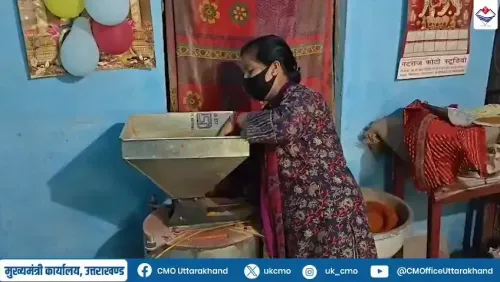
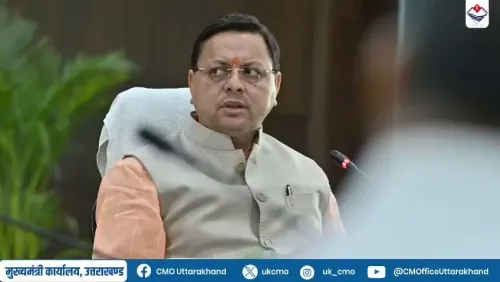
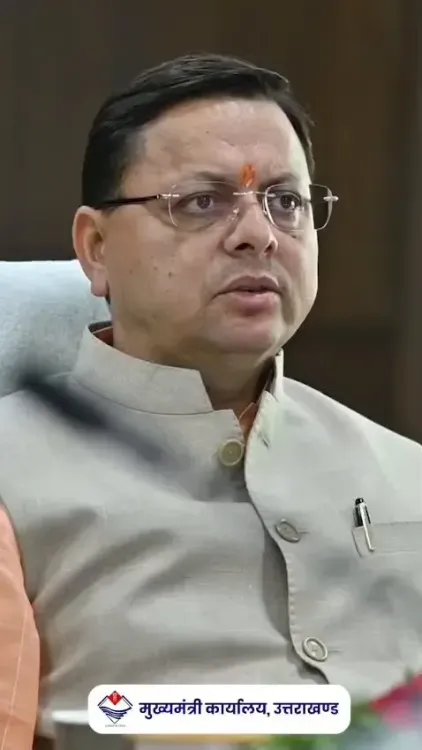
The Chief Minister's Office of Uttarakhand stated on Friday, 24 July 2026 that the state government is actively working to make rural women self-reliant and to bring fresh recognition to traditional folk arts, with a specific focus on Almora district in the Kumaon region.
Context
The post, shared in Hindi, reads: 'Uttarakhand sarkar gramin mahilaon ko aatmnirbhar banane aur paramparik lok kalaon ko nayi pehchaan dilaane ke liye prayasrat hai' — ('The Uttarakhand government is working to make rural women self-reliant and to give new identity to traditional folk arts'). The message was accompanied by a video and tagged under #WomenEmpowerment, #Almora, and #Uttarakhand, signalling a deliberate focus on the district as a site of cultural and economic intervention.
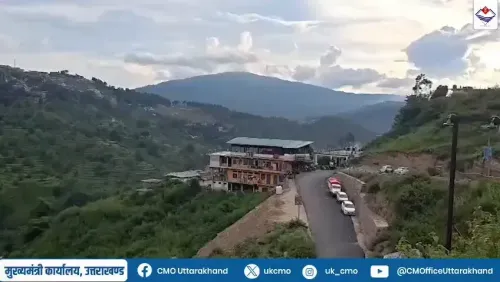
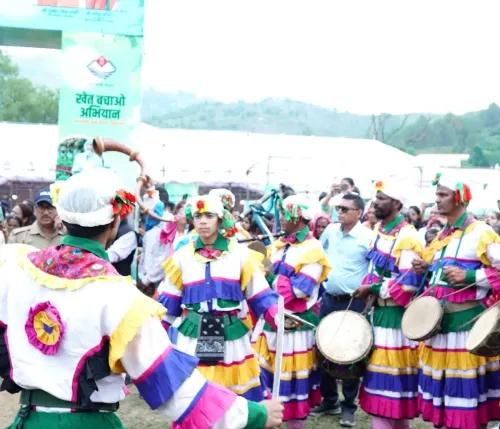
Almora is a hill district in Uttarakhand's Kumaon division with a long history of Kumaoni folk traditions, including crafts, music, and textile arts practiced predominantly by women in rural households. The district's economy is characterised by limited formal employment, seasonal agriculture, and significant out-migration of working-age men, leaving rural women as key economic actors.
Policy Backdrop
The state government's emphasis on women's self-reliance draws on a layered policy architecture. At the central level, the Deendayal Antyodaya Yojana – National Rural Livelihoods Mission (DAY-NRLM), launched in 2011, has supported self-help groups (SHGs) across India, including in Uttarakhand, by providing skill development, micro-credit access, and market linkages to rural women.
Since Uttarakhand's formation in 2000, successive state administrations have pursued policies linking handicraft promotion with livelihood programmes in hill districts. Kumaoni folk arts — ranging from aipan (traditional floor art) to woollen weaves — have been integrated into tourism-linked income schemes, positioning cultural preservation as an economic strategy rather than a purely heritage exercise.
Indian hill states broadly face a dual challenge: stemming rural out-migration while sustaining traditional knowledge systems. The convergence of women's SHG networks with folk-art promotion represents a model increasingly adopted across hill economies to generate supplementary household income without requiring relocation.
Stakeholders and Impact
Rural women in Almora and surrounding Kumaon villages are the primary beneficiaries of such initiatives, gaining access to skill upgradation, collective marketing platforms, and formal recognition of craft-based livelihoods. Folk artisans — many of whom are elderly women holding generational knowledge — stand to benefit from institutional support that can widen market reach beyond local fairs and festivals.
The cultural dimension is equally significant. Traditional Kumaoni art forms risk gradual disappearance as younger generations migrate to urban centres. Government-backed programmes that attach economic value to these art forms create an incentive structure for intergenerational transmission of skills, effectively turning cultural heritage into a livelihood asset.
What's Next
Observers will watch for district-level implementation details, including budget allocations under Uttarakhand's rural livelihood and handicraft schemes specifically targeting Almora women artisans. The deployment of SHG networks, tie-ups with e-commerce platforms for craft marketing, and any new state-level scheme announcements will indicate how the government translates this stated commitment into on-ground outcomes.
If sustained with adequate funding and market access, the dual focus on economic empowerment and folk-art revival in Almora could serve as a replicable model for other remote hill districts across Uttarakhand and the broader Himalayan belt.
Point of View
The government signals a district-specific push rather than a generic welfare statement, which is notable given Almora's demographic vulnerability to out-migration. The framing of folk arts as a vehicle for 'new identity' rather than mere preservation suggests an intent to commercialise cultural heritage — a direction consistent with central government pushes around GI-tagged handicrafts and artisan e-commerce. Whether this translates into measurable outcomes will depend on the budget and implementation architecture that follows.
NationPress
22 Oct 2026
Frequently Asked Questions
What is the Uttarakhand government doing for rural women in Almora?
The Uttarakhand government is working to make rural women in Almora self-reliant through livelihood programmes and is also promoting traditional Kumaoni folk arts to provide these women with new economic and cultural recognition.
What are Kumaoni folk arts practiced in Almora?
Almora district is known for traditional Kumaoni art forms including aipan (a ritual floor and wall art), woollen weaving, and other craft traditions historically practiced by rural women in the Kumaon region of Uttarakhand.
Which central scheme supports rural women's empowerment in Uttarakhand?
The Deendayal Antyodaya Yojana – National Rural Livelihoods Mission (DAY-NRLM) , launched in 2011 , supports self-help groups across Uttarakhand by providing skill development, micro-credit, and market linkages to rural women.
Why is Almora significant for women's empowerment initiatives in Uttarakhand?
Almora faces high male out-migration, leaving rural women as primary household earners. Its rich folk-art heritage also makes it a natural focus for programmes that combine economic empowerment with cultural preservation in Uttarakhand's Kumaon division.
What is the Uttarakhand CM Office's role in welfare schemes?
The Chief Minister's Office of Uttarakhand coordinates and communicates the state government's policy priorities, including rural welfare and women's empowerment programmes, and serves as the official public communication channel for the state administration.