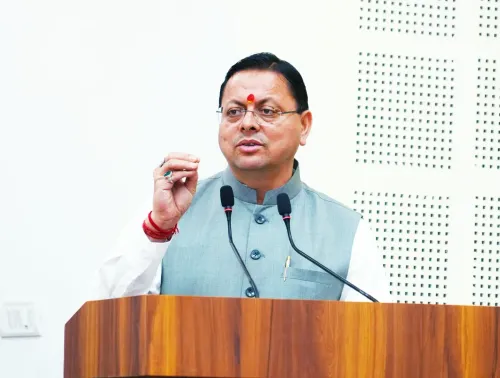
Uttarakhand Cabinet Clears Prison Rules, Literacy Tag & Kishau Dam Push

Synopsis
Uttarakhand's cabinet on 18 June 2026 approved prison rule amendments mandated by the Supreme Court, new jailor service rules, a full-literacy declaration aligned with NEP 2020, Sanskrit education regulation changes, Golden Card health bill payments, and expressed gratitude for central facilitation of the long-pending Kishau dam project.
Key Takeaways
Cabinet approved the Uttarakhand Prison (Amendment) Rules, 2026 in compliance with a Supreme Court order dated 3 October 2024 , redefining 'habitual offender' as someone convicted on at least three separate occasions .
New Uttarakhand Prison Jailor Subordinate (Gazetted) Service Rules, 2026 approved, covering 14 sanctioned Jailor posts — the first independent cadre rules since state formation in 2000.
Uttarakhand Sanskrit Education (Amendment) Regulations, 2026 cleared to update the 2023 rules under the Sanskrit Education Act, 2014.
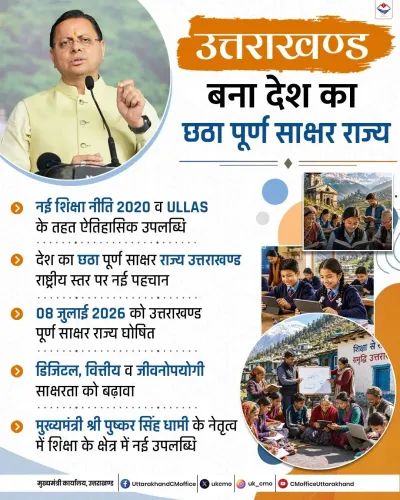
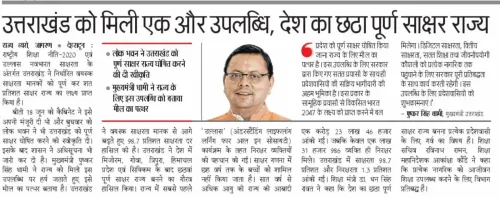
Cabinet approved declaring Uttarakhand a fully literate state under National Education Policy 2020 literacy standards.
Financial assistance to be provided to the Health Department to clear pending hospital bills under the State Government Health Scheme (Golden Card) .
Cabinet thanked PM Narendra Modi and Home Minister Amit Shah for enabling consensus on the decades-pending Kishau Multi-Purpose Dam Project .
The Chief Minister's Office of Uttarakhand announced on 18 June 2026 that the state cabinet, meeting under Chief Minister's chairmanship, approved a package of decisions spanning prison administration reform, Sanskrit education, full-literacy declaration, health-scheme bill payments, and a long-pending inter-state dam project.
Context
The cabinet's most legally significant move was its approval of the Uttarakhand Prison (Amendment) Rules, 2026, framed in compliance with a Supreme Court of India order dated 3 October 2024. The amendment revises the definition of a 'habitual offender' under the Uttarakhand Prison Rules, 2023 — a person convicted on at least three separate occasions for offences listed in the schedule of the Uttar Pradesh Habitual Offenders Prevention Act, 1952, where no such conviction has been set aside in appeal or revision.
Separately, the cabinet cleared the Uttarakhand Prison Jailor Subordinate (Gazetted) Service Rules, 2026. The state's prison department currently carries 14 sanctioned posts of Jailor for subordinate prisons, filled by promotion from permanent Deputy Jailors. Since Uttarakhand's formation in 2000, no independent Jailor cadre service rules had been framed; the department had continued under an adapted version of the 1980 Uttar Pradesh Jail Executive Subordinate Service Rules.
Policy Backdrop
On education, the cabinet approved the Uttarakhand Sanskrit Education (Amendment) Regulations, 2026, amending the 2023 regulations that operationalised the Uttarakhand Sanskrit Education Act, 2014. That Act established the Uttarakhand Sanskrit Education Council as a statutory body for recognising Sanskrit schools, setting curricula, and conducting examinations across the state.
In a landmark step aligned with the National Education Policy 2020, the cabinet approved a proposal to declare Uttarakhand a fully literate state based on NEP 2020 literacy standards. The cabinet also resolved to provide financial assistance to the Health Department to clear pending bills at various hospitals under the State Government Health Scheme (Golden Card).
Kishau Dam: Stakeholders and Impact
In what the cabinet described as a long-awaited breakthrough, ministers expressed gratitude to Prime Minister Narendra Modi and Union Home Minister Amit Shah for facilitating consensus among the concerned states on the Kishau Multi-Purpose Dam Project. The project, stalled since the early 2000s, involves Uttarakhand and neighbouring states and is sited on the Tons river, a tributary of the Yamuna.
The dam is expected to generate hydropower and provide irrigation benefits to multiple states. Inter-state deadlocks on water-sharing and cost-apportionment had held back the project for decades; high-level central intervention appears to have broken that impasse, though formal gazette notifications and detailed agreements are still awaited.
What's Next
The approved rules — the Prison Amendment Rules 2026, the Jailor Service Rules 2026, and the Sanskrit Education Amendment Regulations 2026 — will now move toward gazette notification before they come into force. The full-literacy declaration is expected to be formalised at a state-level event. Release of Golden Card health-scheme payments to empanelled hospitals will depend on the financial assistance being routed to the Health Department. The Kishau dam project will require inter-state agreements and central clearances before construction can resume, but today's cabinet endorsement signals renewed political momentum for a project that has waited over two decades.
Point of View
Which positions the BJP's central leadership as infrastructure enablers ahead of electoral cycles. The full-literacy declaration under NEP 2020 is a reputational milestone that costs little but signals alignment with the Centre's flagship education agenda. The long-overdue Jailor cadre rules, meanwhile, address a 26-year administrative gap that has frustrated prison staff promotions, suggesting the cabinet is also clearing a backlog of bureaucratic housekeeping that could yield quiet political goodwill within the state apparatus.
NationPress
19 Sept 2026
Frequently Asked Questions
What is the Kishau dam project and why is it significant?
The Kishau Multi-Purpose Dam Project is a long-pending hydropower and irrigation project on the Tons river involving Uttarakhand and neighbouring states. It has been stalled since the early 2000s due to inter-state disputes over water-sharing and cost-apportionment; the Uttarakhand cabinet on 18 June 2026 welcomed central facilitation by PM Modi and Home Minister Shah in building consensus for its revival.
Why did Uttarakhand amend its prison rules in 2026?
The Uttarakhand Prison (Amendment) Rules, 2026 were framed in compliance with a Supreme Court of India order dated 3 October 2024. The amendment updates the definition of a 'habitual offender' in the Uttarakhand Prison Rules, 2023, requiring conviction on at least three separate occasions for scheduled offences.
What does Uttarakhand being declared a 'fully literate state' mean?
The cabinet approved declaring Uttarakhand fully literate based on literacy standards set by the National Education Policy 2020. The formal declaration is expected to be announced at a state-level event and signals the state's alignment with NEP 2020 benchmarks.
What is the Golden Card health scheme in Uttarakhand?
The Golden Card is the State Government Health Scheme that allows government employees and beneficiaries to access cashless treatment at empanelled hospitals. The cabinet decided to provide financial assistance to the Health Department to clear a backlog of pending bills at various hospitals under this scheme.
What are the new Jailor service rules approved by the Uttarakhand cabinet?
The Uttarakhand Prison Jailor Subordinate (Gazetted) Service Rules, 2026 create the first independent cadre rules for the 14 sanctioned Jailor posts in the state's subordinate prisons, replacing adapted 1980-era Uttar Pradesh rules that had been in use since Uttarakhand's formation in 2000.