Uttarakhand CM Resolves Civic Complaints Live, Orders 24-Hr Action
Synopsis
Uttarakhand's Chief Minister held a direct citizen grievance session on 30 July 2026, resolving complaints from Almora, Tehri Garhwal, Haridwar, and Udham Singh Nagar — and ordering the Almora DM to fix a drainage issue within 24 hours, with all district magistrates attending virtually.
Key Takeaways
Mohammad Salman of Almora reported his garbage disposal complaint was resolved; the CM ordered the Almora DM to address his drainage complaint within 24 hours .
Akash Ramola of Tehri Garhwal confirmed drinking water supply to Suman Colony, Chamba had been restored.
Zulfiqar Khan of Haridwar raised a Revenue Department issue; the CM directed officials to resolve it promptly.
Najam Khan (Udham Singh Nagar) and Nandan Singh (Almora) thanked the CM for resolving their complaints through the state helpline.
All district magistrates across Uttarakhand participated virtually , ensuring statewide accountability in real time.
Senior officials including Principal Secretary R.
Sudhanshu and State Disaster Management Advisory Committee VP Vinay Kumar Ruhela were present.
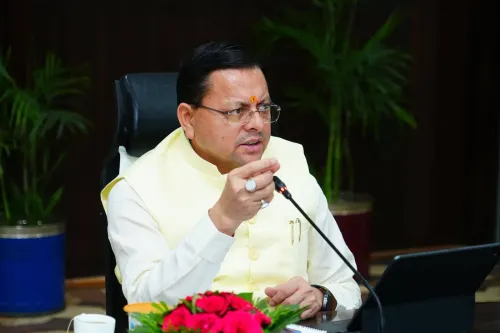
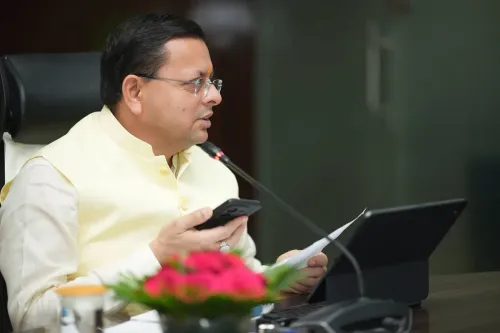
Waste disposal resolved. Drinking water restored. A drainage problem — still pending — gets a 24-hour deadline straight from the Chief Minister's chair. The Chief Minister's Office of Uttarakhand on Thursday, 30 July 2026, shared details of a direct grievance-redressal session in which the Chief Minister personally spoke with citizens from Almora, Tehri Garhwal, Haridwar, and Udham Singh Nagar — and acted on the spot.
Almora's drainage problem gets a clock on it
Mohammad Salman of Almora informed the Chief Minister that his earlier complaint about garbage disposal had already been resolved. But he raised a fresh concern: a drain that still needs to be built. The Chief Minister responded immediately, directing the District Magistrate of Almora to take necessary action within 24 hours. That kind of real-time accountability — a citizen speaks, a DM gets a deadline — is precisely what these sessions are designed to deliver.
Chamba's water supply and Haridwar's revenue tangle
Akash Ramola of Tehri Garhwal confirmed that his complaint about drinking water supply in Suman Colony, Chamba had been satisfactorily resolved. Zulfiqar Khan of Haridwar then raised a matter linked to the Revenue Department, prompting the Chief Minister to direct officials to resolve it without delay. Two of the five citizens who spoke during the session were there to report closure; the other three brought live problems that drew live orders.
Citizens thank the helpline, CM listens to two more districts
The Chief Minister also interacted with Najam Khan of Udham Singh Nagar and Nandan Singh of Almora. Both expressed gratitude for the satisfactory resolution of their complaints through the state helpline mechanism — a small but telling signal that the pipeline is closing cases, not just logging them.
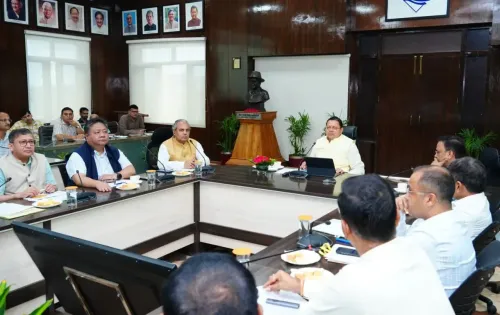
The session was attended by Vinay Kumar Ruhela, Vice-President of the State Disaster Management Advisory Committee; Principal Secretary R. K. Sudhanshu; senior officials including L. Fanai and Dr. R. Meenakshi Sundaram; along with secretaries, additional secretaries, and department heads. All district magistrates across Uttarakhand joined virtually — meaning the Chief Minister's orders landed in every district simultaneously.
Why the virtual DM model matters
Uttarakhand's terrain makes field accountability hard. Mountains, poor connectivity, and dispersed populations have historically slowed civic grievance resolution to a crawl. The model of virtual district magistrate participation — all DMs on one call, hearing the same citizen, receiving the same instruction — compresses the chain of command. One session, five citizens, four districts: the format is designed to be witnessed, not just recorded.
The kicker: when a Chief Minister sets a 24-hour deadline for a drain in Almora with every DM in the state watching, the accountability is no longer theoretical.
Point of View
Which has historically struggled with service delivery in remote districts, the 24-hour deadline model is as much a political statement about responsiveness as it is a governance tool. Whether closure rates hold up across districts over time will determine if the format produces durable results or remains a high-visibility ritual.
NationPress
30 Jul 2026
Frequently Asked Questions
What is the Uttarakhand CM helpline for grievances?
Uttarakhand operates a Chief Minister helpline through which citizens can register civic complaints — on issues like water supply, sanitation, and revenue matters — which are then tracked and resolved through district administrations.
What happened at the Uttarakhand CM grievance session on 30 July 2026?
The Chief Minister directly interacted with five citizens from Almora, Tehri Garhwal, Haridwar, and Udham Singh Nagar, issued a 24-hour deadline to the Almora DM on a drainage complaint, and directed officials to resolve a Revenue Department issue from Haridwar.
Was the Almora drainage complaint resolved?
Not yet at the time of the session — Mohammad Salman of Almora raised it live, and the Chief Minister directed the District Magistrate of Almora to take necessary action within 24 hours.
What is the role of district magistrates in Uttarakhand's grievance redressal?
District magistrates are the key field-level officers responsible for implementing CM directives on citizen complaints. In this session, all DMs joined virtually, receiving instructions in real time.
Who attended the Uttarakhand CM grievance review meeting on 30 July 2026?
The meeting was attended by State Disaster Management Advisory Committee Vice-President Vinay Kumar Ruhela, Principal Secretary R. K. Sudhanshu, senior officials L. Fanai and Dr. R. Meenakshi Sundaram, and all district magistrates via virtual link.