Uttarakhand CMO highlights fruit missions and dairy incentive
Synopsis
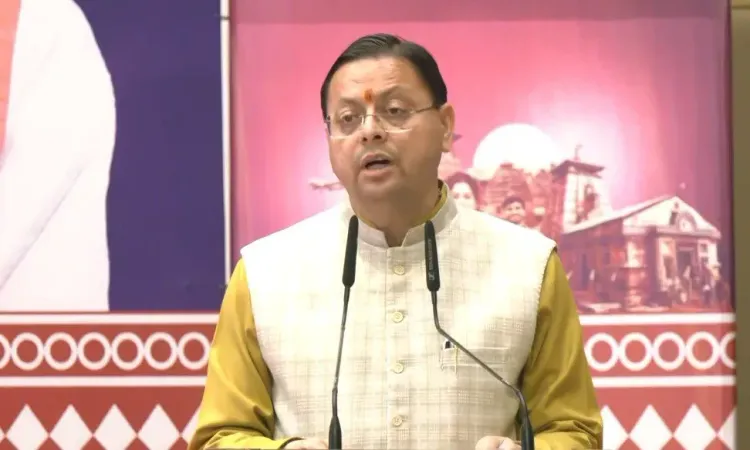
Uttarakhand's CMO on 26 November 2026 quoted CM Pushkar Dhami on the Apple, Kiwi and Dragon Fruit Mission, Aroma Valley under Mahak Kranti, and a four-rupee per litre milk incentive.
Key Takeaways
The Chief Minister's Office of Uttarakhand on 26 November 2026 quoted CM Pushkar Dhami on three rural income tracks.
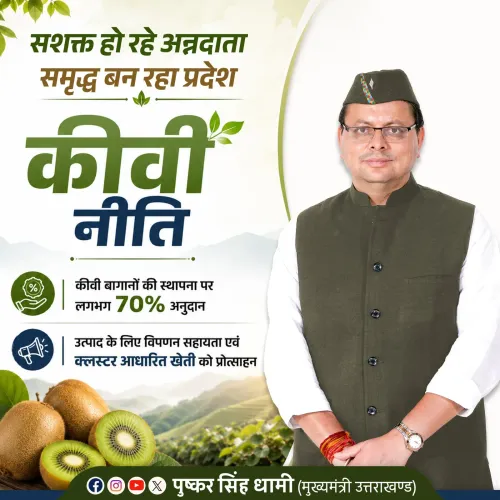
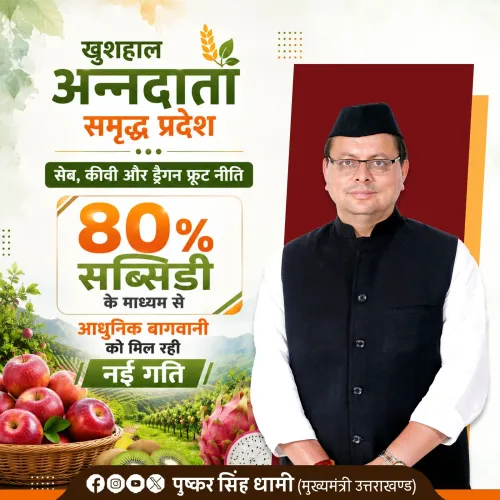
Horticulture is being promoted under the Apple, Kiwi and Dragon Fruit Mission.
An Aroma Valley is being developed under the Mahak Kranti programme for aromatic crops.
Milk producers are being given an incentive of four rupees per litre, according to the quoted remarks.
The pitch fits a longer shift from subsistence cereals toward high-value horticulture and dairy in hill districts.
Uttarakhand is staking hill incomes on apple, kiwi, dragon fruit and a four-rupee milk cheque, the Chief Minister's Office of Uttarakhand said on 26 November 2026, quoting Chief Minister Pushkar Dhami. His three-track pitch — a fruit mission, an Aroma Valley under Mahak Kranti, and a cash top-up for dairy — is how the Himalayan state is now framing a longer turn away from subsistence cereals.
The CMO carried Dhami's remarks in Hindi. In English they read: ‘Today in the state, horticulture is being promoted under the Apple, Kiwi and Dragon Fruit Mission. Under Mahak Kranti, Aroma Valley is being developed. Milk producers are being given an incentive of four rupees per litre.’
Apple, kiwi and dragon fruit on hill terraces
The message to orchardists is concrete. Apple remains the signature crop of Uttarakhand's higher belts, while kiwi and dragon fruit are the newer, non-traditional bets meant to spread risk when one season fails. Horticulture, the quoted remarks say, is being promoted under the Apple, Kiwi and Dragon Fruit Mission.
That banner sits on an older foundation. Since the mid-2000s, Uttarakhand has used components of the central Mission for Integrated Development of Horticulture to expand fruit cultivation in hill districts. The post gives no acreage, no farmer tally, and no launch date. It does put the three-fruit mission at the centre of the state's public horticulture story.
Mahak Kranti and the Aroma Valley bet
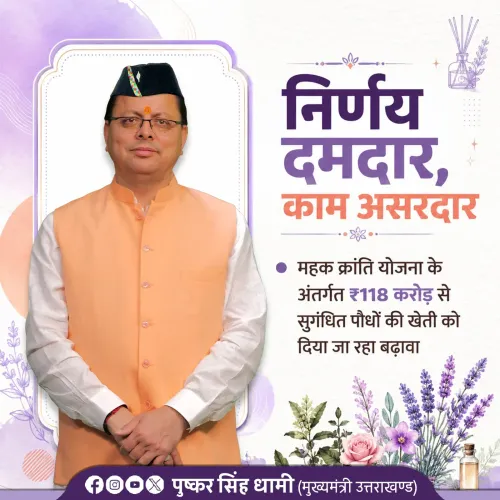
The second track is fragrance, not fruit. Under Mahak Kranti — महक क्रांति (fragrance revolution) — the government says an Aroma Valley is being developed for aromatic and medicinal plants suited to Himalayan agro-climatic zones. Thin soils that struggle with grain can still carry lemongrass, mint and allied crops beside orchards.
Other Himalayan states have chased the same logic: plant what the altitude rewards, lift cash income, and try to slow the walk out of the village.
Four rupees on every litre of milk
Dairy households will hear the third number first. Milk producers, Dhami said, are being given four rupees per litre as an incentive. In remote blocks where a fruit truck may not always arrive, livestock already fills the gap. A per-litre top-up is meant to make that buffer more reliable.
State dairy schemes have periodically offered such support, building on animal-husbandry programmes from the 2010s. The CMO post does not spell out how many producers are covered or how long the rate has run. What it does assert, in the Chief Minister's quoted words, is that the incentive is being paid.
The next test is delivery. Area under the fruit missions, farmer registration, and whether that four-rupee line actually appears on procurement slips will be the figures to watch in the coming agriculture budget cycle and review meetings.
Point of View
Aromatics, and a dairy cash top-up instead of a cereal-first hill economy. That arc has run since mid-2000s horticulture missions and 2010s livestock support, and it is aimed at slowing out-migration from hill districts. Bundling fruit, fragrance and milk in one quote lets the government speak to orchardists and cattle-keepers in a single frame. The credibility test remains delivery — area covered, farmers enrolled, and whether the four-rupee incentive actually lands in procurement.
NationPress
26 Nov 2026
Frequently Asked Questions
What is Uttarakhand's Apple, Kiwi and Dragon Fruit Mission?
It is a state horticulture push, cited by CM Pushkar Dhami, to promote apple along with non-traditional kiwi and dragon fruit. The CMO post did not give acreage or launch dates.
What is Mahak Kranti and Aroma Valley in Uttarakhand?
Mahak Kranti is the state's aromatic-crop programme; under it, an Aroma Valley is being developed for medicinal and fragrance plants. The aim is cash income suited to Himalayan agro-climatic zones.
How much milk incentive is Uttarakhand giving producers?
Chief Minister Pushkar Dhami was quoted as saying milk producers are being given four rupees per litre. Coverage and duration were not detailed in the CMO post.
Who is the Chief Minister of Uttarakhand?
Pushkar Dhami is Chief Minister of Uttarakhand, in office since 2021. The CMO posted his remarks on horticulture, aromatics and dairy on 26 November 2026.
Why is Uttarakhand promoting horticulture in the hills?
Hill districts have long depended on subsistence cereals and livestock; high-value fruit and aromatic crops are meant to raise rural earnings and reduce migration. Dairy incentives are the parallel income buffer.