Defence Minister Rajnath Singh on PM's Constitution Day article
Synopsis
On Constitution Day, Union Defence Minister Rajnath Singh praised Prime Minister Narendra Modi's article on the Constitution's transformative vision and the government's work on dignity and justice. He also stressed the Opposition's duty in a parliamentary democracy, saying disruption is no substitute for discharging that role.
Key Takeaways
Union Defence Minister Rajnath Singh on 26 November 2026 praised Prime Minister Narendra Modi 's Constitution Day article as a profound reflection on the Constitution's vision.
He said the government is translating ideals of dignity, equal opportunity and social and economic justice into reality through various initiatives.
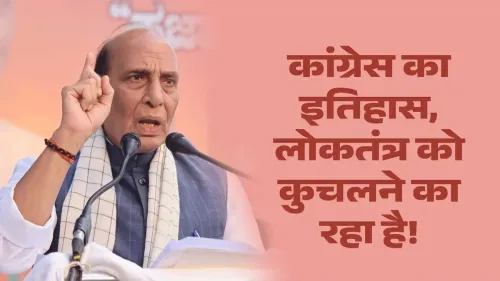
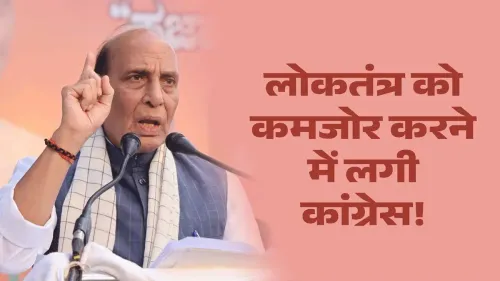
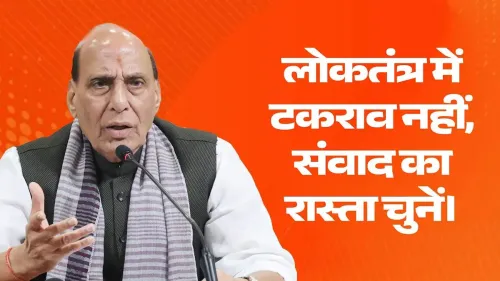
Singh underlined the Opposition's constitutional responsibilities and said disrupting democratic processes is no substitute for its parliamentary duties.
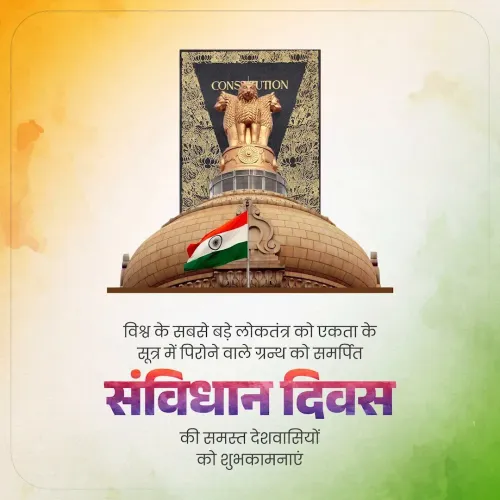
India observes Constitution Day each year on 26 November , marking the adoption of the Constitution in 1949 .
The Union government declared the date as Constitution Day in 2015 to promote awareness of constitutional values and fundamental duties.
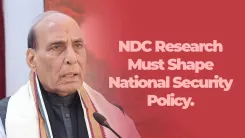
Union Defence Minister Rajnath Singh marked Constitution Day on 26 November 2026 by holding up Prime Minister Narendra Modi's article as a map of how India's founding text is meant to work in practice. He said the piece offered a profound reflection on a just, inclusive and empowered India, and that the government was turning dignity, equal opportunity and social and economic justice into lived policy. Then came the sharper turn: disrupting democratic processes, he wrote, is no substitute for the Opposition discharging its duties in a parliamentary democracy.
How Singh framed the Prime Minister's article
Singh called the article 'a profound reflection on the transformative vision of our Constitution and its role in shaping a just, inclusive and empowered India.' He said it showed how the government is translating constitutional ideals 'into reality through various initiatives.' He did not list those schemes in the post. The emphasis was the claim itself: that the text is being executed, not merely commemorated.
He closed by calling it 'a thoughtful read on our constitutional journey, its achievements and our collective responsibilities towards the future.' The post tagged the Prime Minister and sat inside a familiar argument of the BJP-led government, that constitutional morality is measured in programmes as much as in speeches.
A Constitution Day line aimed at the Opposition
The most pointed sentence was not about history. Singh said the article 'underscores the constitutional responsibilities of the Opposition,' and reminded readers that 'disrupting democratic processes is no substitute for discharging its duties in a parliamentary democracy.' That is a running contest, not a one-day slogan. Around Constitution Day and in sessions marked by protests, the ruling party has often contrasted its legislative push with Opposition walkouts and scenes in the well of the House.
Parliamentarians on both sides will hear that as a message about the next sitting as much as about 1949. Watch for how Opposition parties answer in the House, not only in public statements, and whether the government ties specific schemes to the ideals Singh named.
From 26 November 1949 to a national observance
The Constitution of India was adopted on 26 November 1949 and came into force on 26 January 1950. In 2015, the Union government declared 26 November as Constitution Day to deepen public awareness of constitutional values and fundamental duties. The date now sits on the political calendar as surely as it sits on the civic one.
Singh's post keeps that dual use alive: a tribute to the document, and a claim about who is honouring it in Parliament. The founding text is not in dispute. The fight is over conduct, credit and what equal opportunity looks like when it leaves the page.
Constitution Day will return every year. So will the argument Singh rehearsed: programmes versus protest, duty versus disruption, every time the House hits turbulence.
Point of View
And it restates a long BJP argument that Opposition protest inside Parliament is a failure of constitutional duty rather than a legitimate tactic. That framing has recurred around 26 November and during disrupted sessions, turning a civic anniversary into a verdict on legislative conduct. The political test is whether the Opposition answers on the floor with debate, or whether the next sitting again becomes a contest of disruption versus majority numbers. Singh did not name schemes; he named a standard, and invited the House to be judged by it.
NationPress
26 Nov 2026
Frequently Asked Questions
What did Rajnath Singh say on Constitution Day 2026?
Union Defence Minister Rajnath Singh praised Prime Minister Narendra Modi's Constitution Day article as a profound reflection on the Constitution's vision. He said the government is translating ideals of dignity, equal opportunity and justice into reality, and that the Opposition must not treat disruption as a substitute for its parliamentary duties.
When is Constitution Day observed in India?
Constitution Day is observed every year on 26 November. The date marks the adoption of the Constitution of India on 26 November 1949.
Why was 26 November declared Constitution Day?
In 2015 the Union government declared 26 November as Constitution Day to promote awareness of constitutional values and fundamental duties. Republic Day on 26 January separately marks the Constitution coming into force in 1950.
What did Rajnath Singh say about the Opposition?
He said the Prime Minister's article underscores the constitutional responsibilities of the Opposition. He added that disrupting democratic processes is no substitute for discharging its duties in a parliamentary democracy.
Did Rajnath Singh list the government initiatives he mentioned?
No. His post referred to various initiatives that, in his words, translate constitutional ideals into reality, but it did not name specific schemes. He pointed readers to the Prime Minister's article as the fuller account.