CM Dhami: Uttarakhand DRR Model Praised at BRICS Forum
Synopsis
Uttarakhand CM Pushkar Singh Dhami announced on June 9, 2026 that the state's disaster risk reduction innovations and rapid relief mechanisms received appreciation at a BRICS Disaster Risk Reduction Working Group meeting, crediting PM Modi's leadership for the model's national and global recognition.
Key Takeaways
CM Pushkar Singh Dhami on June 9, 2026 credited PM Narendra Modi's leadership for Uttarakhand's disaster management model gaining international recognition.
The state's innovations in disaster risk reduction (DRR) and rapid relief and rehabilitation were praised at a BRICS DRR Working Group meeting.
Uttarakhand revamped its disaster management framework after the devastating 2013 Kedarnath floods , integrating early warning systems and community-level protocols.
India's disaster governance rests on the Disaster Management Act, 2005 , which mandates state-level plans under the National Disaster Management Authority .
The recognition aligns with India's broader strategy of presenting sub-national DRR models at multilateral platforms in line with the Sendai Framework (2015–2030) .
Hill communities across Uttarakhand's flood- and landslide-prone valleys are the primary beneficiaries of improved rapid-response mechanisms.
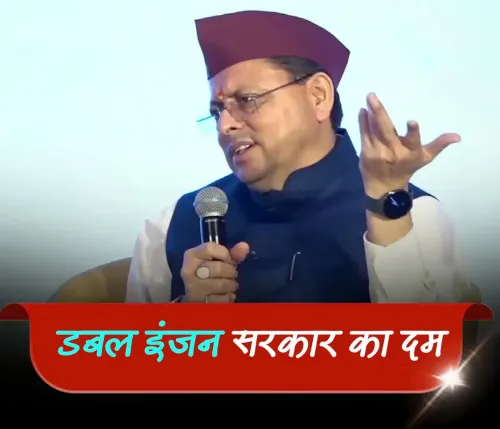
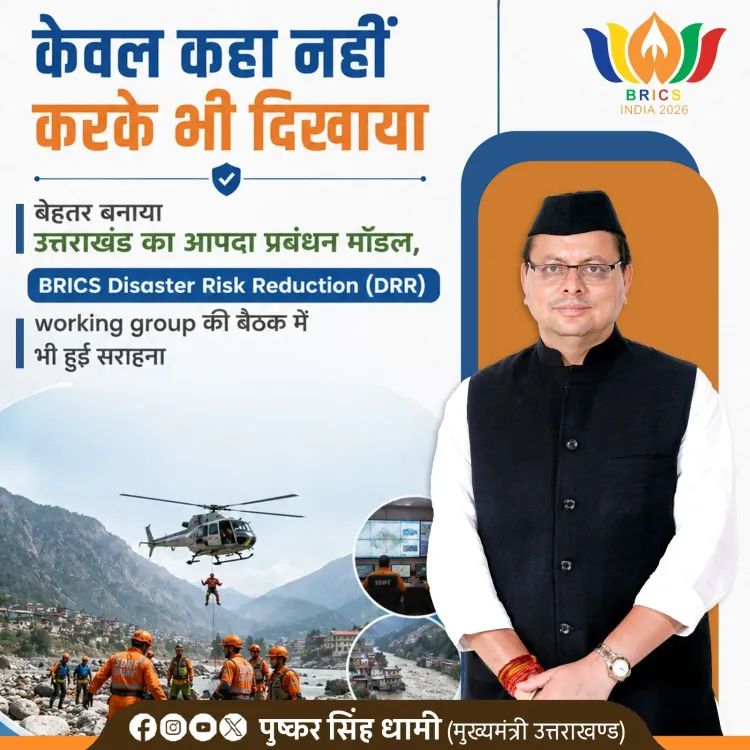
Uttarakhand Chief Minister Pushkar Singh Dhami on Tuesday, June 9, 2026, credited the leadership of Prime Minister Narendra Modi as the driving force behind the state's disaster management model gaining recognition on the international stage, including at a meeting of the BRICS Disaster Risk Reduction (DRR) Working Group.
Context
CM Dhami posted in Hindi, stating: 'Aadaraniya Pradhanmantri Shri Narendra Modi ji ke kushal netritva evam margadarshan mein Uttarakhand ka aapda prabandhan model desh-duniya ke liye ek udaharan bankar ubhra hai' — 'Under the able leadership and guidance of respected Prime Minister Shri Narendra Modi, Uttarakhand's disaster management model has emerged as an example for the country and the world.' He further noted that innovations by the state government in the field of disaster risk reduction, along with rapid relief and rehabilitation mechanisms, received appreciation at the BRICS DRR Working Group meeting.
The Chief Minister described the recognition as 'a matter of pride for Devbhoomi Uttarakhand' — a reverential name for the Himalayan state meaning 'Land of the Gods.'
Policy Backdrop
Uttarakhand sits in one of India's most disaster-prone geographies, exposed to floods, landslides, and earthquakes. The catastrophic 2013 Kedarnath floods became a turning point: the state overhauled its disaster management architecture, integrating early warning systems and community-level response protocols into a revised state plan.
India's broader framework rests on the Disaster Management Act, 2005, which established the National Disaster Management Authority (NDMA) and made state-level disaster plans mandatory. Over the following decade, sub-national governments were encouraged to develop replicable models aligned with the global Sendai Framework for Disaster Risk Reduction, which runs from 2015 to 2030 and sets targets for reducing disaster mortality, economic losses, and damage to critical infrastructure.
Indian states have increasingly used multilateral platforms — including BRICS mechanisms — to present home-grown DRR innovations as contributions to south-south cooperation on climate-related risks, a pattern that the central government has actively promoted.
Stakeholders and Impact
The most direct beneficiaries of an effective DRR model are the hill communities of Uttarakhand, many of which sit along fragile river valleys and high-altitude terrain where rapid-onset disasters can cut off villages within hours. Faster relief and rehabilitation mechanisms translate directly into lives saved and livelihoods protected.
At the multilateral level, recognition by the BRICS DRR Working Group — a forum that brings together Brazil, Russia, India, China, South Africa and newer member states to coordinate on disaster preparedness — signals that Uttarakhand's approach may serve as a reference point for other disaster-prone regions within the bloc. This kind of peer acknowledgement can also strengthen India's standing in global climate-resilience negotiations.
What's Next
Attention will now turn to whether the practices highlighted at the BRICS DRR Working Group meeting are formally documented and shared with other member states, or integrated into updated national disaster management guidelines. Subsequent sessions of the working group will be a key indicator of how far Uttarakhand's model travels beyond the domestic policy conversation.
For the state government, the international recognition provides political momentum to deepen investment in early warning infrastructure and community-level preparedness — particularly ahead of the annual monsoon season, which remains the highest-risk period for the Himalayan region.
Point of View
Reinforcing the BJP's centralised-leadership narrative. The move fits a well-established pattern in which state governments leverage international platforms to signal policy competence ahead of electoral cycles. For Uttarakhand specifically, disaster management credibility is politically significant given the state's traumatic history with large-scale disasters and the scrutiny that follows each monsoon season. The real test will be whether the BRICS acknowledgement translates into concrete policy adoption or remains a reputational milestone.
NationPress
24 Oct 2026
Frequently Asked Questions
What is the BRICS Disaster Risk Reduction Working Group?
The BRICS DRR Working Group is a forum mechanism through which BRICS member states — Brazil, Russia, India, China, South Africa and newer members — coordinate on disaster preparedness, risk assessment and response strategies, often aligning their work with the global Sendai Framework.
Why is Uttarakhand considered a disaster-prone state?
Uttarakhand is a Himalayan state exposed to floods, landslides and earthquakes. The 2013 Kedarnath floods were among the deadliest disasters in the state's history, prompting a major overhaul of its disaster management policies and infrastructure.
What did CM Dhami say about Uttarakhand's disaster model?
CM Dhami said that under PM Modi's leadership, Uttarakhand's disaster management model has emerged as an example for the country and the world, and that the state's innovations in disaster risk reduction and rapid relief were appreciated at the BRICS DRR Working Group meeting.
What is the Sendai Framework and how does it relate to India?
The Sendai Framework for Disaster Risk Reduction (2015–2030) is a global agreement setting targets to reduce disaster mortality, economic losses and infrastructure damage. India has aligned its national and state-level DRR policies with the framework, encouraging states like Uttarakhand to develop replicable models.
What happens next after Uttarakhand's recognition at the BRICS DRR forum?
The key outcome to watch is whether Uttarakhand's practices are formally documented and shared with other BRICS member states, or incorporated into updated national disaster management guidelines by the NDMA.