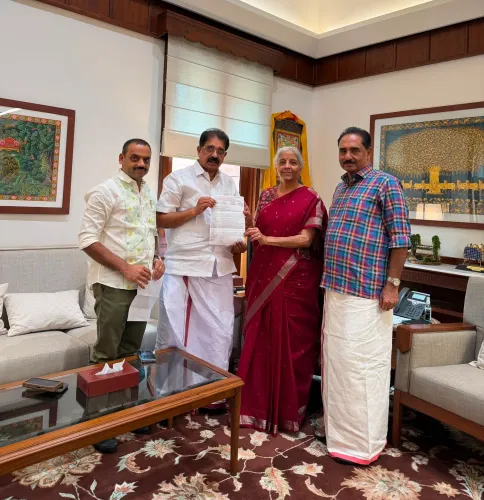
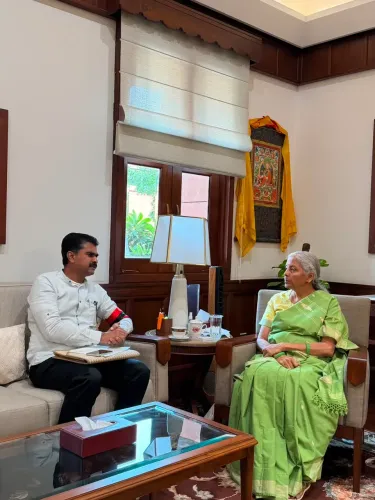
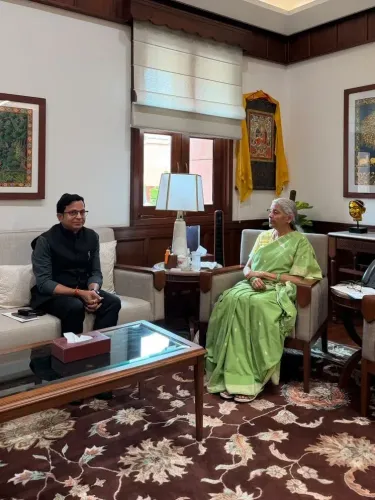
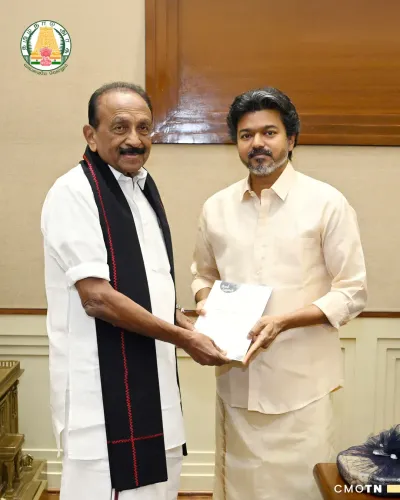
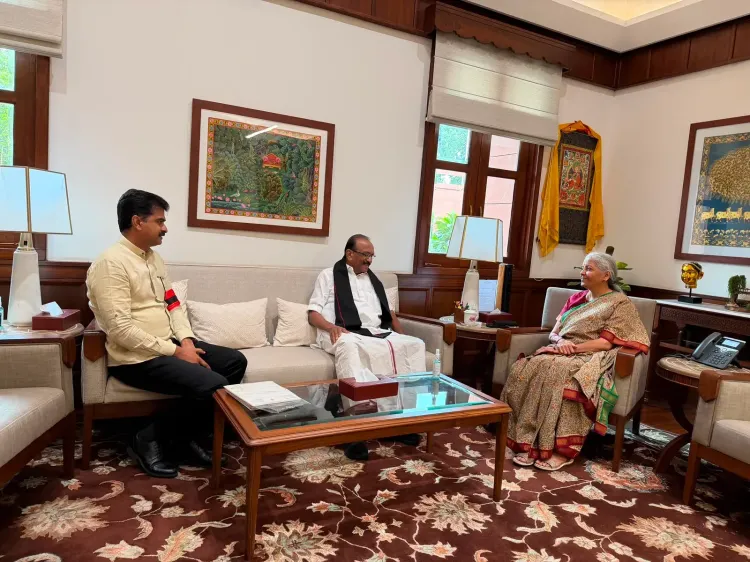
Vaiko, Durai Vaiko Call on FM Sitharaman at Parliament House
Synopsis
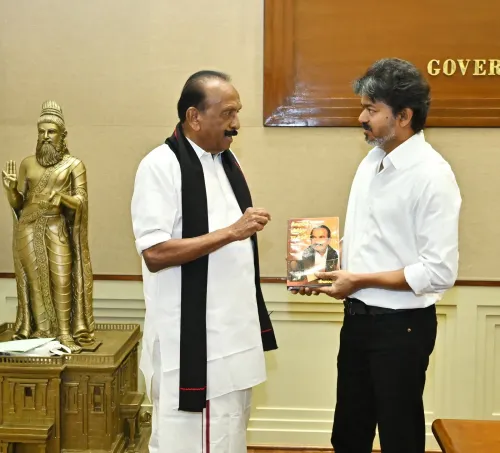
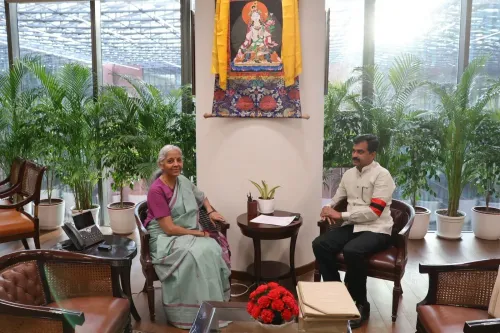
MDMK Founder Vaiko and Lok Sabha MP Durai Vaiko called on Union Finance Minister Nirmala Sitharaman at Parliament House on July 21, 2026, in a meeting reflecting ongoing engagement between Tamil Nadu's regional parties and the Union government during the parliamentary session.
Key Takeaways
Vaiko , Founder and General Secretary of MDMK , and his son Durai Vaiko , Lok Sabha MP, met Finance Minister Nirmala Sitharaman at Parliament House on July 21, 2026 .
The meeting occurred during an active parliamentary session, a common setting for regional party outreach to Union ministers.
MDMK has a history of selective alignment with the BJP-led NDA , including formal support during the 1999–2004 period.
No agenda or outcome of the meeting has been officially stated.
Such engagements typically address state-specific fiscal concerns, central grants, and broader centre-state relations.
Follow-up parliamentary activity by Durai Vaiko on finance or state allocation matters will be a key indicator of the meeting's focus.
Union Finance Minister Nirmala Sitharaman received a courtesy call at Parliament House, New Delhi, on Tuesday, July 21, 2026, from Vaiko, Founder and General Secretary of the Marumalarchi Dravida Munnetra Kazhagam (MDMK), and his son Durai Vaiko, the party's Lok Sabha Member of Parliament.
Context
The meeting took place within the Parliament House complex during an active legislative session, a routine setting for engagements between Union ministers and regional party representatives. Sitharaman, who also holds the portfolio of Minister of Corporate Affairs, is a central figure in managing both fiscal policy and the government's relationships with coalition and non-coalition partners in Parliament.
Vaiko is one of Tamil Nadu's most recognisable Dravidian-movement figures, having led MDMK for decades with a focus on regional autonomy, Tamil cultural issues, and state-specific development concerns. His son Durai Vaiko now carries the party's parliamentary presence in the Lok Sabha.
Policy Backdrop
Meetings between regional party MPs and the Finance Minister during parliamentary sessions typically serve as a channel for raising state-specific fiscal concerns, including central grants, devolution of taxes, and scheme implementation. Tamil Nadu, as one of India's larger contributor states to the central tax pool, has historically maintained active engagement with the Union Finance Ministry on resource-sharing matters.
MDMK has a history of selective alignment with national formations. The party extended support to the BJP-led NDA during the 1999–2004 period and has periodically recalibrated its national positioning based on Tamil Nadu's evolving political arithmetic. Such engagements with senior BJP ministers reflect the fluid coalition dynamics that characterise Indian regional politics.
Stakeholders and Impact
For Tamil Nadu's regional parties, direct access to the Finance Minister represents a critical avenue for advocating state interests — from infrastructure allocations to welfare scheme funding. MDMK's outreach to Sitharaman signals continued engagement with the Centre at the parliamentary level, independent of formal alliance structures.
The meeting is also significant in the context of broader centre-state fiscal relations, with states routinely pressing the Union government on issues such as GST compensation, capital expenditure grants, and sector-specific funds ahead of budget cycles and parliamentary votes.
What's Next
No specific agenda or outcome of the July 21 meeting has been officially disclosed. Observers of Tamil Nadu's political landscape will watch for any follow-up parliamentary interventions by Durai Vaiko on finance-related matters, as well as any signals of MDMK's positioning ahead of future state or national electoral cycles. Such ministerial-level meetings often precede formal representations or parliamentary questions on state allocations.
Point of View
Regardless of formal alliance status. For MDMK, parliamentary-session access to the Finance Minister is a practical tool for advancing state-specific fiscal demands at a critical point in the budget and grants cycle. The engagement also reflects the BJP's ongoing effort to manage a diverse coalition of regional relationships in a state where it has limited direct electoral footprint. Observers will note whether this interaction translates into any concrete parliamentary moves or signals a shift in MDMK's national alignment calculus ahead of future elections.
NationPress
20 Oct 2026
Frequently Asked Questions
Why did Vaiko meet Finance Minister Nirmala Sitharaman?
Vaiko, MDMK Founder, and his son Durai Vaiko, Lok Sabha MP, called on Finance Minister Nirmala Sitharaman at Parliament House on July 21, 2026. No specific agenda was officially disclosed, but such meetings typically address state fiscal concerns and centre-state relations.
Who is Vaiko and what is MDMK?
Vaiko is the Founder and General Secretary of the Marumalarchi Dravida Munnetra Kazhagam (MDMK), a Tamil Nadu-based Dravidian regional party. He is a veteran Tamil politician known for championing regional autonomy and Tamil cultural causes.
Has MDMK previously allied with the BJP?
Yes. MDMK extended support to the BJP-led NDA during the 1999–2004 period and has selectively engaged with national formations at various points, reflecting the shifting coalition arithmetic in Tamil Nadu politics.
What issues do Tamil Nadu parties typically raise with the Finance Minister?
Regional parties from Tamil Nadu commonly raise concerns about central tax devolution, GST-related matters, infrastructure grants, capital expenditure allocations, and welfare scheme funding during meetings with the Union Finance Minister.