Vaishnaw flags Koteshwar Road–Airport Metro corridor for Ahmedabad
Synopsis
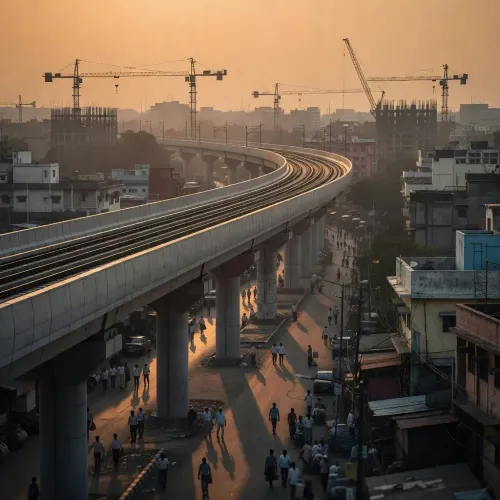
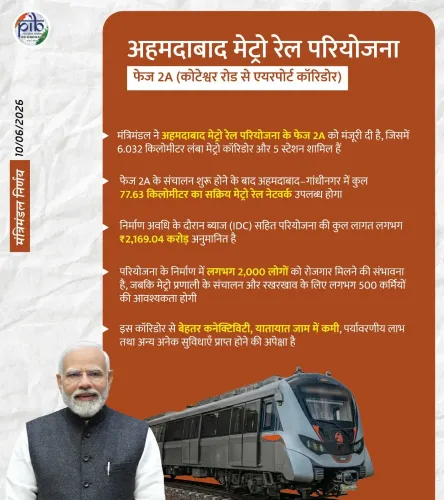
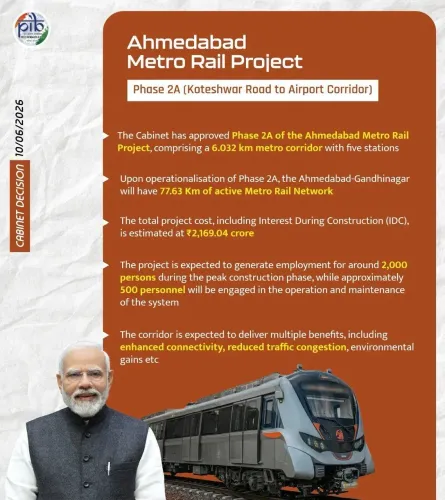
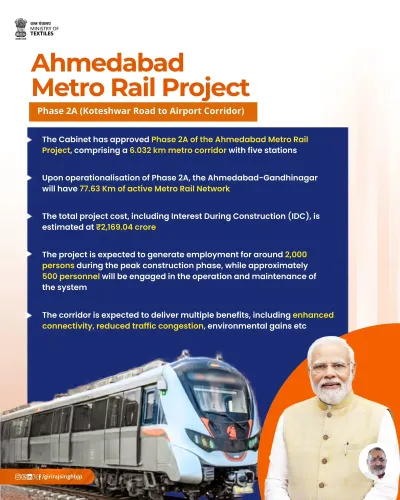
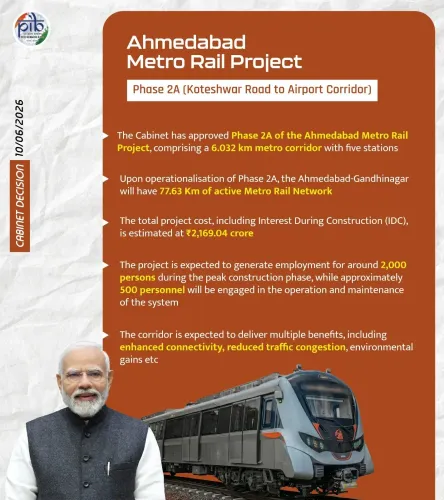
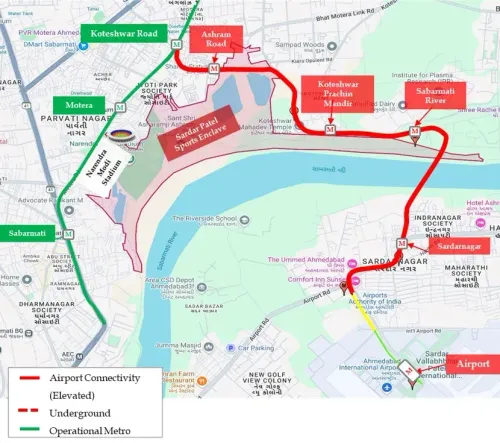
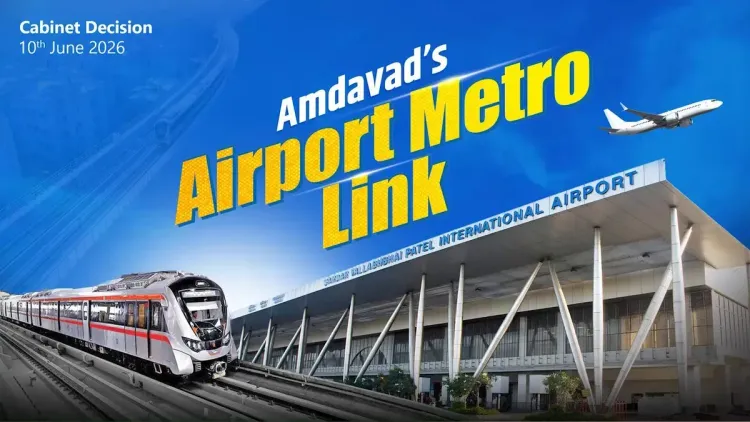
Union Minister Ashwini Vaishnaw on 11 June 2026 spotlighted the Koteshwar Road–Amdavad Airport Metro Corridor, saying it will enhance connectivity to Sardar Vallabhbhai Patel International Airport and the Sardar Patel Sports Enclave, advancing seamless urban mobility in Ahmedabad.
Key Takeaways
Union Minister Ashwini Vaishnaw on 11 June 2026 highlighted the Koteshwar Road–Amdavad Airport Metro Corridor on X.
The corridor is intended to improve connectivity to Sardar Vallabhbhai Patel International Airport and the Sardar Patel Sports Enclave in Ahmedabad .
The Ahmedabad Metro project received in-principle central approval in 2014 under the Metro Rail Policy framework.
The Sardar Patel Sports Enclave hosts the Narendra Modi Stadium , the world's largest cricket stadium, which currently has limited mass-transit access.
The corridor aligns with India's broader policy of integrating airports and major venues with metro networks, as seen in Delhi , Bengaluru , and Mumbai .
Key next steps include formal project sanction, land acquisition, and rolling-stock tenders by the Gujarat Metro Rail Corporation .
Union Minister Ashwini Vaishnaw on Thursday, 11 June 2026 highlighted the proposed Koteshwar Road–Amdavad Airport Metro Corridor, describing it as a project that will strengthen airport connectivity and improve access to the Sardar Patel Sports Enclave in Ahmedabad.
Context
In his post on X, the minister stated that the corridor 'will enhance connectivity to the airport and Sardar Patel Sports Enclave, strengthening seamless urban mobility.' The remarks place the spur line within the broader Ahmedabad Metro network, which has been expanding across the city over the past decade. The Sardar Vallabhbhai Patel International Airport — commonly referred to as Amdavad Airport — is the primary aviation gateway for Ahmedabad and central Gujarat.
Policy Backdrop
The Ahmedabad Metro Rail project received in-principle central approval in 2014 under the Metro Rail Policy framework, with Phase-1 corridors prioritised for east-west and north-south connectivity across the city. Successive Union governments have backed metro expansion through viability gap funding and joint ventures between central and state entities, reflecting a consistent policy preference for rail-based urban mobility. The proposed airport spur fits squarely within this framework, mirroring similar airport-metro links developed or under development in Delhi, Bengaluru, and Mumbai.
The Sardar Patel Sports Enclave — anchored by the Narendra Modi Stadium, the world's largest cricket stadium — is a major events venue that currently draws large crowds with limited mass-transit access. A dedicated metro corridor would address that gap and reduce vehicular pressure on surrounding arterial roads.
Stakeholders and Impact
Urban commuters, domestic and international air travellers, and attendees at sporting and cultural events at the Sardar Patel Sports Enclave stand to benefit most directly from the corridor. Improved last-mile connectivity to the airport is also expected to ease road congestion on the Sardar Patel Ring Road and adjoining arterials that currently absorb the bulk of airport-bound traffic. Businesses operating in the Koteshwar Road precinct — a growing commercial belt in western Ahmedabad — are among other potential beneficiaries.
The Gujarat Metro Rail Corporation, which operates existing Ahmedabad Metro lines, would likely be the implementing agency for the corridor, working in partnership with the Union government under the standard 50:50 equity model used for metro projects nationally.
What's Next
The immediate watch points are formal project sanction, land acquisition clearances, and rolling-stock tender announcements from the Gujarat state government and the Gujarat Metro Rail Corporation. Progress on remaining Ahmedabad Metro phases — particularly extensions in the western and northern corridors — will also signal how quickly the airport spur can move from announcement to ground-breaking. As Ahmedabad continues to grow as a commercial and sporting hub, the integration of metro infrastructure with the airport and major venues is likely to remain a priority investment for both the Union and state governments.
Point of View
Creating political ownership early. For the BJP, which governs both at the Centre and in Gujarat, the corridor also reinforces a narrative of transformative urban infrastructure delivery in its home state. The broader implication is that airport-metro integration is now a standard template the Centre is applying city by city, with Ahmedabad positioned as the next showcase.
NationPress
25 Sept 2026
Frequently Asked Questions
What is the Koteshwar Road–Amdavad Airport Metro Corridor?
It is a proposed metro rail spur in Ahmedabad that would connect Koteshwar Road to Sardar Vallabhbhai Patel International Airport, also providing access to the Sardar Patel Sports Enclave. Union Minister Ashwini Vaishnaw highlighted the corridor on 11 June 2026.
Which metro network will the airport corridor be part of?
The corridor is part of the Ahmedabad Metro network, which has been expanding across the city since receiving in-principle central approval in 2014 under the Metro Rail Policy framework.
Why is the Sardar Patel Sports Enclave important for this metro project?
The Sardar Patel Sports Enclave is anchored by the Narendra Modi Stadium, the world's largest cricket stadium. The enclave draws large crowds but has limited mass-transit access, making a dedicated metro link a significant connectivity upgrade.
Who will build the Koteshwar Road–Airport Metro Corridor in Ahmedabad?
The Gujarat Metro Rail Corporation is the likely implementing agency, working in partnership with the Union government under the standard joint-venture model used for metro projects across India.
What is the current status of the Ahmedabad Airport Metro project?
As of June 2026, Union Minister Ashwini Vaishnaw has publicly flagged the corridor. Formal project sanction, land acquisition clearances, and rolling-stock tenders are the key next steps before construction can begin.