CM Bhupendra Patel thanks PM Modi for Ahmedabad Metro Phase 2A nod
Synopsis
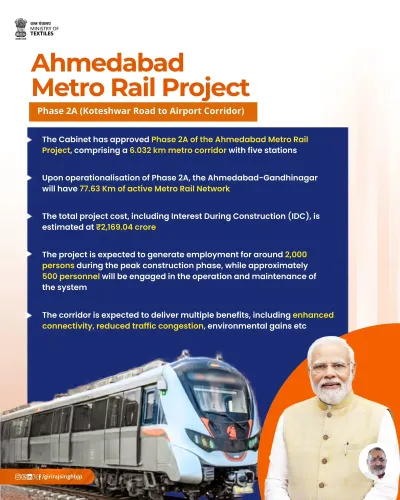
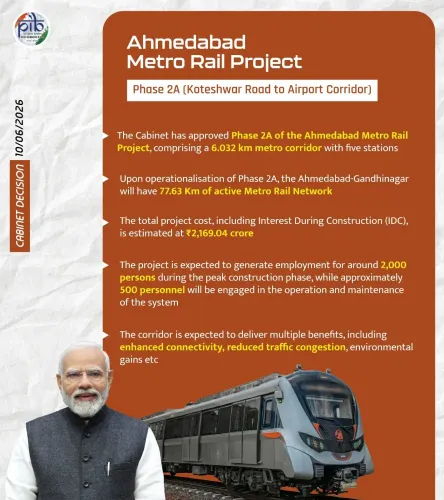
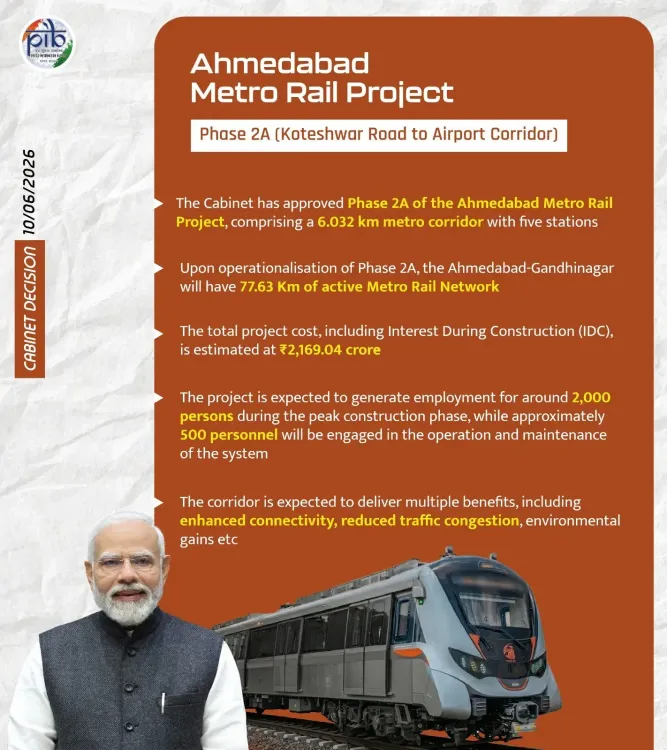
The Union Cabinet has approved Ahmedabad Metro Rail Phase 2A covering the Koteshwar Road–Airport Corridor. Gujarat CM Bhupendra Patel thanked PM Modi for the decision, calling metro rail a symbol of sustainable urban mobility that will strengthen Ahmedabad-Gandhinagar's emergence as a modern urban hub.
Key Takeaways
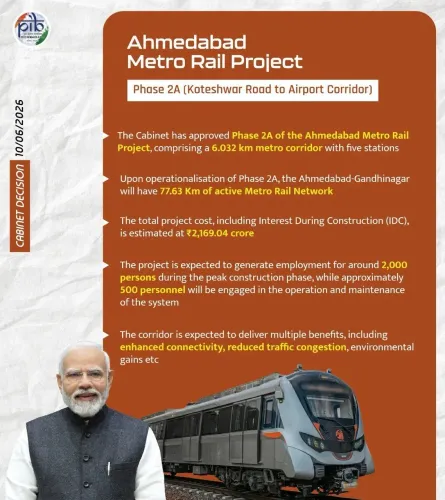
The Union Cabinet approved Ahmedabad Metro Rail Phase 2A , covering the Koteshwar Road–Airport Corridor , as announced on 10 June 2026 .
Gujarat CM Bhupendra Patel publicly thanked PM Narendra Modi and the Cabinet for the sanction.
The project is executed through MEGA (Metro-Link Express for Gandhinagar and Ahmedabad), incorporated in 2010 .
Ahmedabad Metro Phase 1 was approved in 2014 , covering the first 40 km of corridors; Phase 2A extends the network to the airport.
The corridor is expected to reduce road congestion, lower urban emissions, and improve commuter access to Ahmedabad's international airport .
Next steps include a detailed project report, tendering, and land acquisition notifications for the new alignment.
Gujarat Chief Minister Bhupendra Patel on Wednesday, 10 June 2026 expressed gratitude to Prime Minister Narendra Modi and the Union Cabinet for approving the Ahmedabad Metro Rail Phase 2A project, covering the Koteshwar Road–Airport Corridor. The approval marks a significant step in expanding urban transit infrastructure linking Ahmedabad and Gandhinagar.
Context
Posting on X, CM Patel said the project 'will enhance connectivity, improve commuter convenience, reduce congestion and contribute to cleaner, more sustainable transportation for the people of Ahmedabad and Gandhinagar.' He described metro rail as 'a symbol of efficient, safe and sustainable urban mobility, transforming the way people travel and connect.' The post accompanied 2 images related to the announcement.
The Union Cabinet, the central government's apex decision-making body, sanctioned the new corridor as part of the ongoing expansion of the metro network in Gujarat's twin-city urban belt. The approval follows a pattern of central backing for metro projects across Indian cities that has accelerated since 2014.
Policy Backdrop
The Ahmedabad Metro Rail project is executed through the Metro-Link Express for Gandhinagar and Ahmedabad (MEGA) company, incorporated in 2010 on a public-private partnership model. The Union Cabinet had earlier approved Metro Phase 1 in 2014, authorising the first 40 km of elevated and underground corridors connecting key parts of the city.
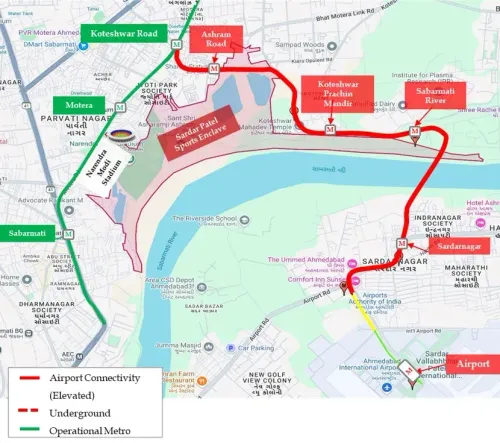
The Phase 2A Koteshwar Road–Airport Corridor extends the network toward Ahmedabad's international airport, a high-demand travel node. Under the National Urban Mobility Policy framework, the central government has now approved metro systems in more than twenty Indian cities, with Gujarat consistently receiving central assistance for connectivity projects linking its two largest urban centres.
CM Patel noted that the expansion 'will further catalyse growth across the region and strengthen Ahmedabad-Gandhinagar's emergence as a modern, future-ready urban hub,' signalling the state government's intent to position the corridor as a driver of economic activity beyond transit alone.
Stakeholders and Impact
The primary beneficiaries are daily commuters in Ahmedabad and residents of Gandhinagar, the state capital, who currently rely heavily on road transport between the two cities. An airport-linked metro corridor is expected to reduce private vehicle use on one of the region's busiest arterial roads, with downstream benefits for air quality and road safety.
The project also carries significance for business travellers, tourism, and the logistics ecosystem around Ahmedabad's Sardar Vallabhbhai Patel International Airport. Broader urban development along the corridor — retail, real estate, and commercial activity — is a commonly observed secondary effect of metro expansion in Indian cities.
What's Next
Following Cabinet approval, the standard sequence involves the release of a detailed project report, tendering of civil and systems contracts, and land acquisition notifications for the Koteshwar Road–Airport alignment. State budget allocations for matching funds and timelines for ground-breaking are expected to be announced in subsequent weeks.
The expansion, once operational, would integrate the airport into Ahmedabad's metro grid for the first time, completing a connectivity loop that urban planners and commuter groups have long advocated. How swiftly the project moves from approval to construction will be a key indicator of execution momentum for the state's infrastructure agenda.
Point of View
Voter-friendly infrastructure deliverables in key states. For Gujarat — the political home ground of both PM Modi and CM Patel — an airport-linked metro corridor carries symbolic weight beyond its transit function, reinforcing the state's brand as a model of urban governance. CM Patel's effusive public thanks to the Prime Minister also reflects the standard political choreography of credit-sharing between state and Centre on centrally-assisted schemes. The real test will be execution speed: metro approvals in India have historically faced long gaps between sanction and groundbreaking, and the Koteshwar Road–Airport corridor will be watched closely as a benchmark for delivery.
NationPress
19 Sept 2026
Frequently Asked Questions
What is Ahmedabad Metro Rail Phase 2A?
Ahmedabad Metro Rail Phase 2A is the newly Cabinet-approved extension of the city's metro network covering the Koteshwar Road–Airport Corridor, designed to connect key urban areas of Ahmedabad to the international airport via rapid rail transit.
Who approved the Ahmedabad Metro Phase 2A project?
The Union Cabinet, headed by Prime Minister Narendra Modi, approved the Ahmedabad Metro Rail Phase 2A project. Gujarat CM Bhupendra Patel announced the approval and thanked the Prime Minister on 10 June 2026.
What is MEGA in the context of Ahmedabad Metro?
MEGA stands for Metro-Link Express for Gandhinagar and Ahmedabad, the public-private partnership company incorporated in 2010 to plan and execute metro rail projects connecting Ahmedabad and Gandhinagar.
How does the Ahmedabad Metro airport corridor benefit commuters?
The Koteshwar Road–Airport Corridor will give commuters a direct, congestion-free metro link to Ahmedabad's Sardar Vallabhbhai Patel International Airport, reducing dependence on road transport and cutting travel time for daily passengers and air travellers.
What were the earlier phases of Ahmedabad Metro?
Ahmedabad Metro Phase 1 was approved by the Union Cabinet in 2014, authorising the first 40 km of elevated and underground corridors across the city. Phase 2A now extends the network further toward the airport.