Vaishnaw Highlights 8 Rajasthan Amrit Stations Inspired by Desert Heritage
Synopsis
Union Minister Ashwini Vaishnaw on 17 July 2026 highlighted eight Rajasthan stations — including Jaisalmer and Barmer — being redeveloped under the Amrit Bharat Station Scheme, with designs inspired by the state's forts, palaces, and desert architectural heritage.
Key Takeaways
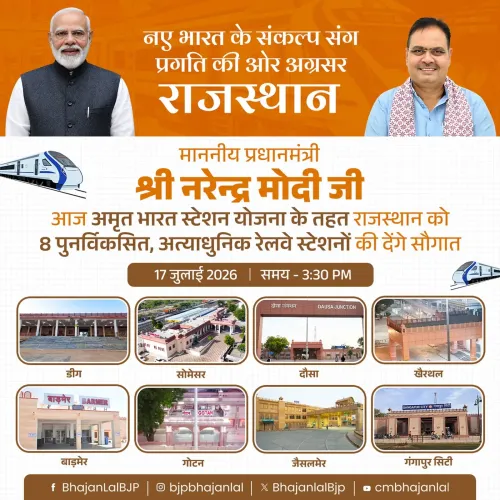
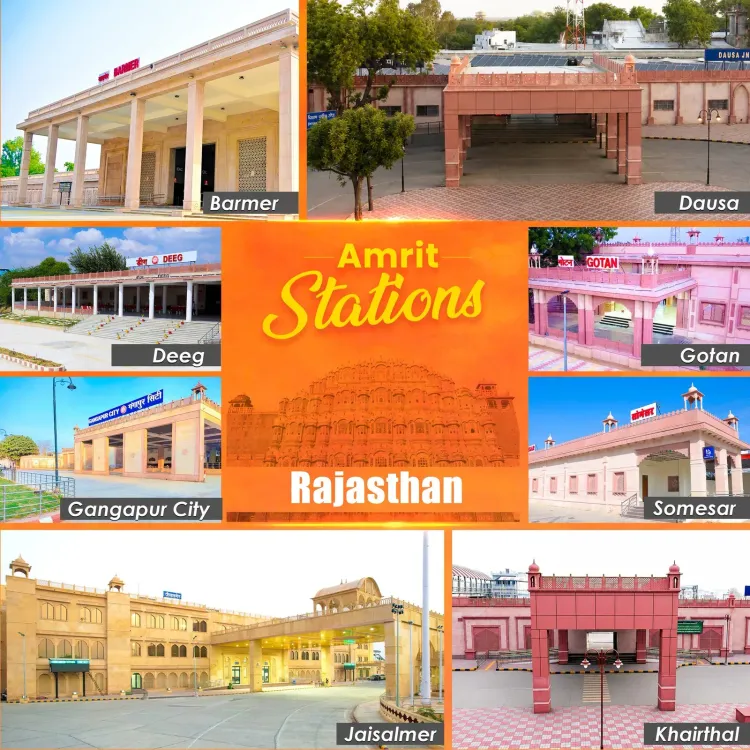
Eight Rajasthan stations — Deeg, Somesar, Dausa, Khairthal, Gotan, Gangapur City, Jaisalmer, and Barmer — are being redeveloped under the Amrit Bharat Station Scheme.
Designs are inspired by Rajasthan's forts, palaces, desert heritage, and regional architecture , blending cultural motifs with modern amenities.
The Amrit Bharat Station Scheme was launched in February 2023 and initially covered 1,275 stations nationwide.
The scheme succeeded the Adarsh Station Scheme of 2009 , which offered more basic upgrades without cultural integration.
Stations at tourism hubs like Jaisalmer and Barmer are seen as key gateways for Rajasthan's travel economy .
Vaishnaw's post is the 11th in a series documenting Amrit Bharat stations across India.
Union Minister Ashwini Vaishnaw on Friday, 17 July 2026 spotlighted eight Rajasthan stations being redeveloped under the Amrit Bharat Station Scheme, stating that the designs draw inspiration from the state's forts, palaces, desert heritage, and regional architecture to blend timeless aesthetics with modern passenger amenities.
Context
The minister's post, the eleventh in a series on Amrit Bharat stations across India, named Deeg, Somesar, Dausa, Khairthal, Gotan, Gangapur City, Jaisalmer, and Barmer as the Rajasthan stations in focus. Each of these stations is being redeveloped with architectural motifs rooted in Rajasthan's celebrated built heritage — from the sandstone forts of Jaisalmer to the palace traditions of the Bharatpur belt that includes Deeg.
Vaishnaw described the approach as one that 'blends timeless design with modern passenger amenities,' signalling that cultural authenticity and functional upgrades are being pursued simultaneously at these locations.
Policy Backdrop
The Amrit Bharat Station Scheme was announced in February 2023 and initially covered 1,275 stations across the country. It succeeded the earlier Adarsh Station Scheme launched in 2009, which had provided a more basic model of station upgrades without the emphasis on regional cultural integration.
Under the current scheme, Indian Railways is mandated to incorporate local architectural vocabularies — drawn from each state's heritage — into station façades, concourses, and public spaces, while simultaneously upgrading waiting areas, sanitation, lighting, and accessibility infrastructure. The Rajasthan cluster is among the more visually distinctive, given the state's globally recognised fort-and-palace architectural tradition.
Stakeholders and Impact
The redevelopment directly benefits daily railway passengers at these eight stations, who stand to gain from improved facilities. Beyond commuters, the Rajasthan tourism sector is a significant stakeholder: stations at heritage destinations such as Jaisalmer and Barmer serve as the first physical touchpoint for tourists arriving by train, making their design and upkeep a soft-power asset for the state's travel economy.
Heritage architects and urban planners working on the scheme are tasked with translating centuries-old design grammar — arched gateways, jaali screens, ochre sandstone textures — into contemporary public infrastructure without pastiche. The outcome at each station will serve as a reference point for similar projects in other heritage-rich states.
What's Next
The Railway Ministry is expected to release station-wise completion timelines as the redevelopment programme advances. Parliamentary scrutiny on project costs, design approvals, and passenger feedback is anticipated once the stations become operational. The ongoing series of posts by Vaishnaw suggests a broader communications push to document and publicise the cultural dimension of the scheme ahead of its phased rollout.
As more states are covered in subsequent posts in the same series, the ministry's framing of railway infrastructure as a vehicle for cultural expression and tourism promotion is likely to sharpen as a policy narrative ahead of future budget cycles.
Point of View
Using social media to build cumulative visibility for a flagship infrastructure programme ahead of its operational phase. By foregrounding cultural heritage rather than just construction metrics, the ministry is repositioning railway modernisation as a civilisational project — one that resonates with both domestic voters and the tourism lobby. The Rajasthan cluster is particularly potent symbolically, given the state's identity as India's premier heritage-tourism destination. This framing also pre-empts criticism about cost or delays by anchoring public expectations around design quality and cultural pride rather than delivery timelines.
NationPress
17 Jul 2026
Frequently Asked Questions
Which Rajasthan stations are being redeveloped under the Amrit Bharat Station Scheme?
Eight Rajasthan stations are being redeveloped: Deeg, Somesar, Dausa, Khairthal, Gotan, Gangapur City, Jaisalmer, and Barmer, as highlighted by Union Minister Ashwini Vaishnaw on 17 July 2026.
What is the Amrit Bharat Station Scheme?
The Amrit Bharat Station Scheme is a Ministry of Railways initiative announced in February 2023 to redevelop over 1,275 railway stations nationwide, combining modern passenger facilities with designs inspired by local and regional architectural heritage.
How are Rajasthan's railway stations being redesigned?
The stations are being redesigned with architectural motifs drawn from Rajasthan's forts, palaces, and desert heritage, integrating these traditional design elements into upgraded concourses, facades, and passenger amenity areas.
What came before the Amrit Bharat Station Scheme?
The Adarsh Station Scheme, launched in 2009, was an earlier model for basic station upgrades. The Amrit Bharat framework built on it by adding a stronger emphasis on regional cultural identity and more comprehensive infrastructure improvements.
Why is the Jaisalmer railway station redevelopment significant?
Jaisalmer is one of Rajasthan's most visited heritage tourism destinations, and its railway station serves as the primary arrival point for train travellers. A heritage-inspired redevelopment makes it a cultural gateway, linking railway infrastructure directly to the state's tourism economy.