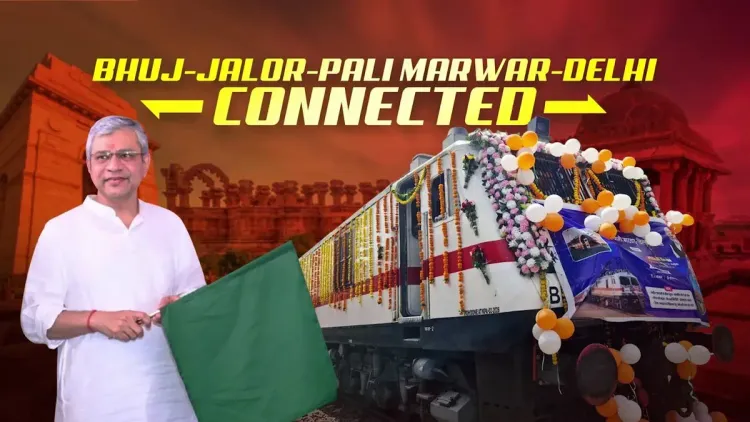
Vaishnaw Launches Express Train Linking Jalore, Pali, Bhuj to Delhi
Synopsis
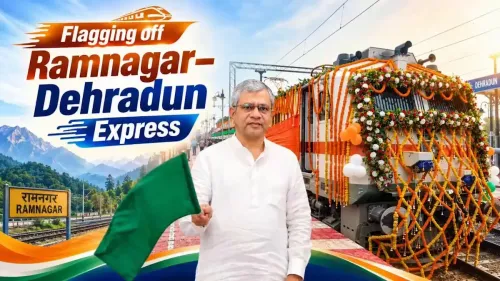
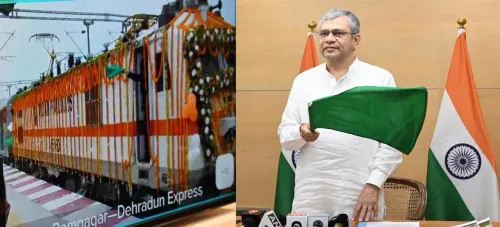
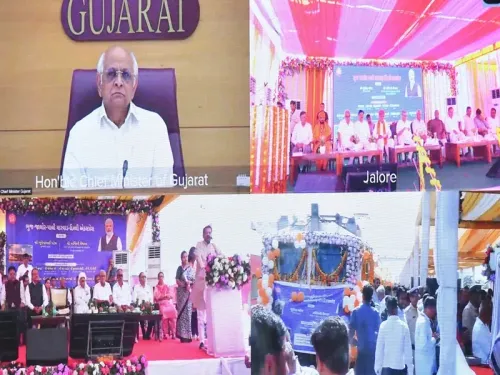
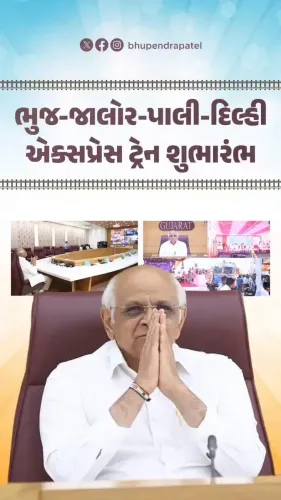
Union Minister Ashwini Vaishnaw on 23 May 2026 launched a new express train connecting Jalore and Pali in Rajasthan and Bhuj in Gujarat to New Delhi, extending direct long-distance rail access to three tier-2 and tier-3 cities under the government's rail connectivity push.
Key Takeaways
Union Minister Ashwini Vaishnaw announced the launch of a new express train on 23 May 2026 .
The train connects Jalore and Pali (Rajasthan) and Bhuj (Gujarat) directly to New Delhi .
All three cities are tier-2 or tier-3 centres that previously lacked a direct express link to the capital.
The launch fits the government's broader pattern of extending rail services to smaller cities alongside freight corridor and station redevelopment projects.
Beneficiaries include traders, textile workers, marble industry stakeholders, and Kutch's post-earthquake economic recovery ecosystem.
Full timetable and frequency details from Indian Railways are awaited.
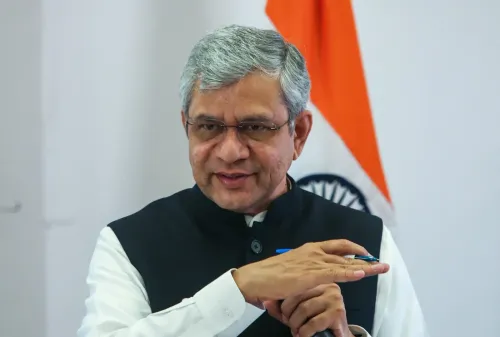
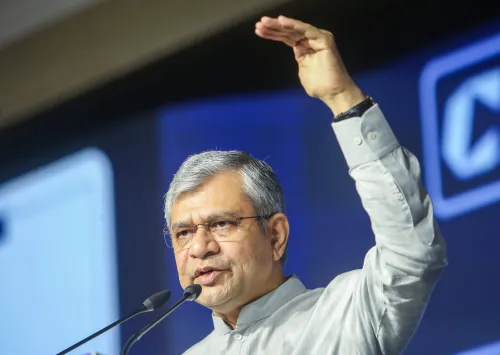
Union Minister Ashwini Vaishnaw on Saturday, 23 May 2026, announced the launch of a new express train connecting Jalore and Pali in Rajasthan and Bhuj in Gujarat directly to the national capital, New Delhi. The service marks a significant step in extending long-distance rail connectivity to tier-2 and tier-3 cities that have historically depended on indirect or time-consuming rail routes to reach Delhi.
Context
Vaishnaw posted on X announcing the inauguration, writing: 'जालोर, पाली और भुज को राजधानी दिल्ली से जोड़ने वाली एक्सप्रेस ट्रेन का शुभारंभ!' — translated as 'Launch of the express train connecting Jalore, Pali and Bhuj to the capital Delhi!' The post was accompanied by a video, underscoring the ceremonial significance of the event.
Jalore is a district in southern Rajasthan known for its marble industry and agrarian economy. Pali, also in Rajasthan, is a hub for the textile and dyeing industry. Bhuj, the administrative centre of the Kutch district in Gujarat, is a major commercial and cultural town that rebuilt itself after the devastating 2001 earthquake.
Policy Backdrop
The new service fits squarely within a sustained government push to deepen rail penetration into India's smaller cities. Successive railway budgets have prioritised adding express and superfast services to cities beyond the major metro corridors, alongside investments in dedicated freight corridors and station redevelopment under flagship schemes.
For Rajasthan and Gujarat, improved rail links to New Delhi carry particular economic weight. Rajasthan's marble and textile belts depend on efficient logistics to national markets, while Kutch's traders and manufacturers have long sought faster passenger access to the capital. The government has framed such connectivity additions as tools for regional economic uplift.
Stakeholders and Impact
The most immediate beneficiaries are residents of Jalore, Pali, and Bhuj — collectively representing hundreds of thousands of commuters, traders, students, and migrant workers who travel to Delhi for commerce, healthcare, and employment. A direct express service reduces journey time and eliminates the need for inconvenient transfers at larger junctions.
For Gujarat's Kutch region, which has seen substantial post-earthquake economic recovery and industrial growth — including the rise of the Dholera and GIFT City corridors nearby — better rail access to Delhi strengthens the region's integration with the national economy. Rajasthan's districts similarly stand to gain as agricultural produce and manufactured goods can move more efficiently alongside passenger traffic.
What's Next
The detailed timetable, weekly frequency, and halts for the new express service are expected to be released by Indian Railways in the coming days. Analysts will watch whether the service is integrated into the next railway budget cycle's broader connectivity matrix for the North-West India corridor. The announcement also signals continued political attention to Rajasthan and Gujarat — two states of strategic importance for the ruling BJP — ahead of future electoral cycles.
Point of View
Pali, and Bhuj is a textbook example of the current government's strategy of using incremental rail additions to signal development outreach in politically significant states. Rajasthan and Gujarat together carry enormous electoral weight for the BJP, and rail inaugurations in under-served districts serve both a genuine connectivity need and a visible governance dividend. Vaishnaw's personal announcement on social media — with video — reflects how infrastructure rollouts are now as much a communications exercise as a logistics one. The broader test will be whether the service is backed by adequate frequency and integration with feeder transport, which will determine its real economic impact.
NationPress
25 Sept 2026
Frequently Asked Questions
Which cities does the new express train launched by Ashwini Vaishnaw connect?
The new express train connects Jalore and Pali in Rajasthan and Bhuj in Gujarat directly to New Delhi, as announced by Union Minister Ashwini Vaishnaw on 23 May 2026.
Why is a direct train to Delhi important for Bhuj?
Bhuj, the main town of Kutch district in Gujarat, has been rebuilding its economy since the 2001 earthquake. A direct express to Delhi cuts travel time and strengthens commercial and passenger links to the national capital for traders, students, and workers.
What is the significance of rail connectivity for Jalore and Pali?
Jalore is a major marble-producing district and Pali is a textile hub; both depend on efficient transport to national markets. A direct Delhi express reduces logistics costs and travel time for residents and businesses in these Rajasthan districts.
When was the Jalore-Pali-Bhuj Delhi express train launched?
Union Minister Ashwini Vaishnaw announced the launch of the express train on Saturday, 23 May 2026.
What are the next steps after the launch of this new express train?
Indian Railways is expected to release the full timetable, weekly frequency, and halt details for the new service in the coming days. Observers will watch for its integration into the broader North-West India rail connectivity plan.