Vaishnaw Quotes Modi on Japan-India AI Synergy
Synopsis
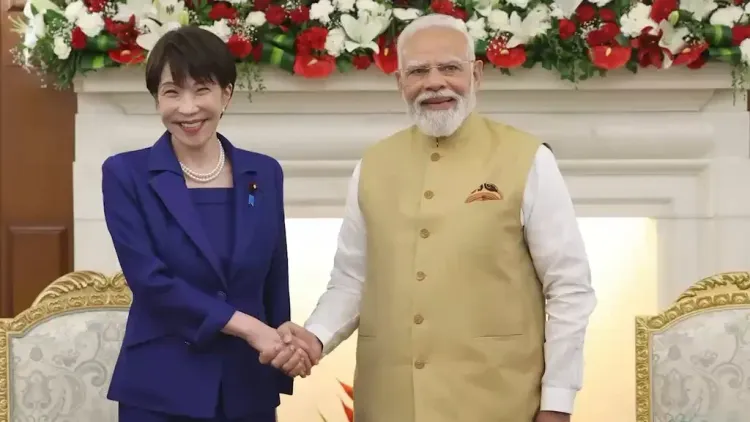
Union Minister Ashwini Vaishnaw amplified a statement by PM Modi on 2 July 2026, highlighting that the convergence of Japan's precision technology and India's software capability will give new momentum to global AI development, signalling a deepening bilateral technology agenda.
Key Takeaways
Union Minister Ashwini Vaishnaw shared a statement by PM Narendra Modi on 2 July 2026 emphasising the India-Japan AI partnership.
Modi stated that the 'confluence of Japan's precision technology and India's software capability' will accelerate global AI development.
The India-Japan Strategic and Global Partnership has been institutionalised since 2006 with annual summits covering technology cooperation.
A dedicated India-Japan Digital Partnership signed in 2017 already targets AI, ICT, and start-up collaboration.
Vaishnaw's ministry oversees the IndiaAI Mission and national semiconductor policy, making him a key executor of any follow-up outcomes.
Concrete deliverables — joint AI projects, MoUs on semiconductors — are expected to be watched at the next India-Japan annual summit.
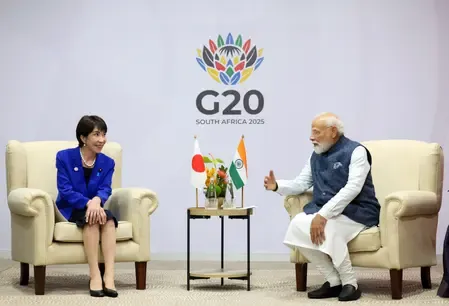
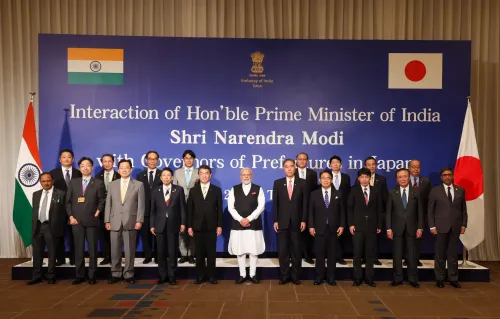
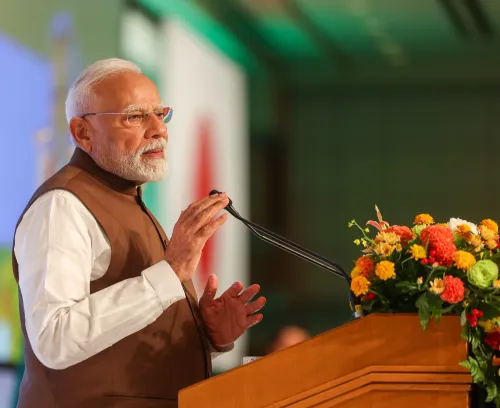
Union Minister Ashwini Vaishnaw on Thursday, 2 July 2026, shared a statement by Prime Minister Narendra Modi on the transformative potential of combining Japan's precision technology with India's software capabilities to accelerate global artificial intelligence development.
Quoting Prime Minister Modi, Vaishnaw posted: 'जापान की precision technology और भारत की software क्षमता का संगम वैश्विक AI विकास को नई गति और शक्ति देगा।' — translated as, 'The confluence of Japan's precision technology and India's software capability will give new momentum and strength to global AI development.'
Context
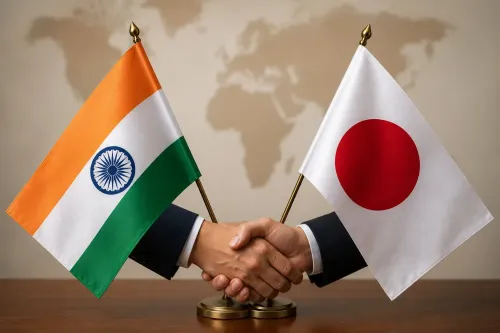
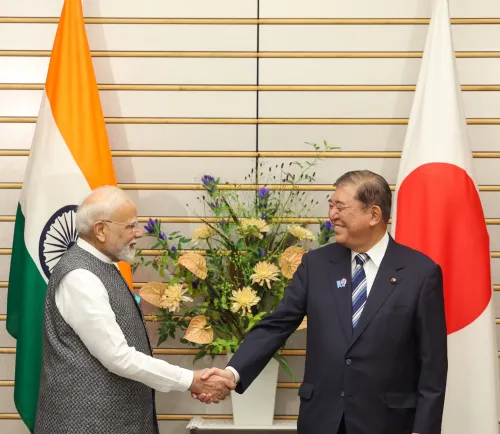
The statement underscores a deepening bilateral technology agenda between India and Japan, two nations whose complementary strengths — precision engineering and hardware on one side, and large-scale software services on the other — have long been identified as a natural fit. Prime Minister Modi's framing positions this partnership not merely as bilateral trade, but as a contribution to global AI infrastructure.
Vaishnaw, who oversees India's semiconductor and AI policy as Minister of Electronics and Information Technology, amplifying this statement signals its relevance to ongoing domestic missions including IndiaAI and the national semiconductor programme.
Policy Backdrop
India and Japan formalised their Strategic and Global Partnership in 2006, institutionalising annual summits that have progressively expanded into technology and infrastructure cooperation. A dedicated India-Japan Digital Partnership signed in 2017 specifically targeted collaboration in ICT, AI, and start-up ecosystems.
These agreements have created a structured channel through which Japanese precision manufacturing and robotics expertise can be paired with Indian software engineering capacity. The current emphasis on AI marks an evolution of that framework into next-generation technology domains.
India's broader strategy has been to forge targeted alliances with advanced economies — including the United States and the European Union — to integrate into global AI and critical technology supply chains, reducing dependence on any single source while building domestic capability.
Stakeholders and Impact
The Indian IT sector, which employs millions and generates significant export revenue, stands to benefit from deepened collaboration frameworks that open co-development opportunities with Japanese electronics and precision manufacturers. Japanese firms, in turn, gain access to India's vast pool of software talent and its rapidly expanding digital consumer base.
For India's IndiaAI Mission, partnerships with technologically advanced nations like Japan offer pathways to acquire high-quality compute infrastructure, precision components for AI hardware, and joint research pipelines — elements that domestic capacity alone cannot yet fully supply.
Smaller Indian AI start-ups and research institutions could also benefit if the partnership translates into joint innovation programmes, technology transfer agreements, or shared access to Japanese precision manufacturing facilities.
What's Next
Attention will now turn to the next India-Japan annual summit, where concrete outcomes — such as joint AI project announcements, new memoranda of understanding on semiconductors, or co-investment frameworks — could give operational shape to the vision articulated by Prime Minister Modi. Vaishnaw's ministry is expected to be at the centre of any such follow-through, given its mandate over both electronics manufacturing and AI policy. Analysts will watch whether the statement is accompanied by specific institutional mechanisms or remains a statement of strategic intent awaiting implementation.
Point of View
Rather than a bilateral trade arrangement, reflects India's broader ambition to position itself as a rule-shaping actor in international technology governance rather than merely a services exporter. This fits a pattern of India cultivating complementary alliances — with Japan for precision hardware, with the US for chips and cloud, with the EU for standards — to build a diversified technology supply chain. The real test will be whether the rhetorical convergence translates into funded, time-bound joint programmes under the IndiaAI Mission or the semiconductor initiative.
NationPress
2 Jul 2026
Frequently Asked Questions
What did PM Modi say about Japan and India's AI partnership?
PM Modi stated that the confluence of Japan's precision technology and India's software capability will give new momentum and strength to global AI development, a quote shared by Union Minister Ashwini Vaishnaw on 2 July 2026.
What is the India-Japan Digital Partnership?
The India-Japan Digital Partnership is an agreement signed in 2017 that focuses on collaboration in information and communications technology, artificial intelligence, and start-up ecosystems between the two countries.
What is India's IndiaAI Mission?
IndiaAI Mission is India's national programme to build domestic artificial intelligence capacity, covering compute infrastructure, datasets, research, and start-up support, overseen by the Ministry of Electronics and Information Technology.
Why is Japan important for India's technology strategy?
Japan brings strengths in precision engineering, robotics, and electronics manufacturing that complement India's large software services sector, making it a key partner for building integrated AI and semiconductor supply chains.
What should we watch for next in the India-Japan tech partnership?
Key things to watch include announcements at the next India-Japan annual summit, any new memoranda of understanding on AI or semiconductors, and whether joint projects are announced under existing bilateral agreements.