VCK's Thirumavalavan Raises Alarm Over Limited Electoral Opportunities After 25 Years
Synopsis
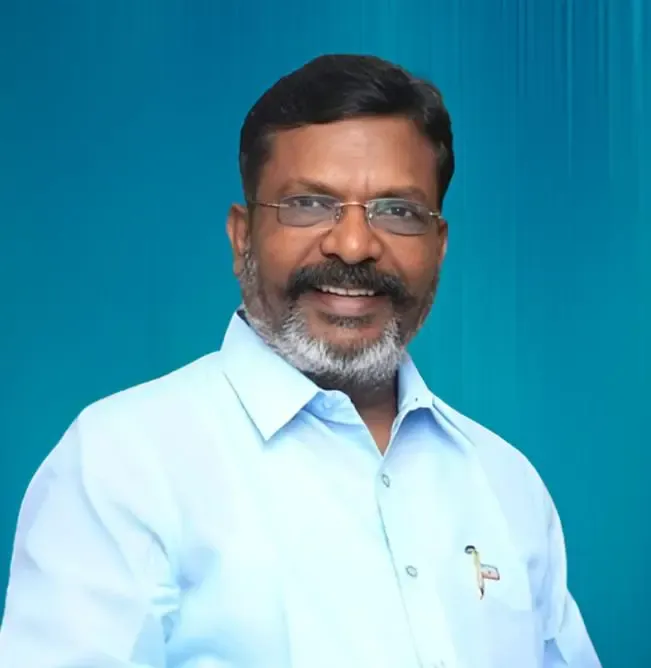
In a recent Facebook Live discussion, VCK leader Thol. Thirumavalavan highlights the ongoing challenges his party faces in securing electoral representation even after 25 years. He discusses internal and external obstacles while emphasizing the need for democratic processes in candidate selection.
Key Takeaways
VCK has faced ongoing challenges in electoral representation for 25 years.
Thirumavalavan highlights internal pressures for candidate selection.
The party emphasizes a democratic process for nominations.
External forces may hinder the party's growth.
VCK remains committed to expanding its political influence.
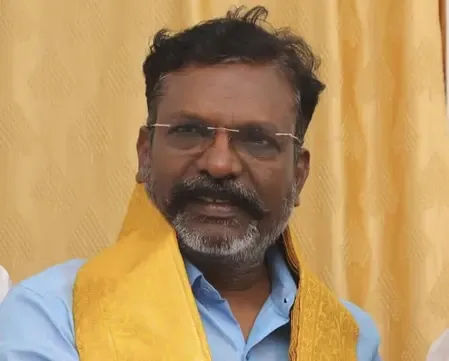
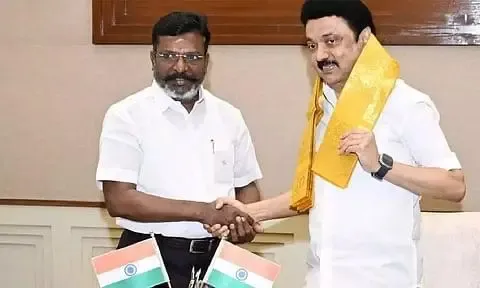
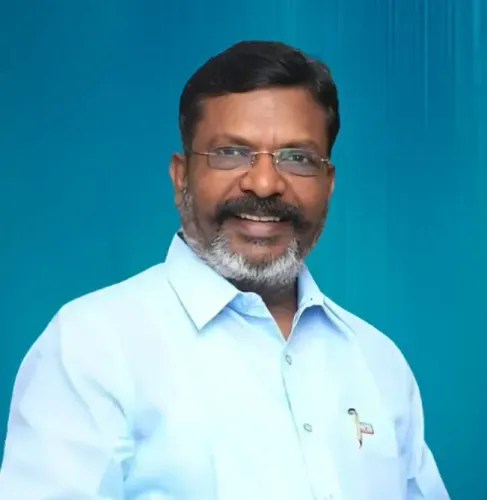
Chennai, March 21 (NationPress) The leader of Viduthalai Chiruthaigal Katchi (VCK) and Member of Parliament Thol. Thirumavalavan has raised alarms regarding his party's ongoing battle for sufficient electoral representation even after 25 years in the political arena, pointing out the structural and social obstacles that hinder its advancement.
During a Facebook Live session with party members, Thirumavalavan remarked that despite the party's lengthy existence, competing in elections continues to be a significant challenge. "Even after 25 years, this political landscape still feels unfamiliar to us. We have not completely adjusted, and the social climate remains unfavorable," he stated.
He emphasized that there are elements that prefer to see the party remain weak rather than develop into a potent political force. "A significant portion still thinks we shouldn't gather strength or transform into a critical political player. There is minimal encouragement or backing for our development," he noted.
Nevertheless, he underscored that the VCK has endured and is steadily establishing itself as a crucial political player in Tamil Nadu.
Thirumavalavan also discussed internal challenges, such as the difficulty in obtaining seats within alliances and raising funds. Being part of the DMK-led coalition, which includes over 20 parties, the allocation of constituencies for VCK remains limited.
“When we receive fewer than 10 seats, there's a lengthy waiting list of candidates that must be taken into account,” he explained, highlighting the pressure involved in selecting candidates. He reiterated that the party adheres to a democratic method by inviting applications from candidates across various constituencies.
However, he clarified that merely applying or participating in interviews does not guarantee a candidacy. “The process is designed to gauge interest and pinpoint potential candidates, but final choices are influenced by numerous factors,” he elaborated. Reflecting on previous experiences, Thirumavalavan mentioned that when he was part of the People’s Welfare Alliance, he had greater freedom in candidate selection due to a larger seat allocation.
He also rejected criticisms concerning “outsider candidates,” referencing instances where the party nominated candidates from diverse regions and still achieved victories in four out of six constituencies. The VCK leader further stressed the necessity for internal discipline and independence in decision-making.
In comparing with Communist parties, he acknowledged their structured candidate selection system and grassroots-based funding model. Despite facing challenges, Thirumavalavan affirmed that the party remains committed to democratic values and will persist in its efforts to broaden its political reach.
Point of View
Thirumavalavan's remarks reflect significant challenges faced by smaller political parties in a landscape dominated by larger coalitions. His emphasis on internal democracy and the need for adequate representation sheds light on the complexities of electoral politics in India, particularly as parties navigate alliances and public perception.
NationPress
24 Sept 2026
Frequently Asked Questions
What challenges does VCK face in elections?
VCK struggles with limited electoral space, internal pressures for candidate selection, and external forces that discourage its growth.
How does VCK select its candidates?
VCK follows a democratic process, inviting applications from aspiring candidates across constituencies, although applying does not guarantee a ticket.
What has Thirumavalavan said about party growth?
He has expressed concerns that many prefer VCK not to gain strength, indicating a lack of support for its evolution into a more significant political force.
What is the significance of Thirumavalavan's comments?
His comments highlight the ongoing struggle of smaller parties in Indian politics and the need for internal discipline and autonomy.
How does VCK's experience compare with larger parties?
Thirumavalavan notes that unlike larger parties, VCK faces significant challenges in candidate selection due to limited seat allocations within alliances.