Veena George's Own Statement Derails Attempted Murder Case Against KSU Workers
Synopsis
Kerala Health Minister Veena George's own police deposition — describing the Kannur Railway Station protest as mere pushing and jostling — has collapsed the attempted murder case against five KSU workers who spent two weeks in jail. Railway Police are now set to drop Section 307 and file a chargesheet on lesser charges, validating Opposition claims of political overreach.
Key Takeaways
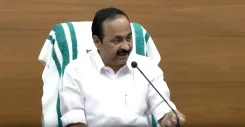
Health Minister Veena George told police that only pushing and jostling occurred during the Kannur Railway Station protest in late February , undermining the attempted murder charge.
The deposition was recorded nearly two months after the incident, raising questions about investigative delays in a politically sensitive case.
Five KSU workers were charged under Section 307 (attempt to murder) based on the minister's gunman's claim of a weapon-inflicted neck injury — a claim the minister did not corroborate.
The accused spent over two weeks in jail before securing bail; the district hospital wound certificate recorded no weapon-caused injury.
CCTV footage from the station and statements from on-duty police personnel also failed to indicate any attempt to murder.
Railway Police are now set to drop Section 307 and proceed with lesser charges in the upcoming chargesheet, validating Opposition claims of disproportionate legal action.
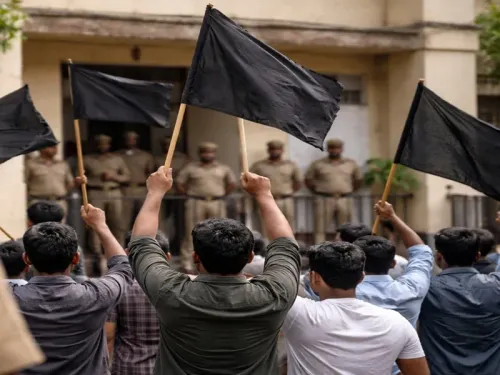
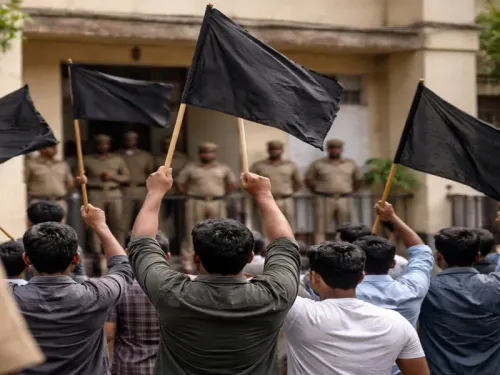
Thiruvananthapuram, April 25: In a dramatic legal reversal, Kerala Health Minister Veena George's own police deposition has effectively dismantled the attempted murder charge filed against five Kerala Students' Union (KSU) workers arrested during a black flag protest at Kannur Railway Station in late February. The minister's statement, recorded nearly two months after the incident, contradicts the very accusation that sent the accused to jail — that she sustained a weapon-inflicted neck injury during the demonstration.
What Veena George Said in Her Deposition
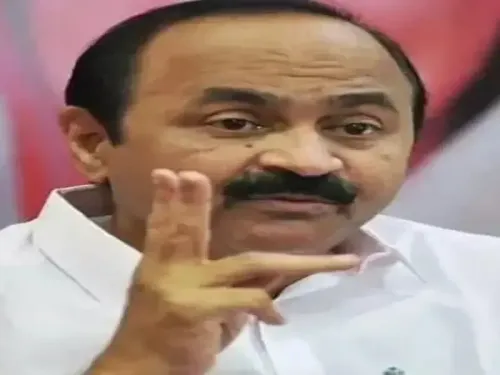
In her recorded statement to the police probe team, Minister Veena George described the protest as involving only pushing and jostling — a characterisation that stands in stark contrast to the allegation made by her gunman, who claimed she had suffered a neck injury caused by a weapon. That allegation had formed the legal backbone for invoking Section 307 (attempt to murder) of the Indian Penal Code against the five KSU workers.
The minister's account, though delayed by nearly two months — reportedly because investigators were unable to record her statement earlier, possibly due to political sensitivities and the election season — has now triggered a fundamental reassessment of the case by the Railway Police.
Key Developments in the Case
The five accused KSU workers spent over two weeks in judicial custody before being granted bail. During that period, multiple pieces of evidence had already begun to contradict the serious charge against them. The wound certificate issued by the district hospital made no mention of any weapon-inflicted injury. CCTV footage from the railway station and statements from police personnel on duty similarly failed to substantiate any attempt on the minister's life.
Although medical bulletins from Government Medical College Pariyaram — where the minister was transferred that night — repeatedly referenced pain in the cervical spine region, no corroborative clinical or forensic evidence of a serious assault ever emerged. The confrontation at Platform 1 lasted approximately two minutes and was marked by pushing, shouting, and general commotion, according to multiple accounts.
With the minister's own deposition now confirming the non-violent nature of the protest, the Railway Police are set to drop the Section 307 charge and file a chargesheet under lesser offences.
Background: The Protest That Sparked a Political Storm
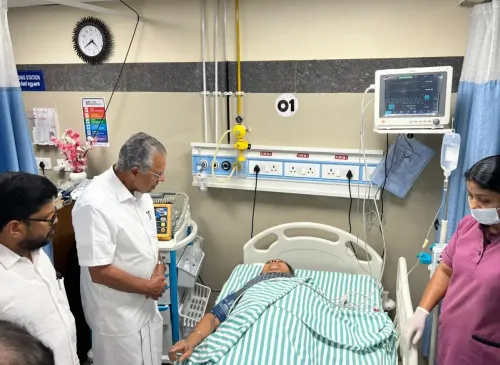
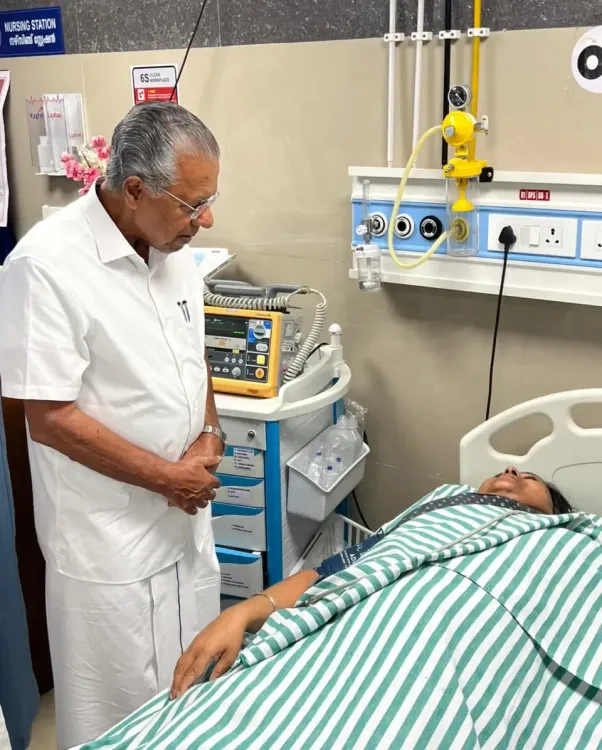
The incident occurred during Minister Veena George's visit to Kannur, where she faced black flag demonstrations at five separate locations. The situation at the railway station was reportedly inflamed by the alleged assault of Youth League leader Shajir Iqbal by CPI(M) workers at Peringome earlier that same day. Following the station confrontation, the minister cancelled her journey and was taken to the district hospital. Senior political leaders, including Chief Minister Pinarayi Vijayan, visited her as news of the incident spread rapidly.
An FIR was registered the same night. The five arrested KSU workers, initially detained by Town Police, were handed over to the Railway Police, produced before a magistrate the following morning, and remanded to judicial custody. Bail was secured only after approximately two weeks.
Political and Legal Implications
The unravelling of the attempted murder charge lends significant credibility to Opposition claims that the invocation of Section 307 was disproportionate and politically motivated. Critics had argued from the outset that deploying one of the most serious provisions in criminal law — carrying a punishment of up to life imprisonment — against protesters involved in a brief physical altercation was an overreach designed to intimidate political opponents.
This case fits into a broader pattern observed across Indian states where serious criminal provisions are invoked in politically charged situations, only to collapse under evidentiary scrutiny. The fact that the minister's own statement — the most critical piece of testimony — took nearly two months to be recorded raises procedural questions about the investigation's integrity and urgency.
Notably, Veena George, a former journalist who transitioned to politics, found herself at the centre of a significant social media backlash following the incident, with widespread trolling questioning both the circumstances of the protest and the subsequent legal action.
What Happens Next
The Railway Police chargesheet, expected to be filed soon, will mark a formal legal retreat from the attempted murder allegation. The accused will face charges related to obstruction, assault, or similar lesser offences — a significant de-escalation with direct consequences for the accused's legal standing and public perception of the case. The development is also likely to intensify political debate in Kerala ahead of future electoral cycles about the use of state machinery against Opposition student organisations.
Legal observers and civil liberties advocates will be watching whether the police or the government face any accountability for the two weeks the accused spent in custody on a charge that the minister's own testimony has now effectively negated.
Point of View
A charge that can mean life imprisonment, is invoked on the basis of a gunman's claim that the minister herself cannot corroborate, the justice system becomes an instrument of political intimidation rather than protection. The two weeks those five young men spent in custody represent an accountability gap that neither the police nor the ruling establishment has answered for. Kerala, like many Indian states, must reckon with the pattern of escalating charges in politically charged protests — a pattern that erodes institutional trust far more than any black flag demonstration ever could.
NationPress
16 Sept 2026
Frequently Asked Questions
Why is the attempted murder case against KSU workers being dropped in Kerala?
The attempted murder case is being dropped because Health Minister Veena George's own deposition stated that only pushing and jostling occurred during the Kannur protest, contradicting the weapon-injury claim that justified the Section 307 charge. CCTV footage and hospital records also failed to support the serious allegation.
What happened during the black flag protest against Veena George at Kannur Railway Station?
KSU workers staged a black flag protest against Health Minister Veena George at Kannur Railway Station in late February, resulting in a roughly two-minute confrontation involving pushing and shouting. The minister subsequently cancelled her journey and was taken to the district hospital, later transferred to Government Medical College Pariyaram.
How long did the KSU workers remain in jail after the Kannur protest?
The five KSU workers arrested at Kannur Railway Station spent over two weeks in judicial custody before being granted bail. They were produced before a magistrate the morning after their arrest and remanded based on the Section 307 charge.
What is Section 307 IPC and why was it controversial in this case?
Section 307 of the Indian Penal Code deals with attempt to murder and carries a punishment of up to life imprisonment. Its application was controversial because neither CCTV evidence, hospital wound certificates, nor ultimately the minister's own testimony supported the claim that any weapon was used or that her life was endangered.
What charges will the KSU workers face after Section 307 is dropped?
Railway Police are expected to file a chargesheet against the five KSU workers on lesser offences such as obstruction or assault after dropping the attempted murder count. The exact charges will be confirmed when the chargesheet is formally filed.