Pinarayi Vijayan accuses UDF-BJP deal on Kerala Waqf Board non-Muslim induction
Synopsis
Pinarayi Vijayan has levelled a pointed accusation: that Kerala's Congress-led UDF government has quietly aligned with the BJP on the Waqf issue, reversing a unanimous Assembly resolution from October 2024. With a BJP state vice-president among those petitioning for non-Muslim induction, and the Muslim League's own pleader backing the Centre's position in the High Court, the political optics are striking.
Key Takeaways
Pinarayi Vijayan on 17 July accused the UDF government of striking a political deal with the BJP over the Kerala Waqf Board .
The Satheesan government informed the Kerala High Court it would abide by the Centre's Unified Waqf Act , reversing the previous LDF stance.
The Kerala Assembly had unanimously passed a resolution in October 2024 opposing the Centre's Waqf amendments.
The Kerala Waqf Board has 11 nominated members ; 2 vacancies remain pending a Supreme Court ruling.
BJP State Vice-President Shone George is among the petitioners seeking appointment of two non-Muslim members to the Board.
Vijayan announced a campaign against what he called the UDF's double standards on the Waqf issue.
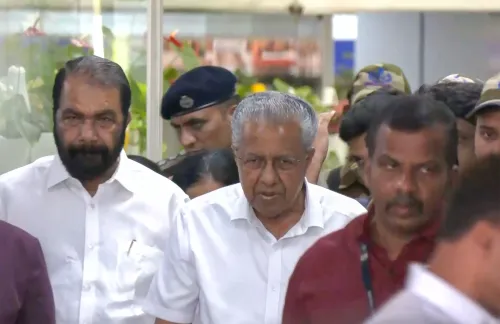
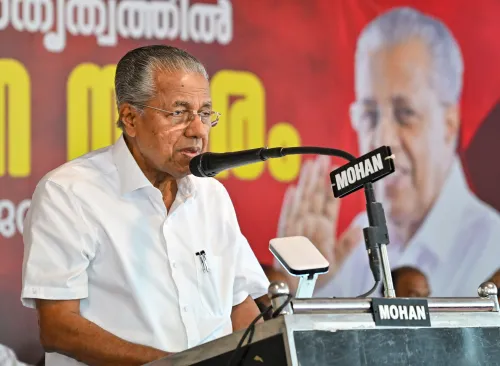
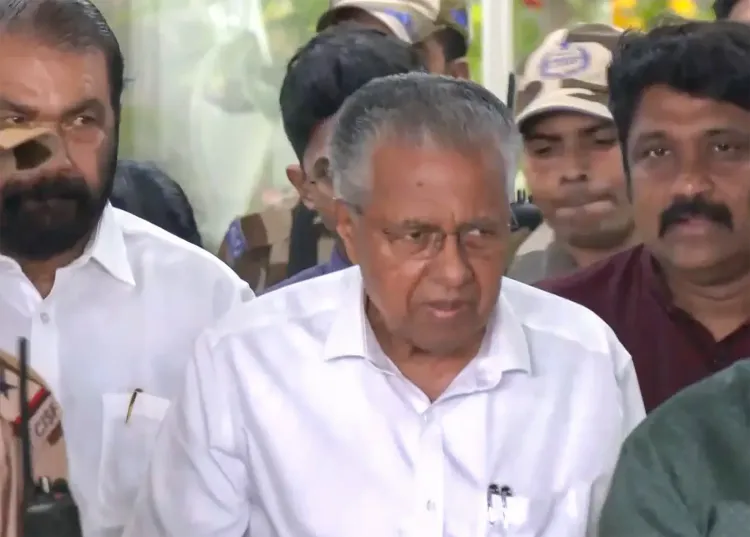
Leader of Opposition in the Kerala Assembly, Pinarayi Vijayan, on Friday, 17 July, accused the Congress-led United Democratic Front (UDF) government of striking a political deal with the Bharatiya Janata Party (BJP) by agreeing to implement the Centre's new Waqf guidelines — including the controversial induction of non-Muslims into the Kerala Waqf Board. Vijayan made the allegations while addressing the media in Thiruvananthapuram, calling the move a betrayal of the minority community.
The Reversal at the Heart of the Controversy
Vijayan charged that the Satheesan government had completely reversed its earlier position by informing the Kerala High Court that it would abide by the provisions of the Unified Waqf Act framed by the Centre. He noted that this submission was made by the Muslim League's nominee serving as Special Pleader and was backed by the Advocate General — a combination he described as particularly telling.
This stands in sharp contrast to the stance taken during the previous Left Democratic Front (LDF) government, which had strongly opposed the Centre's amendments to the Waqf Act. According to Vijayan, the Kerala Assembly had unanimously passed a resolution in October 2024 defending minority rights and rejecting the Centre's move. At the time, even senior Indian National Congress (Congress) leader and All India Congress Committee (AICC) General Secretary K.C. Venugopal had publicly expressed concern over the proposed changes.
Non-Muslim Induction and the Quorum Question
The Kerala Waqf Board currently has 11 nominated members. During the LDF government's tenure, nine members were appointed; the remaining two posts were left vacant pending the Supreme Court's ruling on petitions challenging the amended law. Vijayan pointed out that the Board requires only five members to constitute a quorum, making the vacancies non-urgent in his view.
He alleged that the present government was nonetheless pressing ahead with the appointment of two non-Muslim members — a move he described as aligned with the Sangh Parivar's objective of undermining Muslim community rights. Notably, one of the petitioners seeking such appointments is BJP State Vice-President Shone George, a detail Vijayan cited as evidence of a deeper political understanding between the UDF and the BJP.
What Vijayan Said
'Today it is the Waqf Board. Tomorrow similar guidelines could be imposed on institutions belonging to other religious communities,' Vijayan warned. He also said the Congress had 'completely bowed before the Centre,' whereas the Left had taken what he called a 'firm and principled stand.' He described the government's position as shameful and said a strong campaign against the UDF's alleged double standards on the Waqf issue would follow.
Broader Context: States That Pushed Back
When the Centre introduced the Waqf amendments, several non-BJP-ruled states — including Kerala, Tamil Nadu, and West Bengal — had strongly objected. The Indian Union Muslim League (IUML), a key UDF constituent, had also opposed the amendments at that stage. Critics argue the current government's about-face undermines that collective resistance and hands the Centre a political win without a legal fight.
The matter remains before the Supreme Court, and the government's position in the High Court could influence the broader judicial trajectory of the Waqf amendment challenge. How the Satheesan administration responds to the mounting opposition pressure will be closely watched in the weeks ahead.
Point of View
With the Advocate General in support. That is not a clerical oversight — it is a legal posture. The UDF's earlier opposition to the Waqf amendments was always partly performative, calibrated to Muslim voter sentiment ahead of elections; the question now is whether the Satheesan government believes it has enough political cushion to absorb the fallout. With the Supreme Court yet to rule and a BJP state vice-president actively petitioning for non-Muslim induction, the Left has found a pressure point it will not easily let go of.
NationPress
15 Oct 2026
Frequently Asked Questions
What has Pinarayi Vijayan alleged against the UDF government over the Waqf Board?
Vijayan alleged that the Congress-led UDF government has struck a political deal with the BJP by agreeing to implement the Centre's Waqf guidelines, including the induction of non-Muslim members into the Kerala Waqf Board. He made these allegations on 17 July in Thiruvananthapuram, calling it a betrayal of the minority community.
What was Kerala's earlier position on the Centre's Waqf amendments?
The Kerala Assembly unanimously passed a resolution in October 2024 opposing the Centre's amendments to the Waqf Act and defending minority rights. The previous LDF government, the UDF, and the Indian Union Muslim League had all opposed the amendments at the time.
What is the current status of the Kerala Waqf Board?
The Kerala Waqf Board currently has 11 nominated members. Nine were appointed during the LDF government's tenure; two posts remain vacant pending the Supreme Court's ruling on petitions challenging the amended Waqf law. The Board requires only five members for a quorum.
Why is BJP State Vice-President Shone George's name significant in this case?
Shone George is among the petitioners seeking the appointment of two non-Muslim members to the Kerala Waqf Board. Vijayan cited this as evidence of a political understanding between the UDF and the BJP, arguing it reveals coordination between the ruling alliance and the opposition party on the Waqf issue.
What has the Satheesan government said in the Kerala High Court about the Waqf Act?
According to Vijayan, the Satheesan government informed the Kerala High Court that it would abide by the provisions of the Unified Waqf Act framed by the Centre. The submission was reportedly made by the Muslim League's nominee serving as Special Pleader and was supported by the Advocate General.